

IN CONVERSATION

Russ Marland witnessed the unfurling of the acid house/rave scene in Manchester from a unique position of influence, stood behind the counter at Spin Inn, the essential record shop for dance imports – this was the source of much of the music played by all the main specialist black/dance music DJs in the region (and beyond) from the ‘70s through to the ‘90s.
Russ was at Spin Inn between 1986 and 1990, as House music emerged from its underground origins to explode into mainstream consciousness. He, most crucially, supplied The Haçienda DJs, notably Mike Pickering, with many of their weekly import selections, including numerous tracks now considered as classics, whilst Stu Allan’s legendary radio shows on Piccadilly and Key 103 were fuelled by US Hip-Hop and House that the shop put aside for him.
Moving on to open Manchester Underground in ’90, with fellow former Spin Inn employees, Harry Taylor and Kenny Grogan, he continued to provide a key hub for the city’s DJs. The shop experienced a series of trials and tribulations, but remained active until its eventual closure in 2000. Since 2003, he’s managed Manchester’s Vinyl Exchange.
He’s also enjoyed a successful DJ career, opening for Mike Pickering at The Haçienda’s Shine night between 1991-1994, whilst touring with Pickering’s band, M People. His long-running Out In The Sticks night in Todmorden recently celebrated its 30th anniversary – its home during recent times being the fabled Golden Lion, where Russ also hosts his Sonic Tonic promotions.
Russ was still a teenager, just immersing himself in Electro in late-’83 as I was moving on from DJing, so our paths never crossed back then, Spin Inn still a few years off for him. He thinks it might have been a mix of mine on Piccadilly that tuned him into Electro, his previous penchant for the Futurist/New Romantic music of the early-‘80s, but we haven’t been able to identify which one, although he recalls it had a lot of Tommy Boy stuff in it.
Embracing Electro, then Hip Hop and House, Russ played a somewhat hidden, yet vital role in helping shape the city’s musical soundscape.
GREG WILSON: Russ, let’s start at the beginning. Can you tell me when you were born?
RUSS MARLAND: I was born in 1966. I grew up in a place called Monton which is close to Eccles.
GW: So just near Manchester?
RM: Yeah, up until I was 16, then I moved out towards Irlam, which was around the same time I got more into black music.
GW: How did that happen?
RM: Well, that was through listening to Mike Shaft. That was the catalyst really, and totally by fluke, or maybe it was supposed to happen? – I recorded an Electro mix off Mike’s Taking Care Of Business show on Piccadilly 261.
 Mike Shaft
RM: It was all the early, groundbreaking Electro tracks like ‘Planet Rock’, ‘Pac Jam’, ‘Planet Patrol’, ‘Looking for the Perfect Beat’ and ‘Cheap Thrills’. I think C.O.D. ‘In The The Bottle’ might have been on there too. It had a massive impact on me! It was one of those defining moments in your life, an epiphany, where something changes the course of everything. Obviously it didn’t happen straight away, but the music blew my mind and my immersion into black music kicked off from there really.
I always thought it was one of your mixes and I asked you about this once at an event in Warrington but you couldn’t recall it. I would love to hear it again.
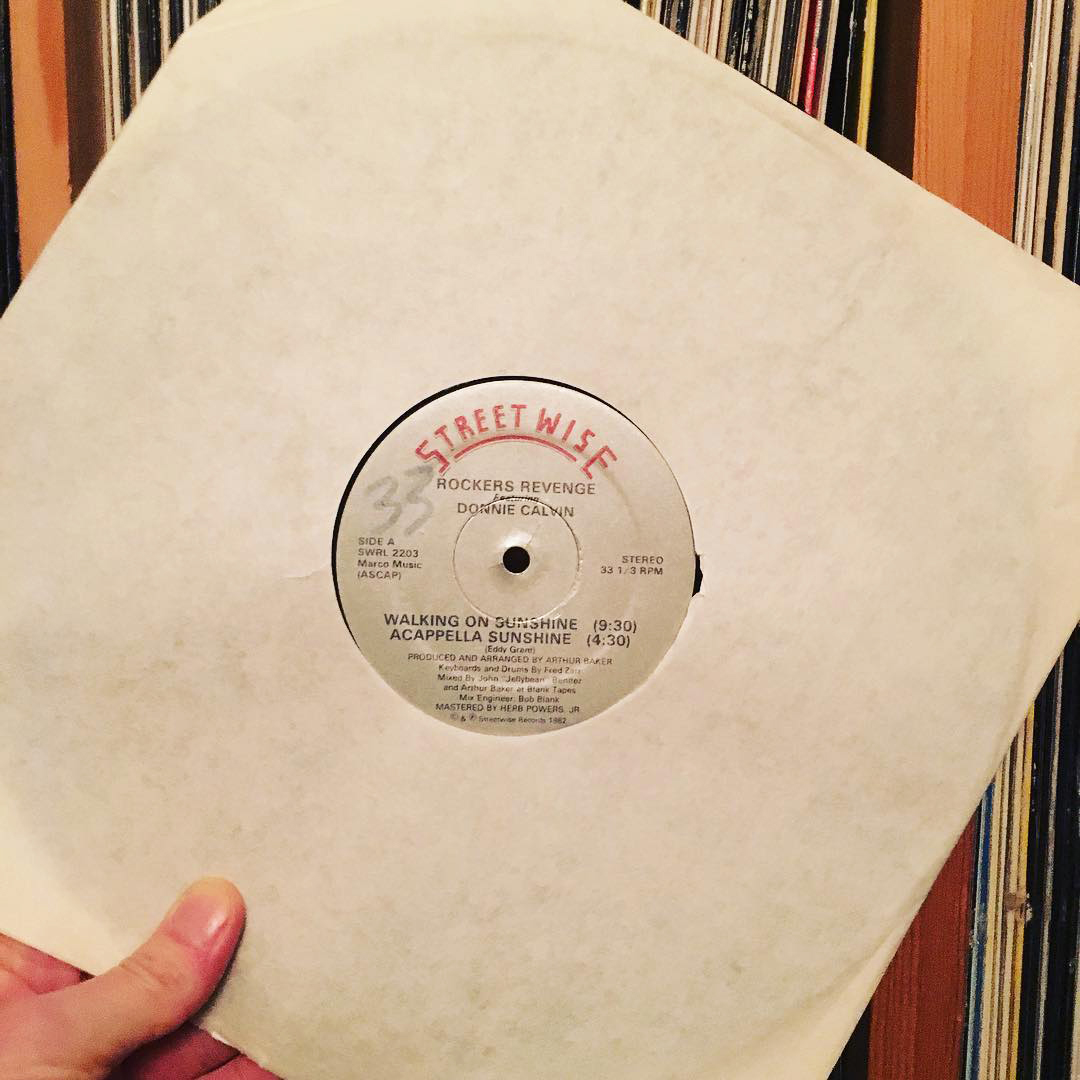
RM: Around the same time; ’82 / ’83, there’s all this other new music filtering through mainstream radio and into the charts. When the Fair was in town, Rockers Revenge ‘Walking On Sunshine’, along with David Joseph ‘You Can’t Hide Your Love’, and Grand Master Flash ‘The Message’ were the sounds blasting out across the rides as we screamed to go faster [laughs]. I also remember buying Record Mirror and reading James Hamilton’s column.
When my Mum asked what I wanted for my 17th birthday in December 1983, I gave her an Electro top 10 I’d found in a magazine (likely Blues & Soul) and asked if she could get me some of those. I was already buying records, I was into the band Japan and all that kind of stuff. The shop I used to buy singles from, apart from HMV in Manchester, was called Play Inn, in Eccles precinct. That was like a chart shop for that kind of thing; top 40 singles, albums, cassettes, all that kind of stuff.
RM: So I cut out the top 10 and I gave it to my Mum and said “I’ll have any of these records”. But I’d not actually heard any of them [laughs]. She must have gone to Play Inn and the guy from there must have gone to Spin Inn, as that was the only place you could get those records from, and came back with a couple of duffers! They weren’t very good [laughs]. One was DJ Divine ‘Get Into The Mix’ on West End and I can’t remember the other. Knowing Mike Carlon & Harry Taylor at Spin Inn they probably offed a couple of bad sellers. So, I was a little crestfallen by this as they were nowhere as good as the likes of ‘Planet Rock’ etc
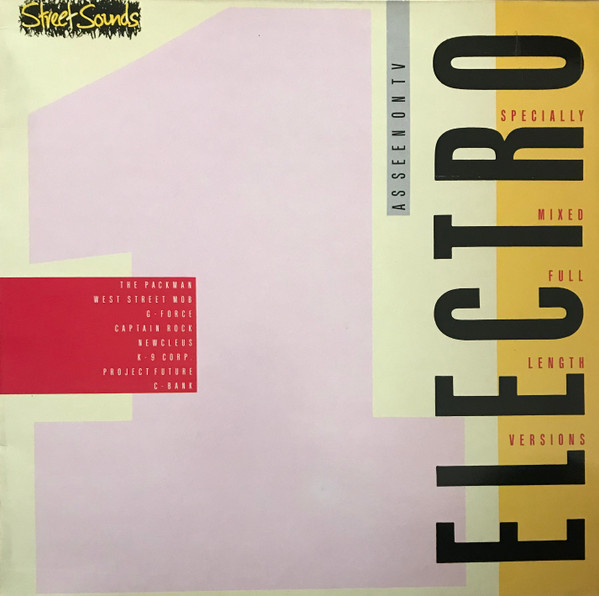
RM: Then I remember seeing an advert for Electro 1, the Street Sounds compilation (released October 1983). That’s a defining Electro moment really, isn’t it? Electro 1. That’s when it became available to the masses.
GW: Absolutely.
RM: Yeah. So I got that. Then that was it, I was away.
RM: I started listening to Mike Shaft’s ‘Taking Care Of Business’ radio show on Piccadilly Records every Sunday, without fail. It was a religion! Nothing got in the way. I’d sit down in front of my tape recorder for 3 hours. Two TDK90 cassettes recorded all of it, paused for the adverts, wrote all the tracks down on the back of the inlays and numbered them, all like a proper nerd! [laughs]
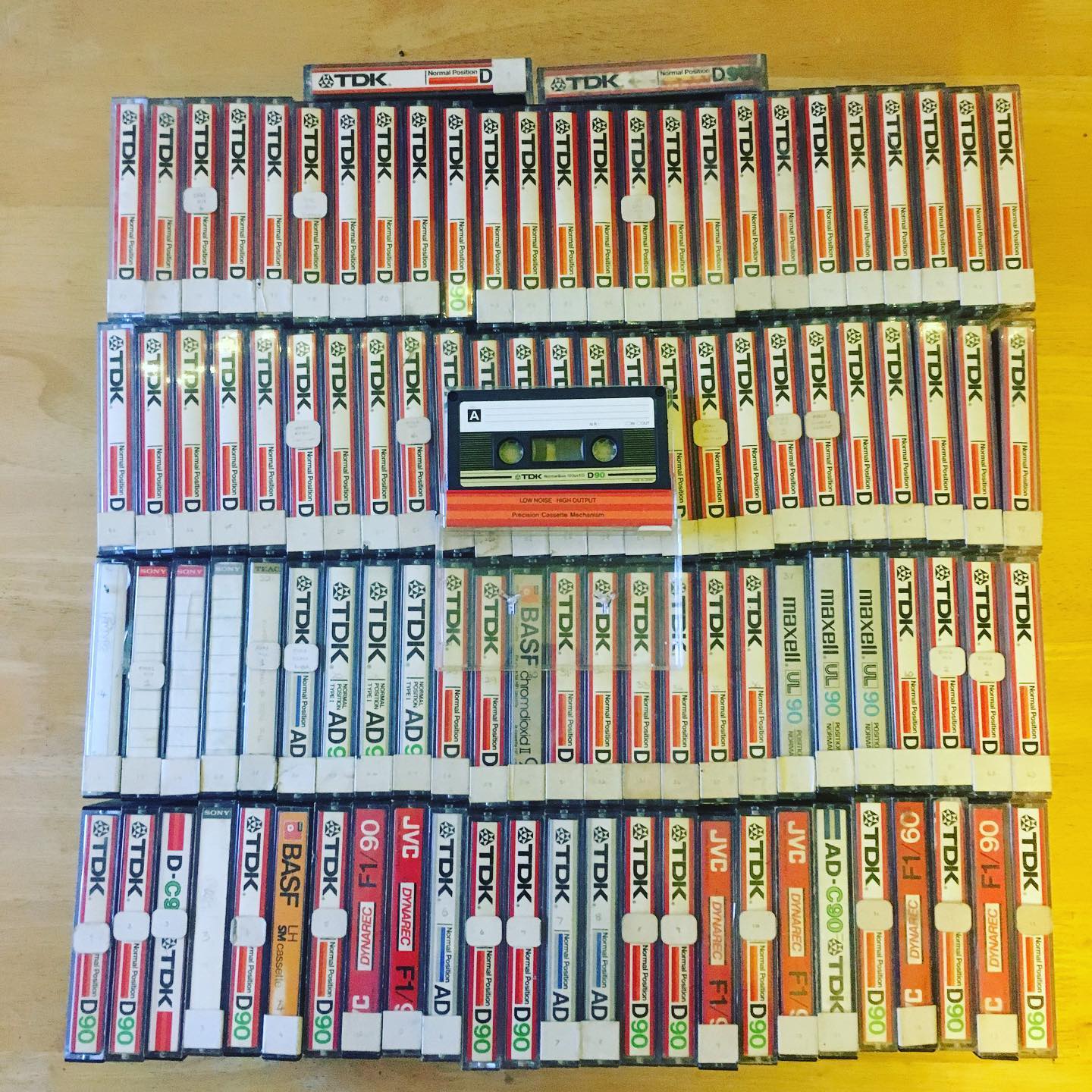 Russ’ Mike Shaft ‘Taking Care Of Business’ tape collection
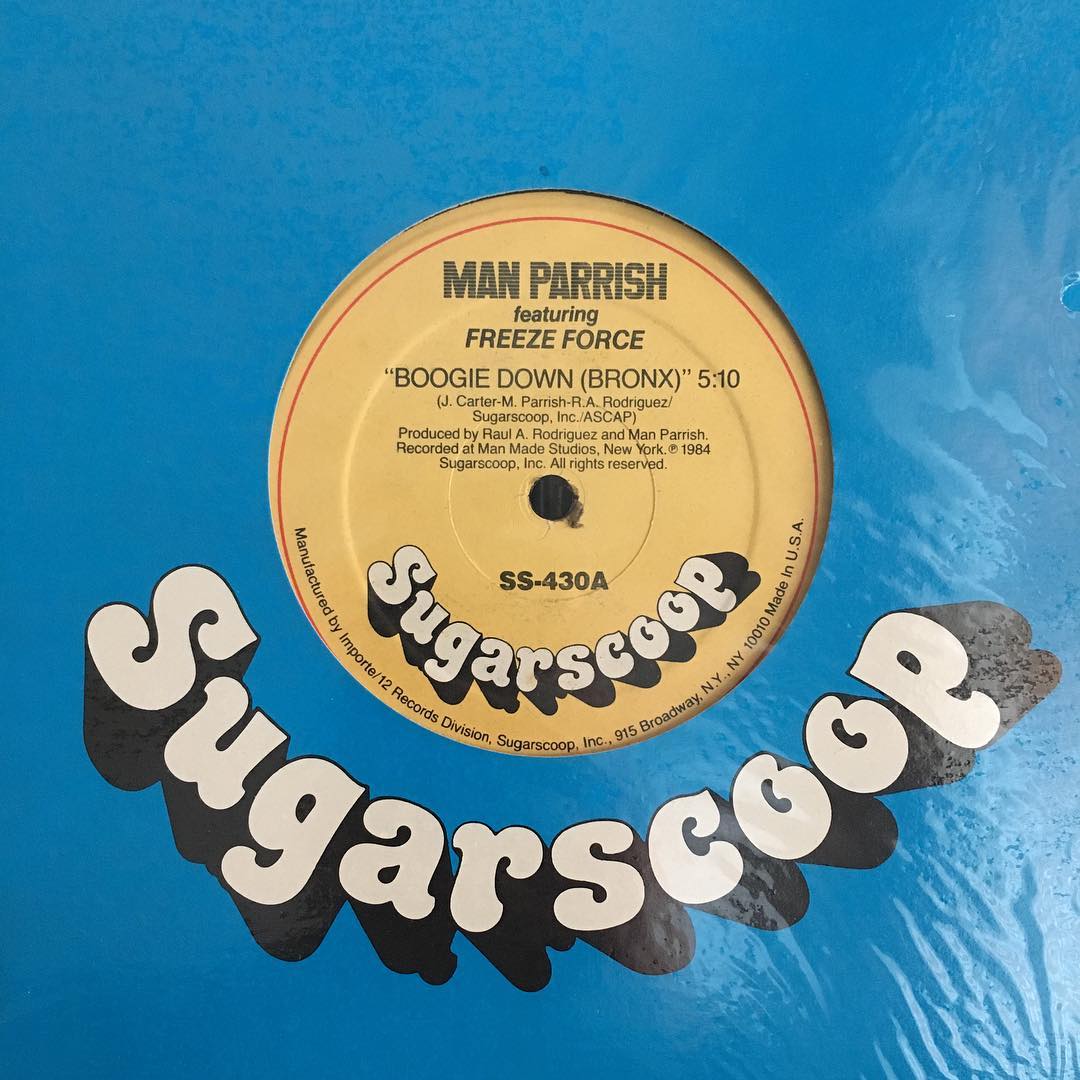
RM: I’d go to Spin Inn on the Saturday after the show to hopefully buy the track I really liked. Sometimes it was a disappointment. I remember when I heard ‘Boogie Down Bronx’ on Mike Shaft’s show, I’m like, “Oh my god!”. So the next Saturday I got there for nine o’clock. There was always massive queue outside, with everyone waiting to get in, trying to buy the imports before they sold out. I think it took eight weeks for it to come back in stock. I knew the words back to front by then, from listening to it on the tape. Put that record on now and I could still rhyme it off, word for word. It’s amazing how music can pull deeply buried memories into sharp focus, as fresh as the day they happened.
GW: Yeah! You told me a story about you selling all your Japan records too.
RM: Yeah. Obviously, I’d always been into music. We always had a record player in the house. That was one of the things we were allowed to just use as we wanted. Whatever records, singles and stuff, just being kids, we’d put them on and play 33’s on 45 so they sound like Chip and Dale. You know, just doing stupid stuff and messing about. Probably scratching and not even knowing what we were doing. Doing stuff that really, if our parents had caught us doing that, we probably would have got told off. But it was never this thing in the corner that you weren’t allowed to touch. So I always grew up with that.
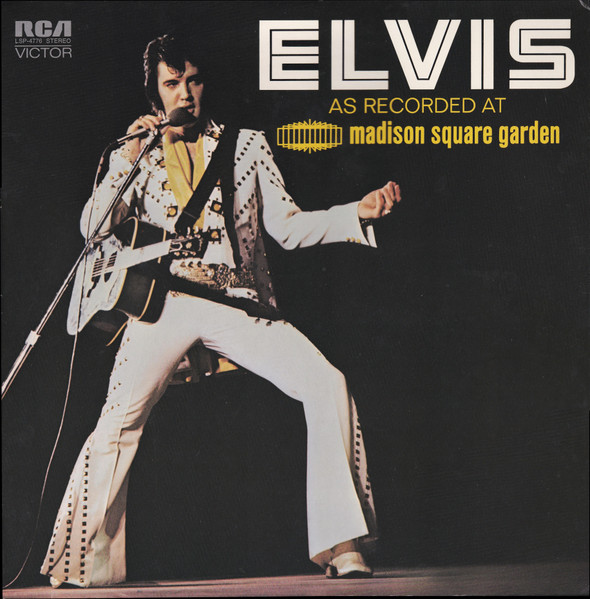
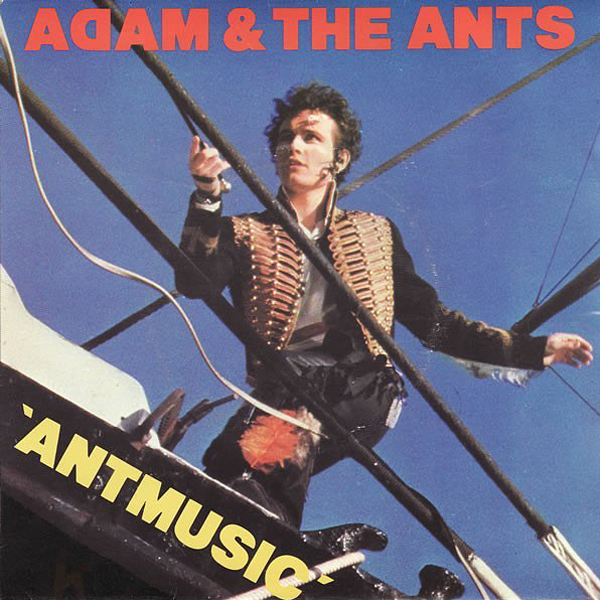
RM: For Christmas in ’76 I got an Elvis album. The first record I owned. I played it to death… all the big ones were on there! So that was the beginning of a lifetime’s passion. Then as a teenager, I got the Sex Pistols, when Sid Vicious was fronting them ‘Something Else’ and ‘Come On Everybody’, then New Wave followed. That’s when I started buying 7″ singles regularly. Things like Martha and the Muffins, ‘Echo Beach’, Gary Numan, The Jam, that kind of thing. Then Adam and the Ants hit the charts with ‘Ant Music’. Adam Ant was my first hero! I used to walk around the streets with a white stripe on my face and feathers and stuff pinned to me. Luckily, no photographic evidence exists!
GW: I mean, those early singles that they did were great, you know.
RM: I missed the earlier punk releases, a little before my time. Then as I got into them, I went back and I bought ‘Car Trouble’ and ‘Xerox’. ‘Dirk Wears White Sox’ is an amazing album!
GW: And that ‘Young Parisians’ track?
RM: Yeah. So that was Adam and the Ants. Then obviously the New Romantic thing came in; Visage and all that Synth type stuff, you know? Synth Pop, as they call it now. So Visage, ‘Fade to Grey’, even now, sounds like an Electro record, doesn’t it?
GW: Yeah, absolutely.
RM: Depeche Mode, Duran Duran, Spandau Ballet, Ultravox, Kraftwerk, Human League, all quickly became firm favourites with me. The first concert I ever went to see was Duran Duran, when they did Planet Earth at Manchester Apollo. Then I got in Japan. I’m not gonna lie, I may have had a boy crush on David Sylvian [laughs]. ‘Quiet Life’ is something specia!
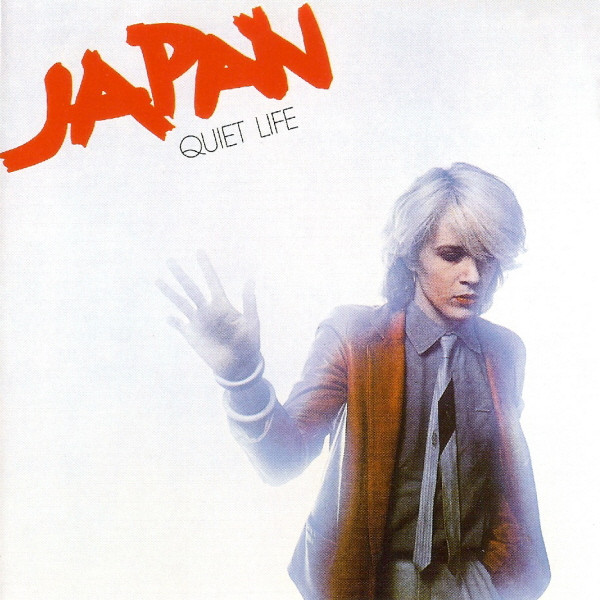
RM: I went to see them three nights on the run at the Apollo for the Tin Drum Tour – on my own, because none of my mates were into them. I had all the Japan albums, loads of singles and loads of Japanese imports. This is when I heard the Electro mix, it was a pivotal moment in my musical direction. I decided that I didn’t like Japan anymore, or at least I had no interest in listening to them at that point. I took the whole collection of Japan records to Manchester to sell.
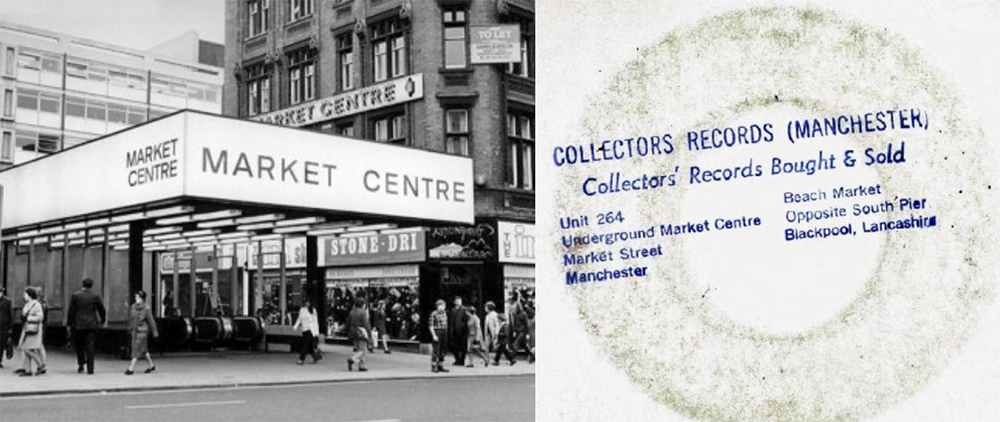
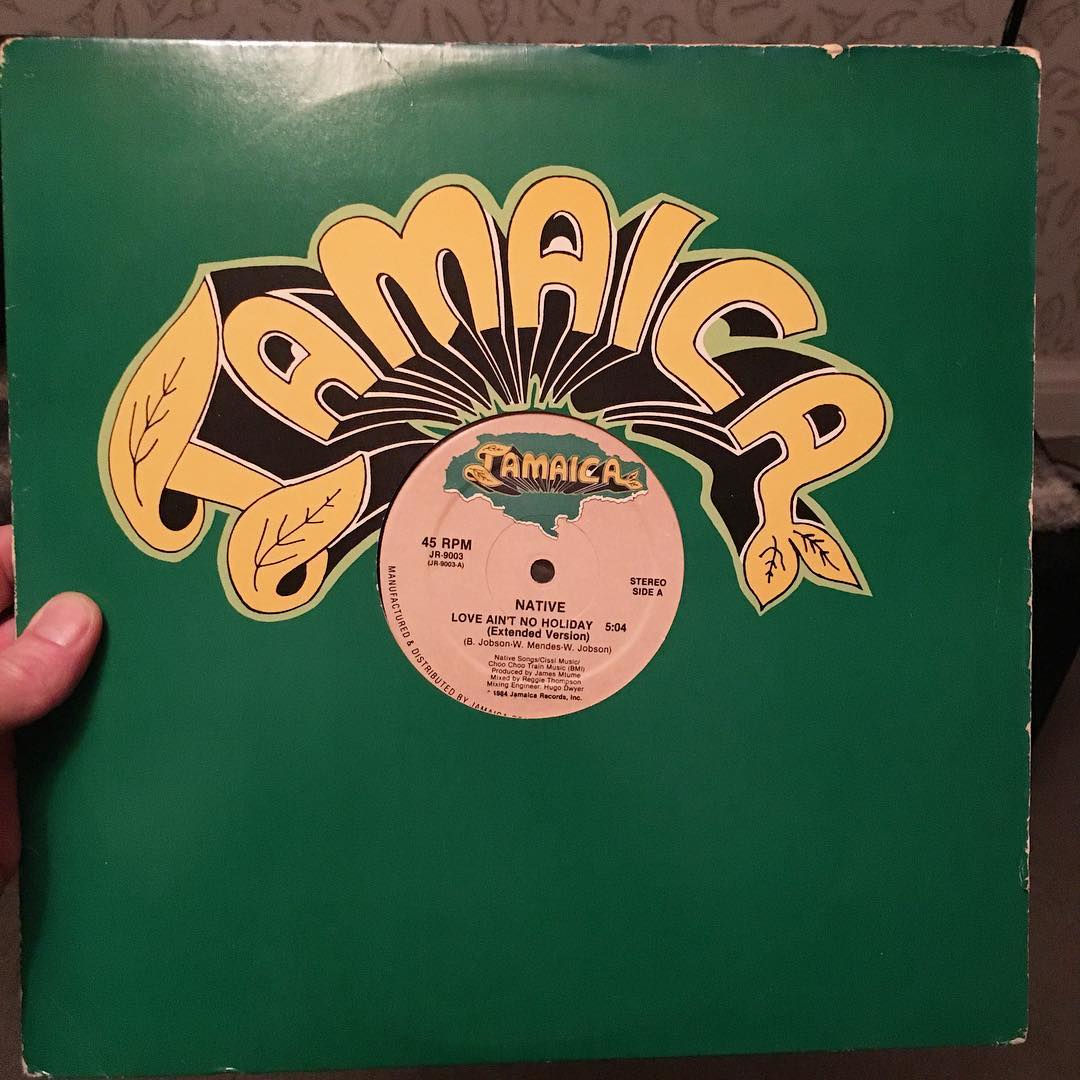
RM: There used to be a record stall in the underground market, called Collectors Records, all the punks and Goths went there for their records. There was a woman who ran it and I knew that she bought records, so I took them to her. She offered me fifty quid for the lot. I was young and stupid! I took the money and set off for Spin Inn. I really wanted a record that I’d heard on Mike’s show, by Native called ‘Love Ain’t No Holiday’. It’s kinda based on Eugene Wilde’s ‘Gotta Get You Home Tonight’. It sounds like that. So I stomped into Spin Inn with the fifty quid in my pocket and asked for this record. And they were like, “that’s £5.49”. I was like, “How much?!… Oh, no, I’m not buying that!” I walked out, got halfway up Cross Street and I was like “God, you know what? Fuck it!” so I went back and bought it.
GW: That was the gateway drug?
RM: Yeah, you just gotta buy the first one.
GW: Then you’re doomed!
RM: Absolutely! There’s something about the American records… Those imports, they’re just so superior. With the British records, the sleeves were always shit and the vinyl was always really thin. Those American records with their thick custom card sleeves, and their label designs made them so much more appealing than UK presses.
GW: Yeah, there’s a certain kind of weight about them. Maybe it’s in the cardboard and everything but yeah, they didn’t feel flimsy like some of the UK stuff.
RM: Yeah.
GW: But I suppose that was the way that the music was at the time. That we were all looking towards America and what was happening there. Although the British New Wave acts, the Futurist, New Romantic, Synthpop, whatever you want to call it, they influenced what was going on in the Bronx, with Bambaataa?
RM: Absolutely.
GW: All part of the fusion that made up Electro in the end.
RM: Yeah. Also, with a lot of the Synthpop stuff, if you listen to it, it’s got all those Italo sounds in it as well. I think all these things have been separated throughout time and that really it’s just one big homogenous thing that’s all intertwined.
GW: Well yeah, it’s like when I try to explain Electro-Funk; I think I can section that off more now, to ‘82/’83. So it’s pre what we’re talking about with the Street Sounds Electro albums. That was when it was defining itself. It was when there were only a few records coming out and the initial ones weren’t like full-on Electro. They had electronic elements in, a kind of, more Boogie-type vibe. It sounded really different then. They were referred to initially as “Electric Funk” records. Because there was a track on Prelude by Electric Funk called ‘On a Journey’. That blew up at Legend. A few other tracks like Stone’s ‘Time’, and then you would get Peech Boys ‘Don’t Make Me Wait’. Some of the kids that were coming into Legend were saying “Have you got that Electric Funk record that you played?”. So that was the initial term, but it wasn’t a term that was generally used; it was more of a descriptive term, for someone to request a record. Then a track came out called ‘Electrophonic Funk’ by Shock and I think that’s when people started saying “Electro Funk”. So it came from that, it also verbally flowed better, like “Jazz-Funk”. So there were more and more of these tracks coming out. Obviously, ‘Planet Rock’ plugged into that, in May ’82, but that was an outlier at the time. Even on the black scene, ‘Planet Rock’ was not well received by a large section of people. It was not an immediate track that all of a sudden took a hold.
RM: It’s something completely different. Really, it’s like, alien so…
GW: I took a lot of flack for ‘Planet Rock’, because I was the guy playing it. It was like, “What are you doing playing Kraftwerk on a Soul night?”, that’s the way that they would have put it. So it took a while before this music was accepted, really – within the black music community. Even at record shop level, with Spin Inn, there was Kev Edwards who was one of the great detractors of Electro. He didn’t like it and he made no bones about it, which was his prerogative. But at a shop level, that could become difficult, because the shop was selling the music, but at the same time, within the shop, it’s being looked down on. I think he put an “Electro Shit” chart up once [laughs]. It was all very Kev and everything. But nevertheless, it was indicative of the politics of that moment in time, as the music was changing around, when black music in New York was bringing on influences from outside its immediate horizon. It was looking at Kraftwerk, Gary Numan, Human League and these kinds of things, Ryuichi Sakamoto and all sorts of stuff. So I think it was a really interesting time. But from the position where I started, just as the Electro thing took off. Then it was like the predominant music on the scene, whereas previously, it came out of the Jazz-Funk era. So there was much more of a soulful vibe going on, previous to the Electro; a lot of funk, and everything that’s now termed ‘Boogie’. But then it was never all just Electro either, Russ. Legend on a Wednesday, always played Jazz breaks, and played the best of the more down-tempo groove tracks and the funkier stuff. More orthodox things were also still played within there, but Electro-Funk was the predominant music. Within that, when you go to define it, going back to the earlier times, I’d say something like ‘The Message’, by Grandmaster Flash was an Electro-Funk track. I remember somebody America once saying “It’s Hip Hop, Greg, it’s a Hip Hop track!”. I’d said, “Yeah, but we didn’t have ‘Hip Hop’ then. It wasn’t termed Hip Hop here at all until later.
RM: There’s a similar analogy to House Music, and how that started.
GW: Exactly, yeah! So we’re talking about that area – of crossover, a hybrid time. The music that was coming out, as you’re aware, was all sorts of tempos. It wasn’t just one style, it was downbeat. It was fast, it was coming from every direction, and that’s what made it so exciting! But Electro was something that absolutely turned the scene upside down then. I was in the eye of the hurricane, because Legend was just this central club to the whole thing. Not just in Manchester, but everywhere. Wigan Pier, of course, was another. So I had the top two clubs at that point in time, as the music changed and a lot of people got their noses put out, as has always happened when there’s a kind of schism on a scene. It’s the same thing that happened at Blackpool Mecca, when Colin Curtis and Ian Levine started playing contemporary tracks, and Wigan Casino was up in arms. At the time it was uncomfortable, because when I started at Legend, I was a young guy in my early-20s. I was right at the top of my game. My clubs were packed out, it was all going great. And you know, your ego needs a little bit of a stroke, but people are telling you that you’re polluting the scene and you’re ruining it. So it was very hard for me, at that moment in time. When Chad Jackson followed me at Legend, everything was now established. Legend took to Electro completely! Colin went off to Nottingham and did Rock City with Jonathan, with the same kind of principles as what we were doing at Legend. They blew the whole thing up there massively. They had a huge club at Rock City, and they were doing The Powerhouse all-dayers in Birmingham as well. So it all continued on through. It’s all part of the lineage of the North and the Midlands. But it was a different lineage to the South, because of the Rare Groove thing that, kind of, interrupted it all and changed things into another direction. So down there, House wasn’t a continuation of Electro, like it was here in the North. House was like something that came out of the gay clubs down there. Whereas House in the North and the Midlands, that came out of the black music clubs. So that’s the difference with what was going on at that point in time.
GW: From your own side, a few questions… When did you start to DJ? And when did you start to work at Spin Inn? How did that come about?
RM: Well, I started working at Spin Inn first, that was… I think it would have been 1986
GW: Were you going out to the clubs at all?
RM: Yeah, I used to go to Legend on a Wednesday, before I’d started at Spin Inn. Mike Shaft did the Wednesday night then. Patrick Booth from Broken Glass used to warm up for him. That club was something else, the lighting, the system. There was nothing like it. I found a picture of it online and it’s just looks like something from Close Encouters Of The Third Kind.

GW: I know, we were really blessed with that place. If you can think of it in this way, Russ, that right at the moment this really cutting edge, state of the art music is coming out of New York. I’m in Legend. I’m in this club with three technics 1200s!
RM: It looks like an American nightclub on the one picture that I saw online. It was a sight to behold.

GW: Well, Wigan Pier was the first one. It was owned by the same company and they really decked it out. It was way ahead of the game. It was opened in ’79. They put lasers in, amazing lighting systems, a proper sound system, the DJ had three decks, we didn’t have the 1200s there. We had the 1500 Mk2s, one of the earlier Technics vari-speed models.
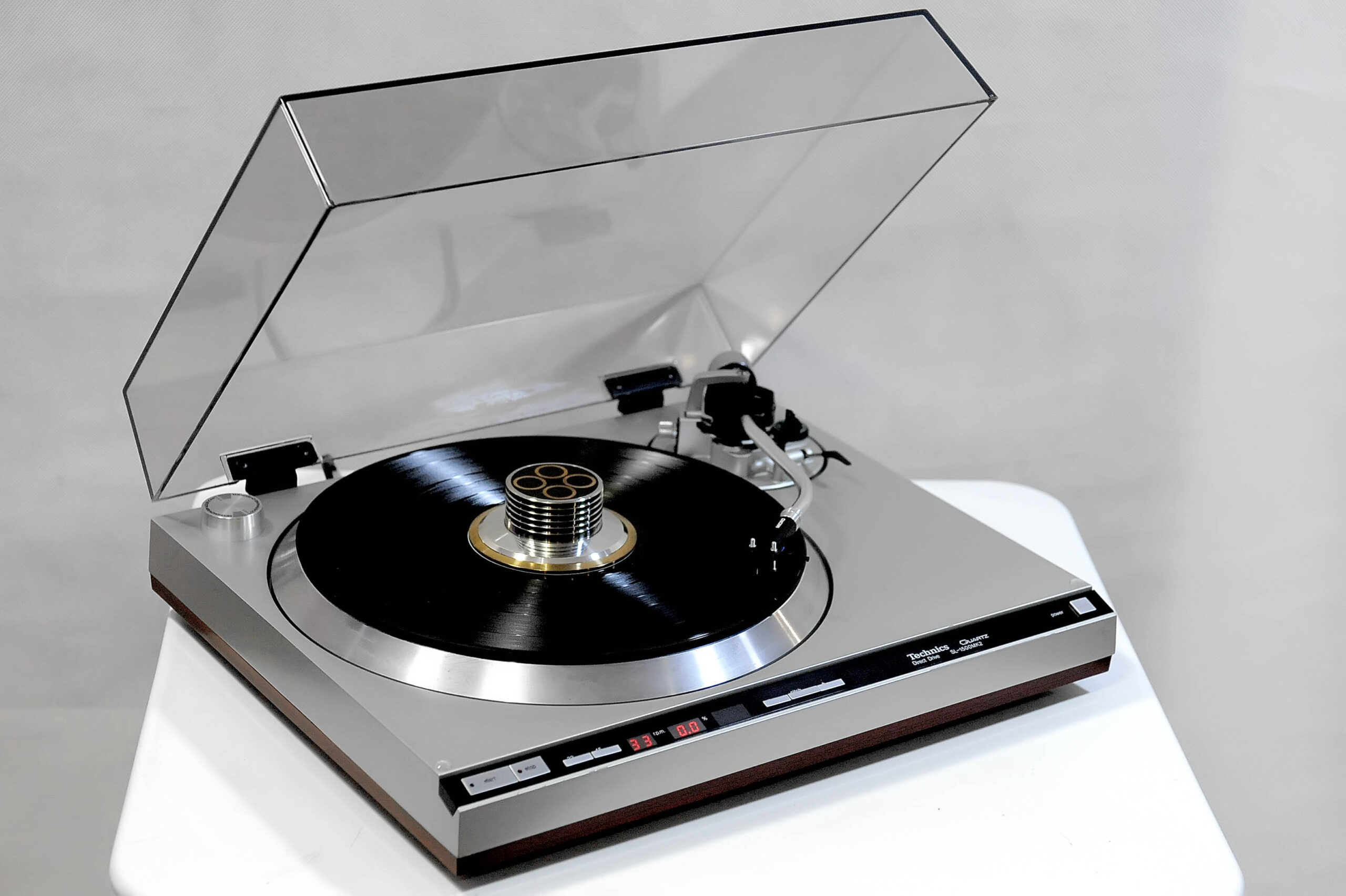
Technics SL-1500 Mk2
GW: Legend had the SL 1200s, again three of them! It was the first place ever with sub bass. The lighting, as you know, was just absolutely phenomenal; what we could do with it – how we could change the whole vibe. I remember A Guy Called Gerald saying that he used to love it when he was dancing to Jazz, when we’d white the place out. We just put smoke into the place and hit the strobes and the white spotlights, so just the dance floor was all white, like a blinding white. He said you didn’t know where you were! It was amazing to just be in that. So we were blessed by having this scene and having a club like Legend. You’ve also got to remember that before Legend and Wigan Pier, the majority of clubs that allowed a black clientele in, were really mostly ramshackle, rundown hovels.
RM: You had The Gallery. There were a lot of black music nights throughout the week in Manchester and most of the bars played Funk & Soul… Dennis Edwards, Mary Jane Girls etc.
GW: Yeah. Well, the Gallery, that really came through after Legend.
RM: The Playpen.
GW: The Playpen was really important. Again, that it’s the same company who owned Wigan Pier and Legend, they also owned The Playpen.
RM: I used to go to that on Thursday nights. Colin Curtis and Mike Shaft played.
GW: And that night is important, for the fact that you could say that’s where House started…
RM: That’s where the House crossover was.
GW: Yeah, you had Foot Patrol dancing there, fusion style, dancing to House. It’s not what we see later, that was ‘footwork’ and everything like that.
RM: That Cab Calloway, that kind of thing.
GW: Yeah, The Nicholas brothers and all that. Everyone was into that. So, with House Music, you can see the lineage from a Manchester perspective, of how that came through. And then, you’ll know this more than anyone, because you’re at Spin Inn in 1986, you’re seeing it happen right at source, because that’s where the music was coming from, largely. That was what you were selling there.
So, tell me how the Spin Inn job came about and how you got into DJing?
RM: Yeah, okay. So I was going into Spin Inn, on and off, mostly on Saturdays. I’d been on the dole for a while and then I got a job for two days a week, working for Age Concern. For two days work per week, I got the same amount of money as I got on the dole. It was a load of lads in a transit van, they used to go around to old grannies gardens, and like, hack them to death. Obviously they were overgrown old gardens. I did that two days a week and got eight days holiday allocation. This meant I could have four weeks off. Another job came up, working for a demolition company. They got the contract to ripp out the Midland Hotel for a refurb. So I did that for four weeks, all with the view of being taken on at the end, because it was really good money. In the meantime, I’d been going into Spin Inn, where Harry Taylor used to serve me sometimes. Then one day he just turned to me and said “Do you want a job?”, I turned it down, because I thought I was gonna get this demolition job and have loads of money to buy loads of records with. It transpired after four weeks that I wasn’t very good at that kind of thing, so they said, “See you later”. So, I went back to Spin Inn and I just asked Harry, “Is that job still going?” He said, “Yeah”. I started the next Saturday, no interview or anything. I mean, I didn’t know Harry was gay at the time. But, you know, it was obviously why he wanted some young boy in there [laughs]. But he must have also appreciated my taste in music from the records that I was buying. I wouldn’t have got the job if I was buying shit records right? [laughs].
GW: You think you might have had his eye on you?
RM: Yeah, definitely [laughs].
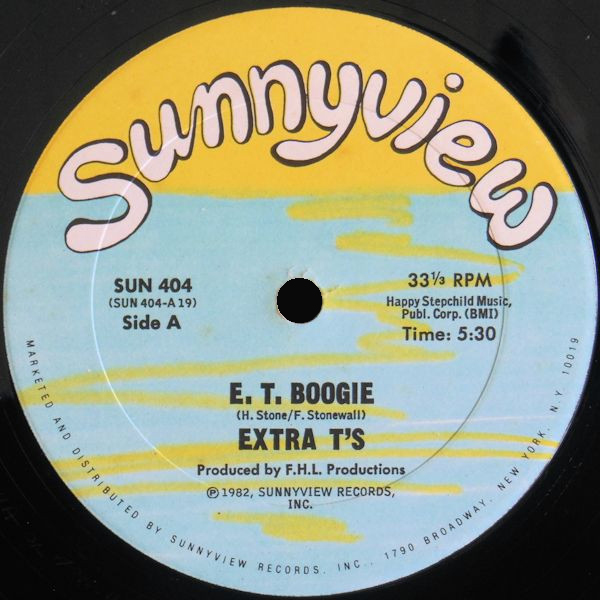
RM: One of the first things I did when I started at Spin Inn was rummage around all the record racks, through things not on sale; supposedly faulties, returns etc… That’s where I found ‘E.T. Boogie’, an Electro-Funk homage to the worlds most famous Alien. I couldn’t believe there was a copy there! There was a dance everyone did to that, where everyone would get in a line do a little wiggle and jump to the side, a bit similar to the ‘900 Number’ dance.
RM: So I started at Spin Inn in ’86 and around that time I recieved about £3000 inheritence from my Grandad. Not a lot, but enough for me to buy two decks and a mixer. I got that money and went down to London on the bus from Chorlton Street bus station with two of my mates. You couldn’t buy Technics in Manchester at the time. I went to a shop on Edgware Road in London and bought two brand new Technics 1200s, boxed, for £250 each, I think. I left them there all day, then went off mooching around London. I went to Spin Offs, a record shop in London and I bought a PMX 9000, which was the ultimate Hip Hop mixer. If you see the cover of Malcolm McLarens ‘Buffalo Gals’, they’ve got one of those mixers on there.

RM: You’d see this mixer in all the Hip Hop videos. It was the dog’s bollocks at the time! It was only a three channel mixer, it had a nine band graphic EQ, crossfader and barrel line switches – ace for transform scratching, plus a preamp. The sound out of it was amazing. I paid £450 in ’86. So that was an expensive mixer back then. I didn’t consider how expensive it actually was, I just wanted it.
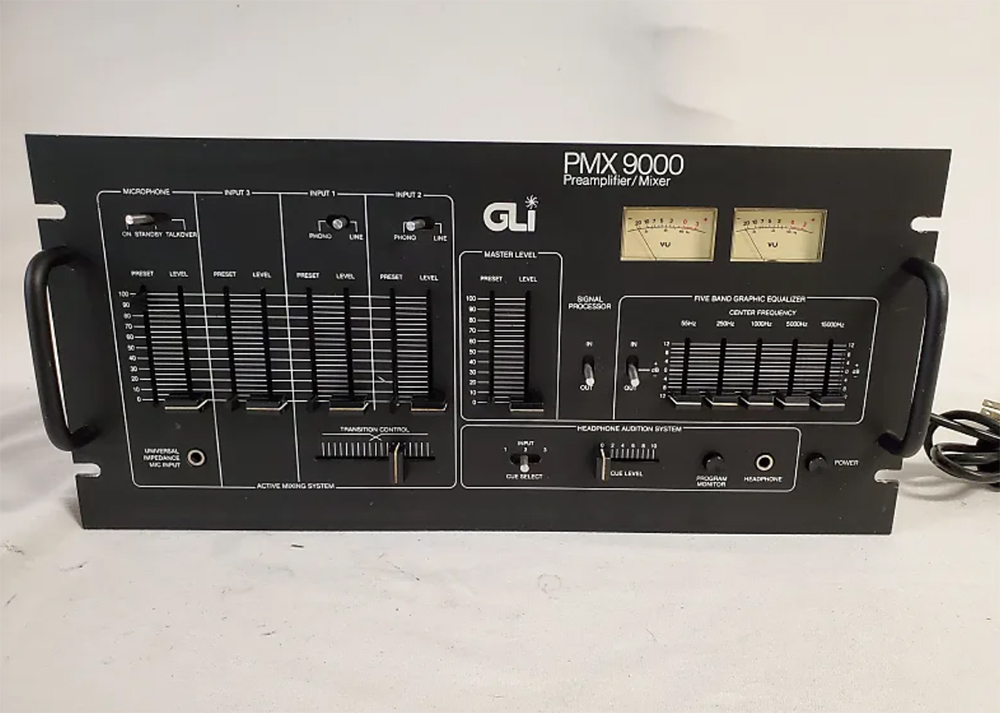
RM: That’s how I got into turntablism… Hip Hop was still the dominant force at the time, House hadn’t really taken over then. I’d spend hours each night perfecting scratch patterns and beat juggling. That’s how you get good, right?
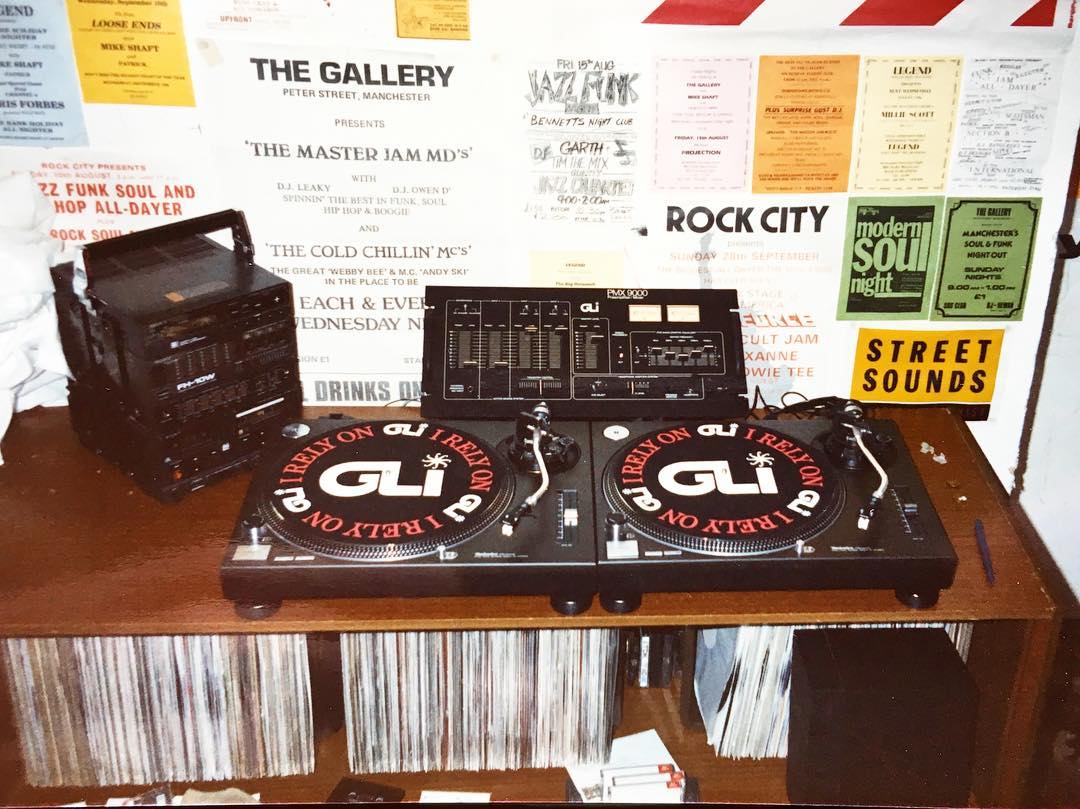 Russ’ gear, fresh out of the box

RM: I’d only been at Spin Inn a short while, when Harry decided to sell his record collection. Me & Ken (fellow Spin Inn employee, Kenny Grogan) both went up to Harry’s house in Bolton for a rummage. It was rather overwhelming to be honest. There was double-figure thousands of records! Being novices, we didn’t really pick much up. I got a promo copy of The Sugarhill Gang’s ‘8th Wonder’ from there. When we got to his house I’d never seen so many records before! When I think back at what would have been in that collection… oh my god! Harry had worked at Spin Inn since the 70s, he was a DJ on the gay Disco and Northern scene. There would have been every Disco record you could ever dream of in that collection!
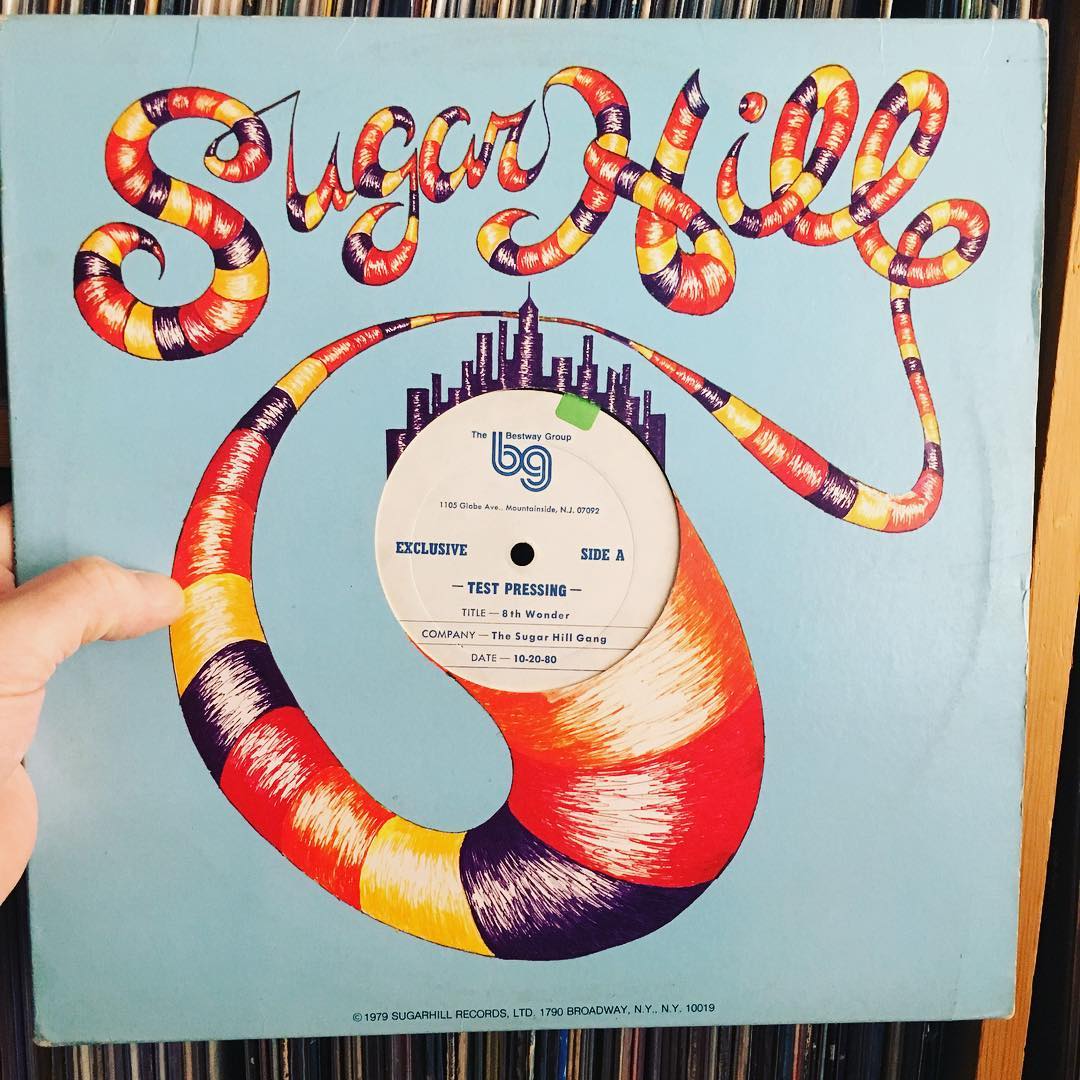
RM: (Re image above): My ‘8th Wonder’ promo, with the rare instrumental version on the flip. Still has the green marker tape on, from when I used cut this up. It’s gotta be the ultimate cut n paste track.
RM: So with DJing, I didn’t really DJ until ’89, I think. I’d done bit and bobs, house parties and things. It’s difficult to remember, that’s a bit of a fuzzy time, to be honest. I DJ’d in a club called the Banshee, which was a Goth club on Oxford Road. That was the first thing that I ever did.
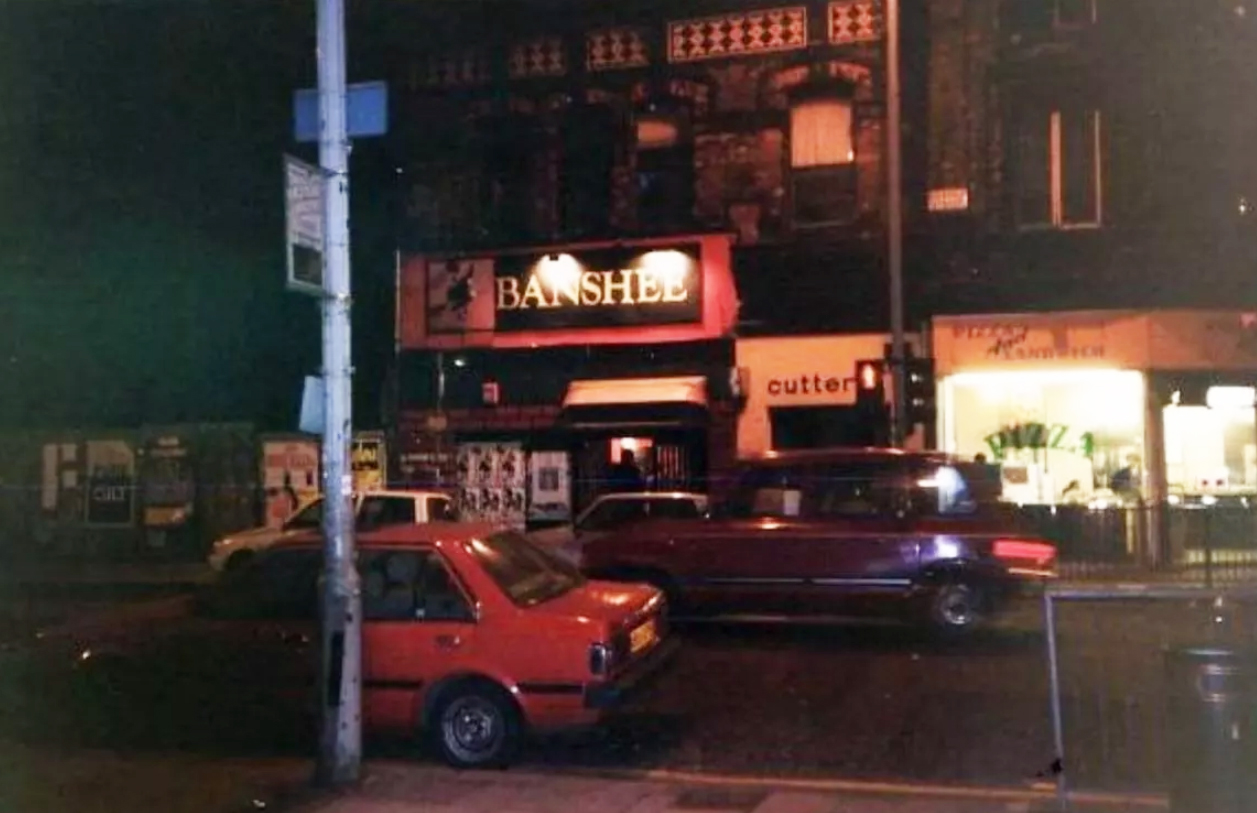
RN: Some kids used to come into Spin Inn, or maybe Manchester Underground for records. One of their parents owned the Banshee, they asked me if I wanted to DJ at this all-night thing on a Friday, with my mate. So we did that for a while.
GW: What were you playing?
RM: All sorts of House really, like early New York, probably 89/90 stuff. Things on the Big Shot label, like Hi-Bias and Dionne ‘Come Get My Lovin’. Bones Breaks type stuff too.

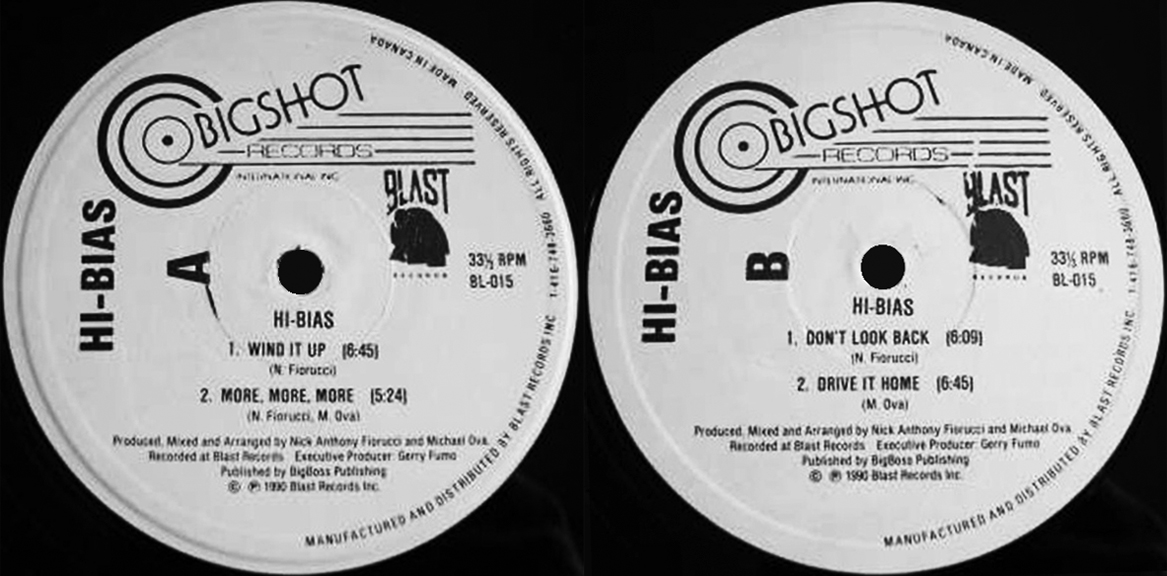
GW: So there’s quite a gap between when you started at Spin Inn to when you actually started to DJ?
RM: DJing properly yeah, because before that, from ’86 to about ’89, I’d just sit in my bedroom and scratch the shit out of records all night. I’d just do it for hours and hours. I must have destroyed about 20 copies of Fab Five Freddy’s ‘Change the Beat’. Must have gone through umpteen copies of Hashim. You know, just wearing out the scratching bits. I got into breakbeats and all that kind of stuff. I also owned a Roland 808 and a 303 for a while as well. I bought them from Danny Hybrid.
GW: Ah, Danny Hybrid. I know Danny from 23 New Mount St, where I had my office looking after the Ruthless Rap Assassins in the early ’90s.
RM: I bought them off him and they sat in my room for a while. I just fiddled with them a bit and didn’t really take them up. I actually sold them to Stu Allan.
GW: You never did any tracks or anything?
RM: No, I’m a bit of a technophobe, really. So never really got to grips with it.
GW: Just going back to when you bought your equipment, you mentioned the London shop ‘Spin Offs’?
RM: Jazzy M worked there.
GW: That’s right.
RM: Obviously, there’s a connection there, because Jazzy M was quite instrumental in the House scene in London, I believe. Sidetracking a little bit here, but I think this… about the North discovering House… No one discovered House. It wasn’t buried in a tomb somewhere, then someone dug it up. Looking back now, at the time, I think everybody thought they were doing something that nobody else was doing, but it was happening all over the country, in little pockets here and there. I think in Manchester, or in the North, it was taken on more wholesale, because obviously Manchester had this massive nightclub, that held 1500 people. There wasn’t the Ministry of Sound, or any of those types of places in London at the time, I guess. So I think there’s a misconception really. There was definitely House stuff going on in London as well.
GW: Of course it was.
RM: Well, like you say it was a black thing up here at first, when it wasn’t in London.
GW: Yeah and also I think the other thing that makes a big difference is that in the North, it was interconnected. So because of the previous all-dayer scenes, in areas like Sheffield, Birmingham, Nottingham, Manchester, Leeds, Huddersfield, all these areas connected. So when we had all-dayers then, people from all these places came to them. So the music was spreading throughout.
RM: Yeah, I went to a few all dayers at Rotters and The Haçienda, mid 80s.
GW: Also, things like Mike Shaft’s show, that’s why with Electro, it was really quick off the mark, because all of a sudden, we had Mike Shaft, and he had a massive reach with his show, to push this music out there, even though he wasn’t personally a fan – my mixes being the conduit.
 Mike Shaft at Piccadilly Radio (Photo by Greg Wilson)
GW: At the same time, it’s not like people weren’t playing Electro-Funk in London – they were doing that on pirate radio, but it wasn’t in the main media at the time – Mike Allen wouldn’t take it onto Capital until ’84.
RM: With Jazzy M’s ‘Jackin’ Zone’, was that a pirate show?
GW: Yeah, it was on LWR.
RM: We’re friends on Facebook. He was the trail blazer for House down south.
GW: As far as a lot people were aware, he was. But people like Mark Moore and Colin Faver were definitely playing House Music as well. Moore on the gay scene and stuff. So from a London side, it’s a little bit harder to work it out, because of all these different factors. From the north, it’s easy to work it out, because it was all directly coming off the back of Electro. So it’s all part of the same thing. So you just follow the same DJs and you get to where the story ends up. What I was going to say though, about Spin Offs was, the guy who owned it was a guy called Greg James, he was an American of Argentinian descent, he’s regarded as the first proper mixing DJ in this country. He came over in 1978 and worked at the Embassy in London, which tried to posture itself as a bit of a Studio 54-type venue for the West End. He later worked at The Warehouse in Leeds, where played for a while. So yeah, he’s steeped in the history of mixing in this country. But he’s somebody, again, that not many people are aware of really. He went off to London and opened Spin Offs and started selling stuff.
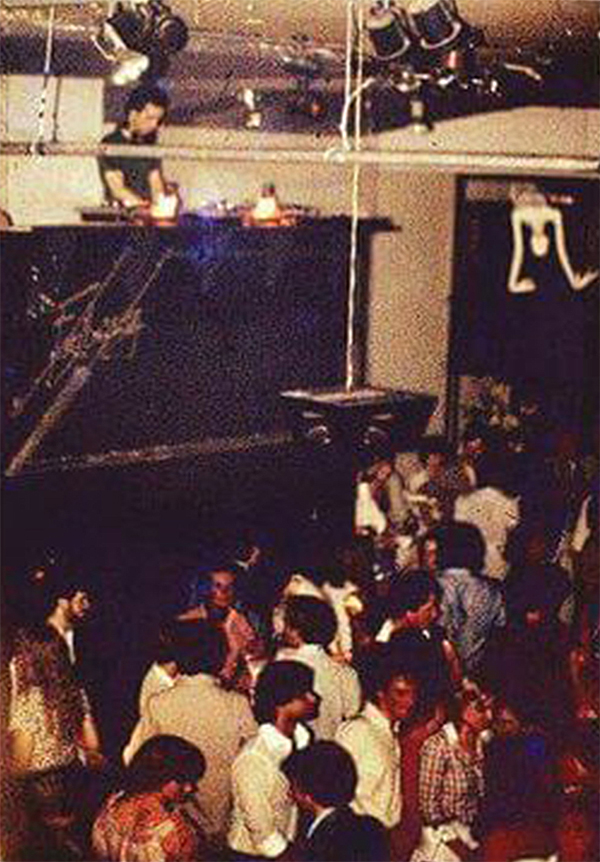 Greg James at The Embassy, 1978
GW: So, let’s talk about Spin Inn, when you were behind the counter selling these records… There’s a whole different kind of perspective that you’ve got to it all. Just fill me in on who were the main DJs at that moment in time? Which DJs were coming into the shop.
RM: Well, obviously, I think Mike Shaft was still top of the list for getting everything first. I think his show finished in ’87. Is that right?
GW: ’86. He then moved across to BBC Radio Manchester.
RM: When his ‘Taking Care of Business’ show finished?
GW: Yes. Stu Allan took over in ’86.
RM: ‘86? I could have sworn it was later than that. Okay, so Mike was coming to the Spin Inn, Colin Curtis was coming in, Trevor M, Richard Searling, and guy called Neil Neale from Stoke.
GW: Yeah?
RM: Yes, Neil must have one of the most ridiculous collections in the country. I haven’t seen him for years, but even up until the early 2000s, he bought everything that came out, everything! CDs, vinyl, albums, 12″s, he just bought one of everything. He actually has a spare house just full of records. There was a guy called Andy Madhatter, who I don’t really hear about anymore and isn’t really acknowledged on the Manchester scene. He was into Soul and Rare Groove as well. When I first started at Spin Inn, Pete Heller, from Heller and Farley, was a student in Manchester, Pete used to come in and buy records. I used to sort him out all the time with all his records, he’d buy Soul, Hip Hop and House. As far as I’m aware, Pete actually did the first illegal rave that I know of in Manchester. It was just off Whitworth Street, right at the top end, near Piccadilly. There were some old buildings where they’d knocked through a hole in a wall. You had to go up a lift, it was on the third floor of this empty warehouse or mill. I let him use my turntables for one of the rooms and I think I did a bit with Owen D, Leaky Fresh and a few others. But that’s about as much as I can remember about that. But yeah, Pete Heller did the first, illegal rave. The sort of the thing that was going on in London.
 Pete Heller
RM: other Manchester DJs; Jam MCs, Tomlin and Chris Jam, they were also about. Obviously there was Hewan Clarke too, Hewan was also important. Yeah, they were all buying records at the time.
 Hewan Clarke
GW: Yeah, and Chad Jackson?
RM: You know what, I didn’t actually see Chad that much to be honest. His Best of ’84/’85 mixes are superb. His ’84 Mix is an absolute masterpiece… end of! There’s nothing to top those 2 megamixes though.
RM: I don’t think he did the ’86 one?
GW: No he didn’t. He did just those 2 years.
RM: Yeah. Then he kind of fell away and got into the whole DMC thing. He was a huge inspiration to me and a whole swathe of people that still hold him in high regard.
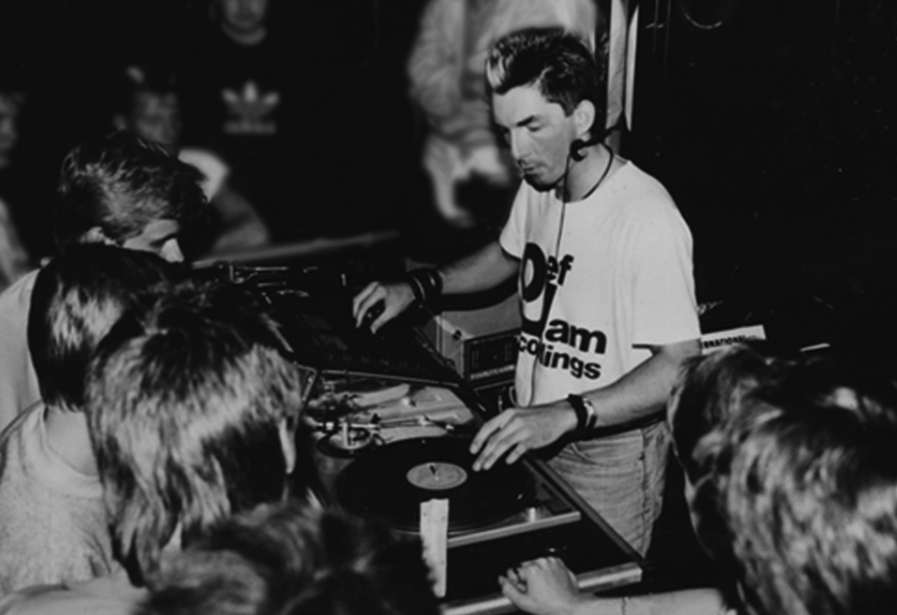 Chad Jackson
RM: Johnny Jay was a regular in the shop along with Owen D and Leaky Fresh, they were all buying records. They were buying the early House records along with Hip Hop, because it was just an extension of what had been coming out before. To be honest, the proper Soul music, by ’86/’87, had started getting really boring and really slushy. Soul music got slow and just too syrupy and sickly. Then this other stuff started coming through. I guess it’d been coming for a while, even in ’84, a couple of guys that don’t really get a lot of props; Darryl Payne and Paul Simpson for example.
GW: Darryl Payne did a lot of stuff in the early ‘80s.
RM: Yeah, he did a lot of stuff then. They call it ‘Proto House’ now, but at the time, it wasn’t. It was like things like Subject ‘The Magic, The Moment’ – things by Serious Intention. NV ‘It’s Alright’ and Sinnamon’s ‘Thin Line’.
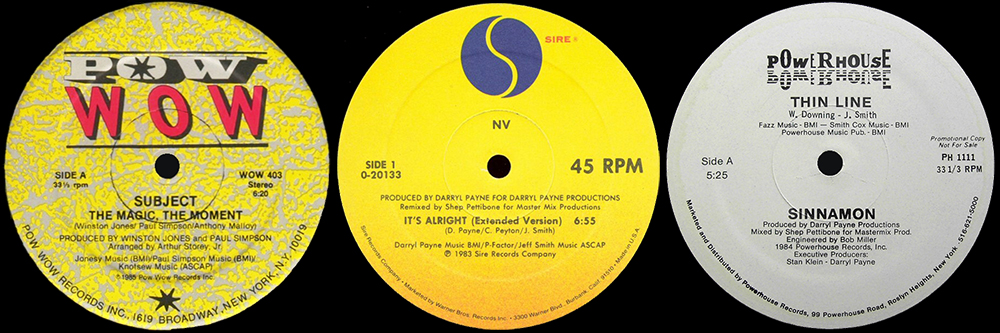
RM: If you listen to those records, they’re not Funk records, or Soul records. One of my favorites is a by Tammy Lucas called ‘Hey Boy’. Dave Lee licensed it for U.K release on Republic, but It doesn’t have the best mix on. It would be classified as a ‘Garage’ record now, but it wasn’t at the time, they were just these up-tempo tracks. Some of these up-tempo things sound similar to Visual ‘The Music’s Got Me’, with the Boyd Jarvis-type sound to them, you know, that big fat clubby sound that makes them great for clubs. Incidentally, Boyd Jarvis & Timmy Regisford mixed the Tammy Lucas track.
GW: You were saying about some of the people that used to come into Spin Inn in ’86. Just thinking now about that being the year that The Haçienda really started to properly take off. Most people think about ’88 because of the whole ecstasy explosion.
RM: Yeah.
GW: The Nude Night on Fridays was going strong from ‘86 onwards.
RM: Yeah, I nearly forgot to mention Mike Pickering! [laughs]. I remember the day that Mike came in the shop. He came in and he went… I think he was with Martin Prendergast. It was when they were MP2, or MPsquared.
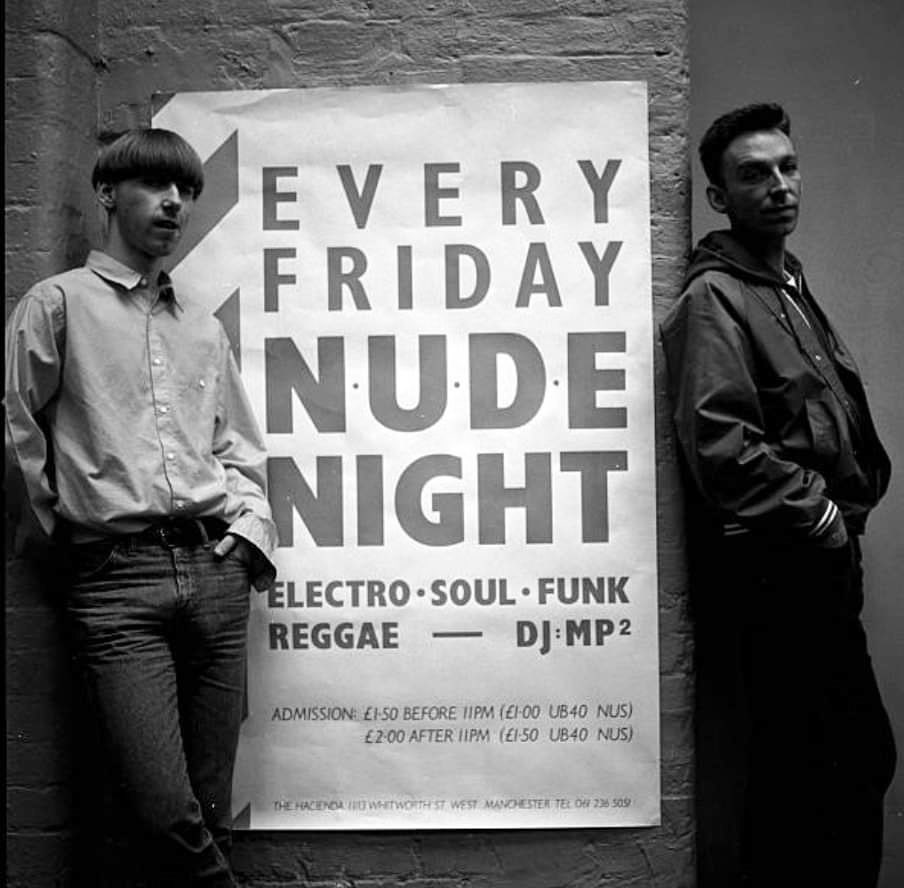 MP2 (Martin Prendergast & Mike Pickering), photo – Kevin Cummins 1986
GW: That’s the one.
RM: Mike said he was starting this night at The Haçienda and wanted some records. We picked him a selection of records. There were no listening posts in Spin Inn back then, they weren’t a thing. The staff at the counter had to play the records over the shop system for you to hear them. We might have just given him a bag of records. I can’t really remember, it’s such a long time ago! It would have been Kenny and I who would have sorted Mike out at first, but after a time, I’d bag Mike’s records up every week. At first it would have been a cross-section of all sorts. This would have been ’86, so it would have been things like Dhar Braxton ‘Jump Back (Set Me Free)’ and even things like Terry Billy ‘Don’t Lock Me Out’, which was a Mantronix produced thing, and Nocera ‘Summetime’. There’s quite a few records I could mention. I would just put aside anything good that came in. This would include the early House stuff from ’86… Fingers Inc, Marshall Jefferson stuff etc. Whatever new stuff was coming in each week. He wasn’t top of the pecking order at that time though.
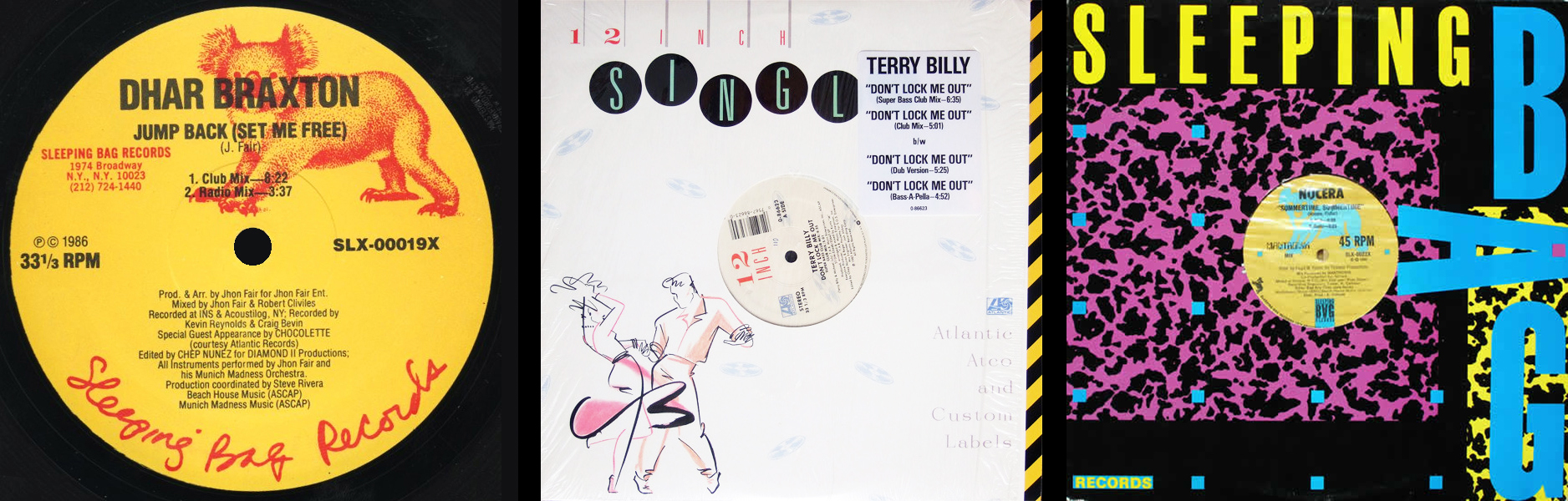
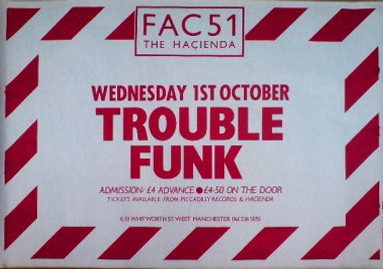
GW: Mantronix were huge at the time they played at The Haçienda, weren’t they?
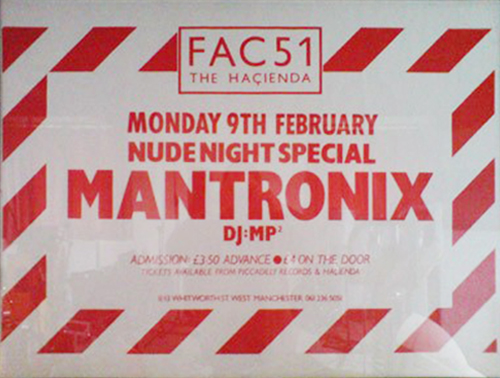
(Image source)
RM: They were. That’s right. Yeah, Mantronix, Trouble Funk, Roxanne Shante, Spoony G…
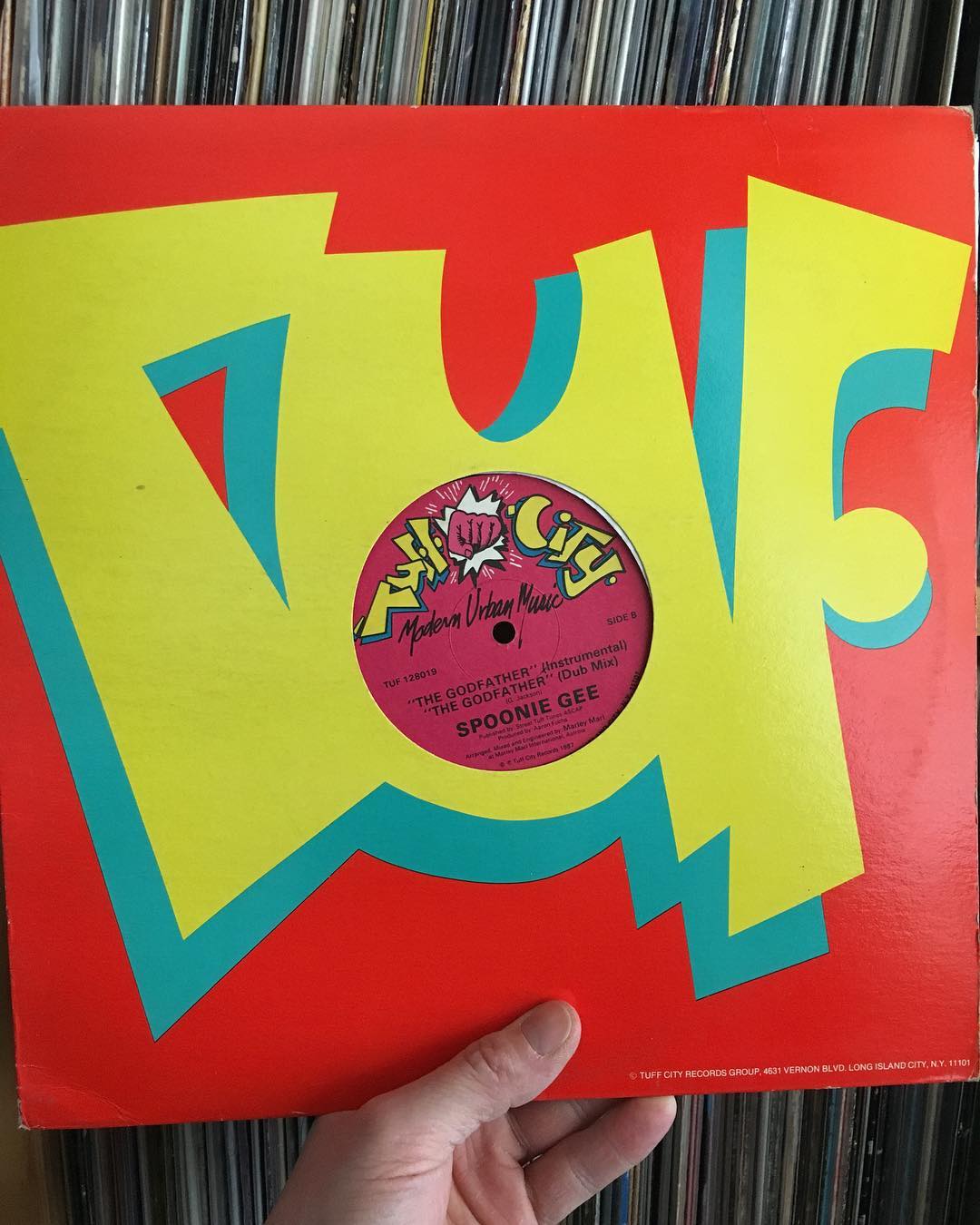
RM: (Re image above): ‘The Godfather’ by Spoonie Gee was proper funky rap music that was played alongside early House Music at The Haçienda. This was before E’s turned the place upside down! The Haçienda had Spoonie Gee on live one Friday night. They needed a pair of turntables for his DJ, so they hired mine for the night.
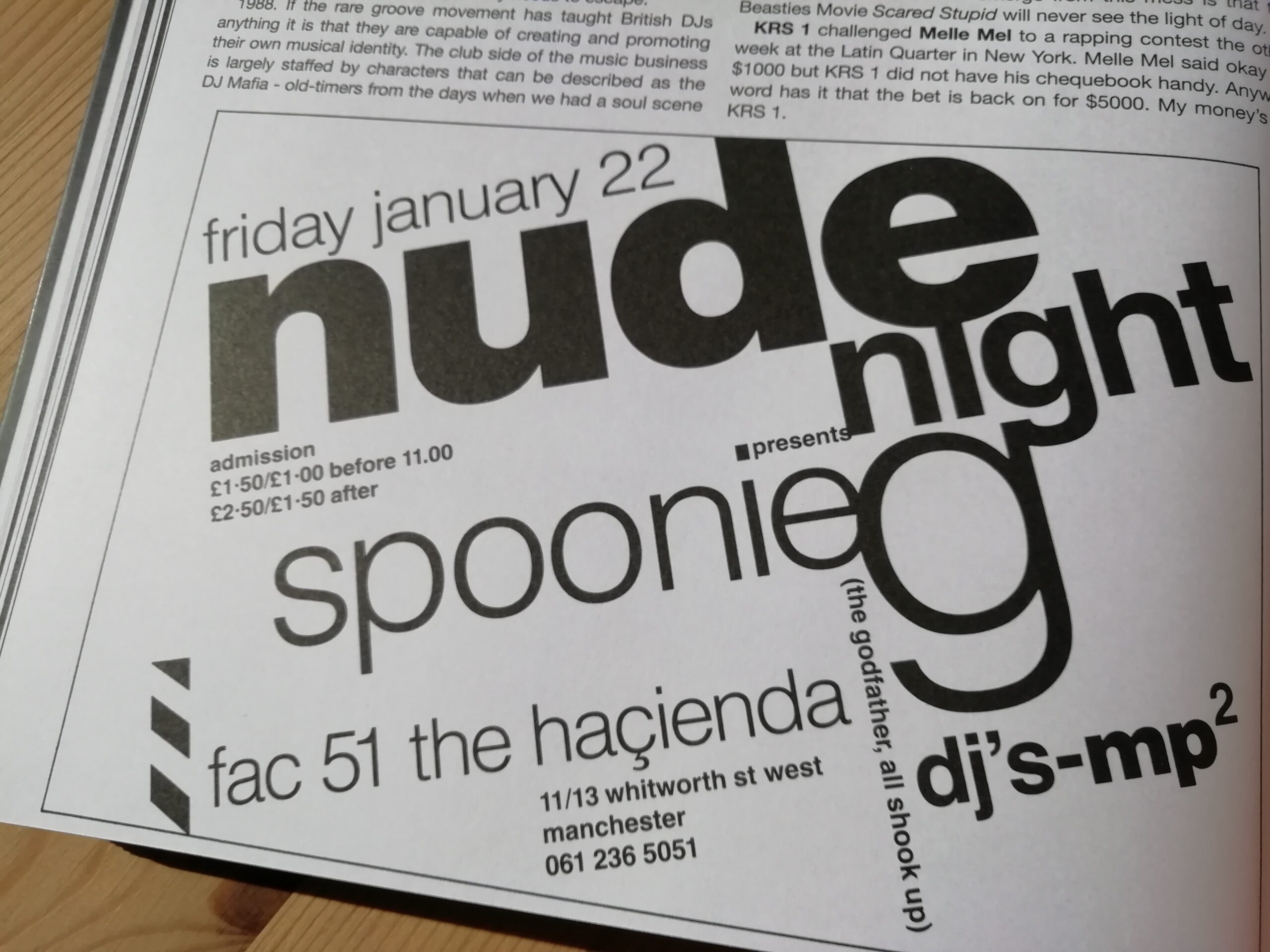 (Image sourced from this 1988 Spoonie G interview)
RM: Through ’87 we used to go to The Haçienda, whizzing our tits off and drinking about 15 cans of Breaker! We didn’t really dance, we just mooched about in there. Chicago House, Hip Hop and Funk records were all in the mix.
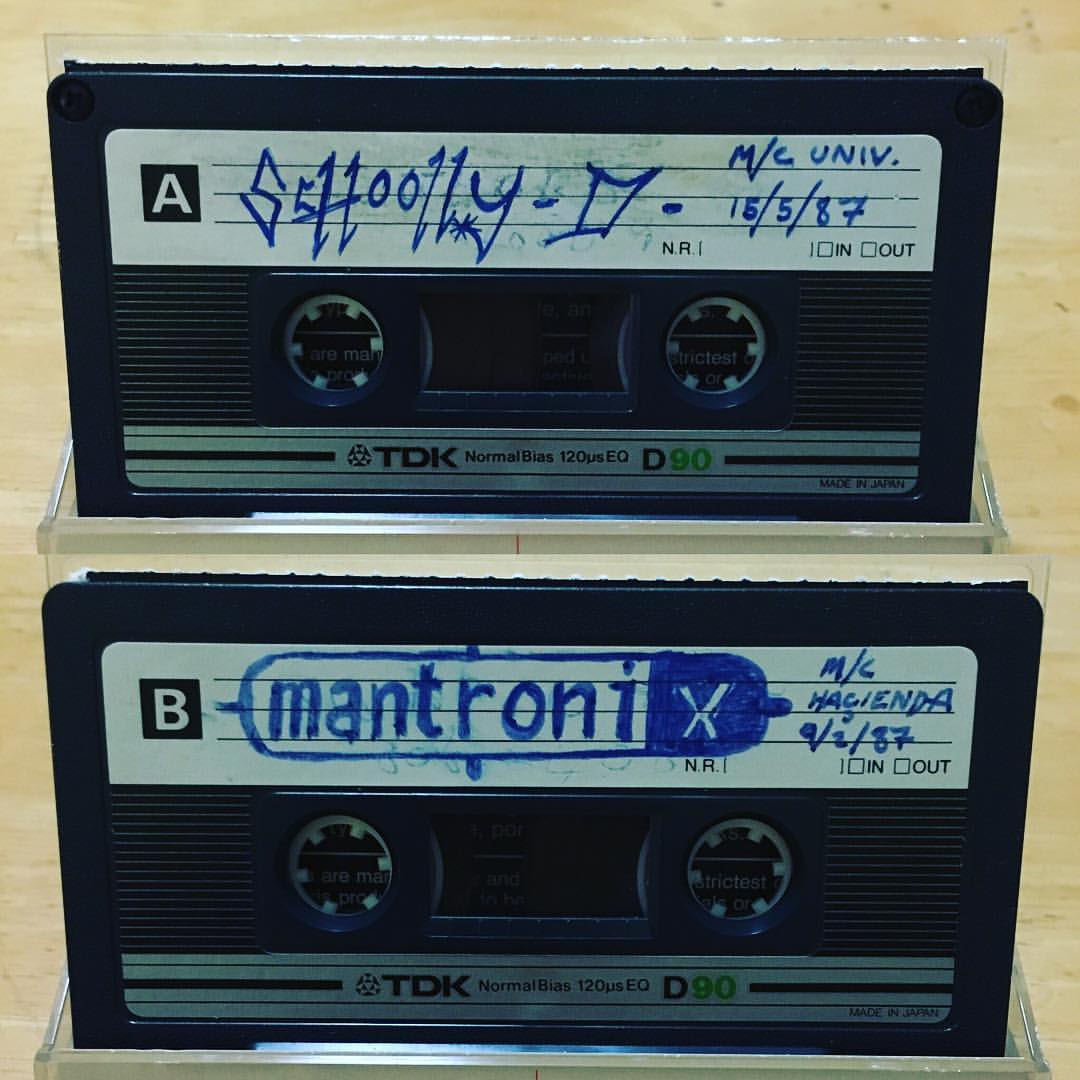
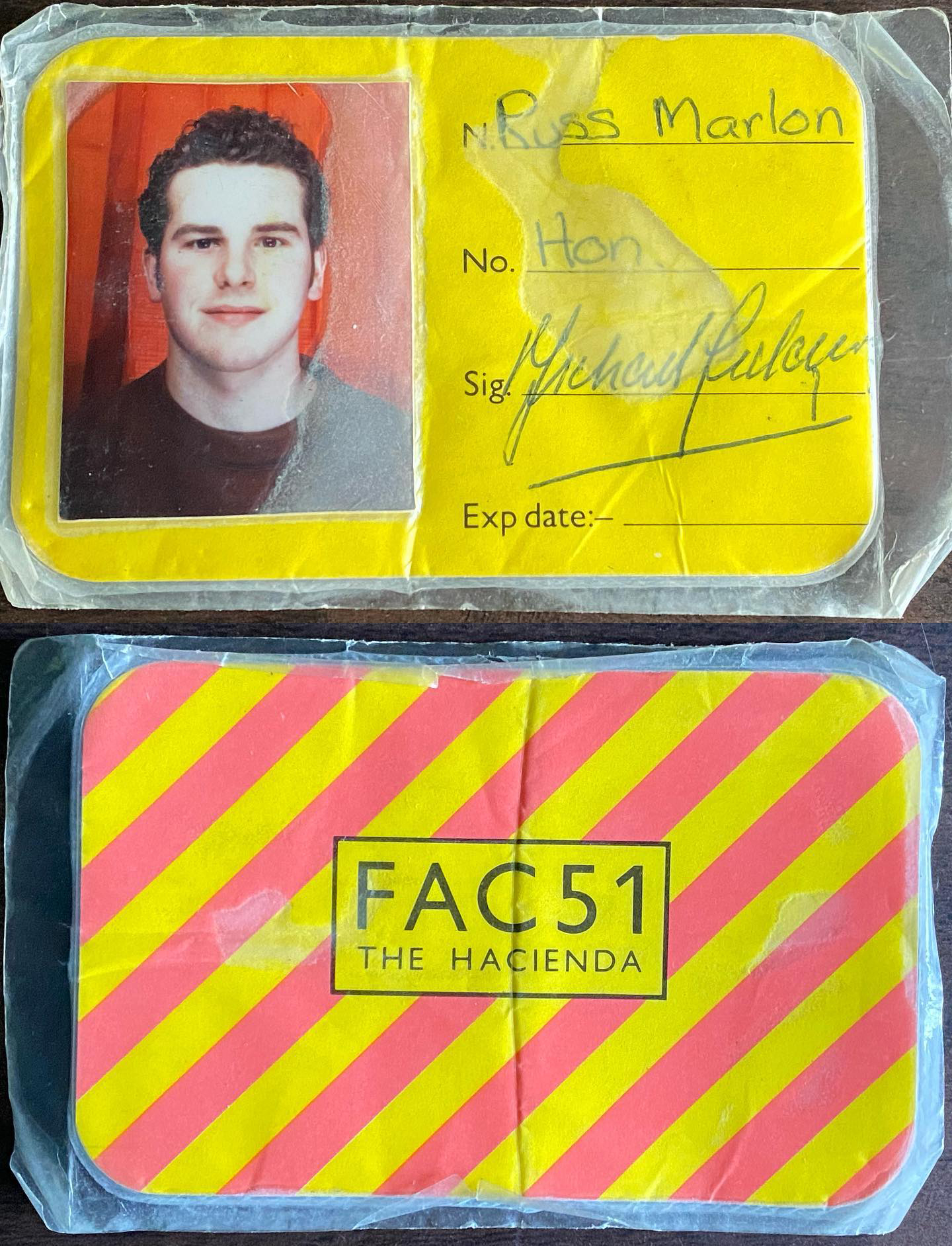
RM: (Re image above): Working at Spin Inn and bagging up a fresh batch of new imports every week for the main man, Mike Pickering, had its perks. An honorary forever valid pass (no expiry date) for The Haçienda from Mike, way before I joined him to warm up on Fridays at Shine. I thought I was the dogs bollox with this. Non of that doorman not letting you in bullshit with this.
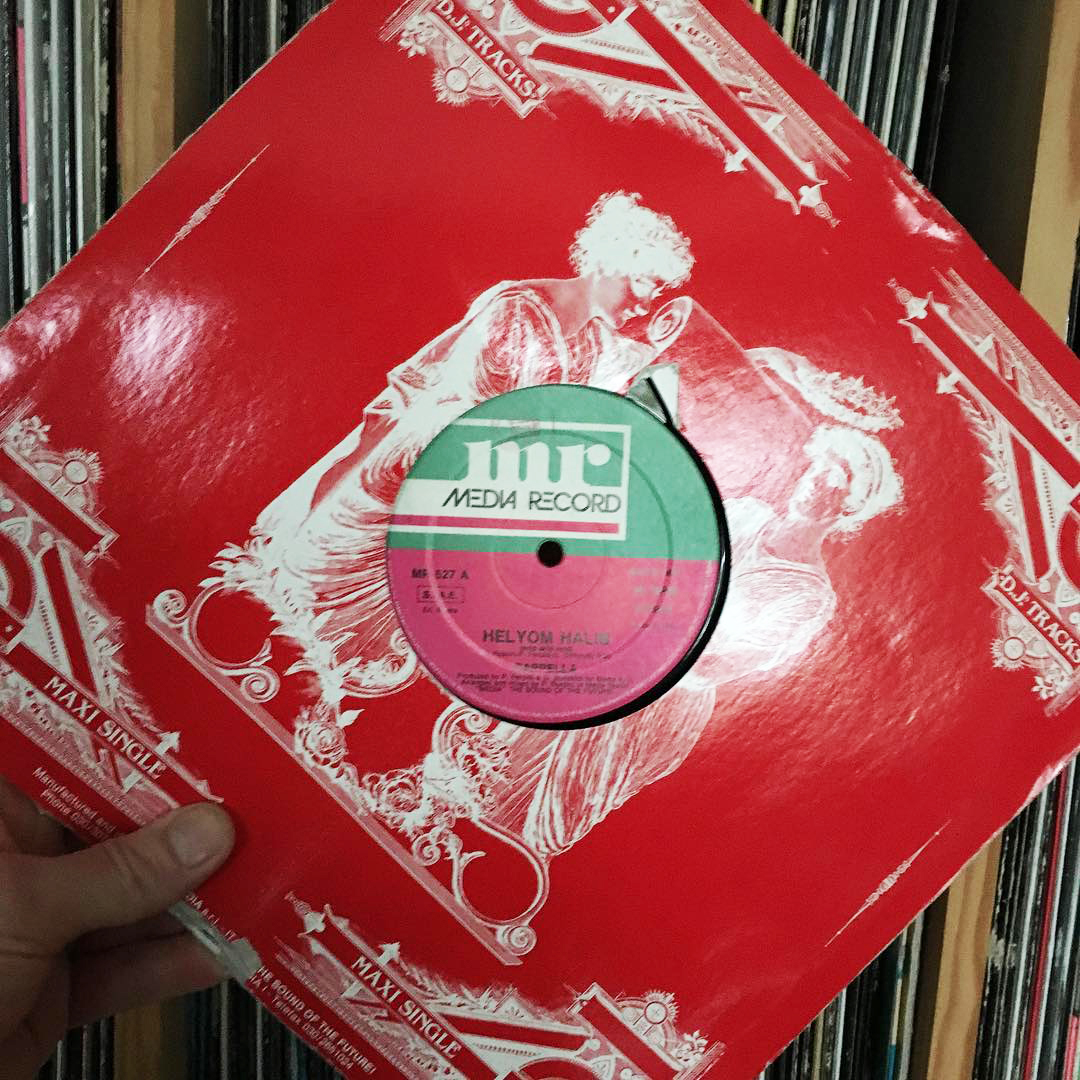
Sometime in ’88, Mike came to Spin Inn for his weekly bag of new music and he says “Awww Russ, you’ve gotta try this new drug, it’s called ecstasy, it will blow your mind! You can only get it in London!”. I was apprehensive to say the least and didn’t take Mike’s advice for quite some time. Anyway, four of us decided we were gonna try it. We would get E from the Hac, take it home and try it there first. On the night, two mates backed out. It was the Wednesday VOID night, we were whizzing away, I procured 2 red capsules called Dynastys through Mike’s contacts in the club. The plan was to take them home and have them later. At 2am, when the club closed, we turned to each other, full of bravado from beer and whizz and decided to neck one each. We walked to The Kitchen in Hume and spent the rest of the night in there blissed out, and that was that! Our lives were changed forever!
If any record reminds me of my early ecstasy experiences, it’s Cappella ‘Haelyom Halib’. I think it still sounds as good as it did then.
RM: The Wednesday VOID night was my favourite night at the Hac. Thursday was my day off from Spin Inn, so Wednesday night was perfect for going out. VOID was the catalyst, my moment. For me, it was by far the best night, with Mike Pickering and Jon DaSilva at the helm.
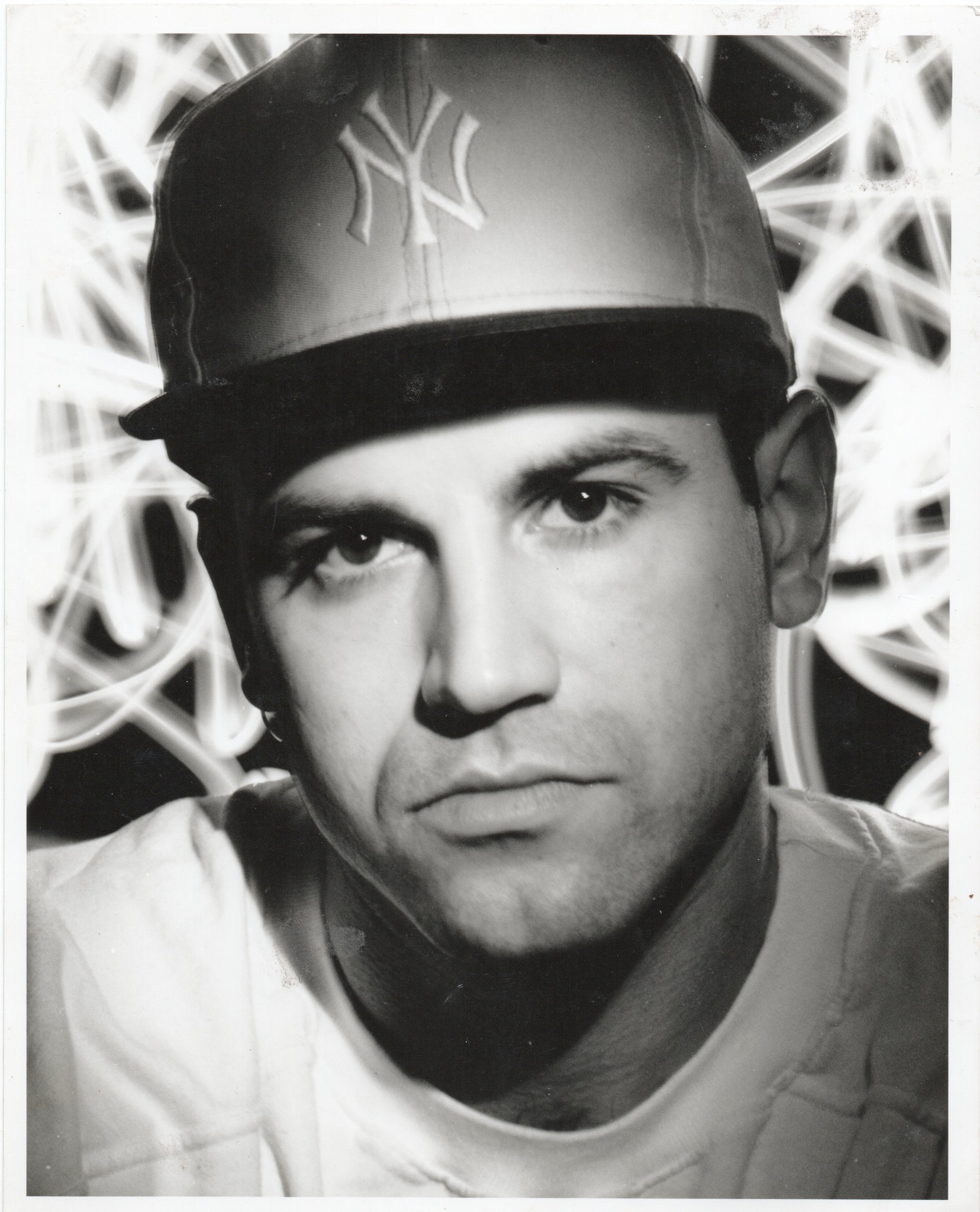
Jon DaSilva, Hacienda press shot, 1989
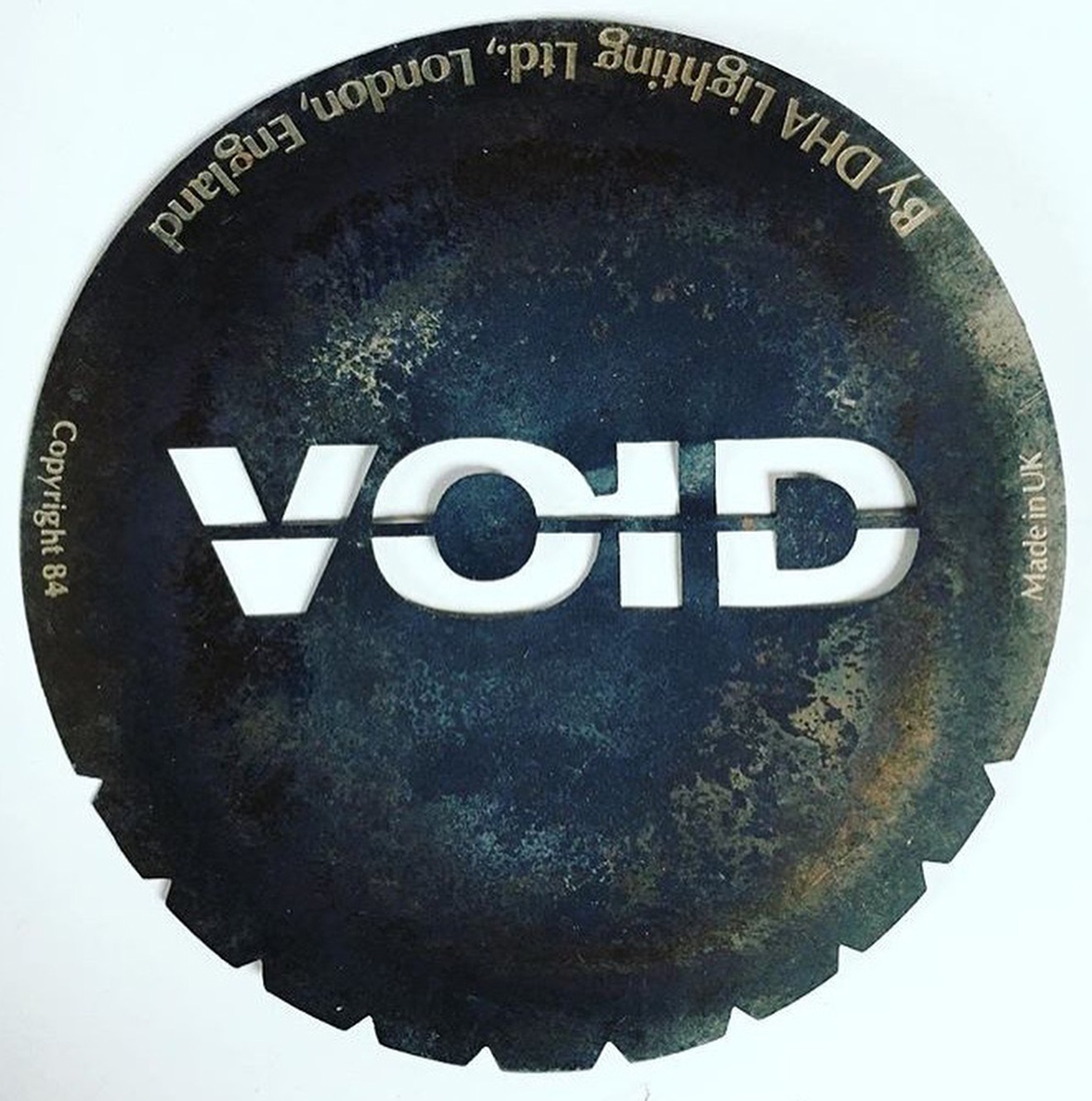
RM: (Re image above): A lighting gobo which beamed VOID around the club throughout the night. Years later, when I was playing there on Fridays, I’d hang out in the lighting box with Jonathan… Where I saw this gobo lying around, forgotten and forlorn, so I liberated it!

RM: Then obviously, there was the Chicago House thing that they did.
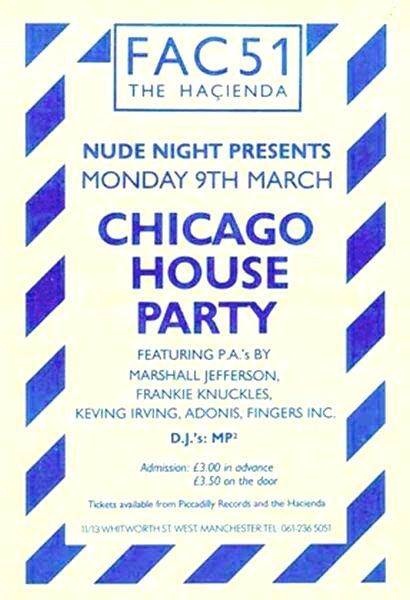
GW: Were you aware of the story of how House Music came to be played on the Friday’s at The Haçienda? A story about a kid from Moss Side going in with ‘Adonis’! I mean, both Mike Pickering and Martin, have said this…
RM: That may well be, maybe they’d already started DJing. Maybe they already had the night and they brought in that record. And then they thought, right, well, we need to go to the shop and start getting these kinds of records. Yeah.
GW: Was that the first time you came across Mike at that point, which was like ’86.
RM: Yeah.
GW: And were you selling House to him at the time?
RM: Yeah, he would have taken whatever new stuff was in. So it would have been a cross-section of House and Hip Hop. So it would have been a very broad spectrum of stuff at first, because there just wasn’t enough House Music.
GW: Of course. Yeah, it’s the same as what we were saying about the Electro times.
RM: Dean Johnson used to buy records from Spin Inn as well. He did the Saturday night at the Hac with… was it John Tracy? Is that right?
GW: Disco John, as he was known back in Sheffield.
RM: I used to go occcasionally on a Friday to The Haçienda in ’86/’87 as I was always working on Saturdays. I’d go more on Saturday night when Dean would drop Jazz, Latin, Motown, and a little bit of House; Just a smorgasbord of all sorts of music on the Saturday. That’s when they still had more of a fashion conscious crowd. But within that, what had come before, like in ’83, when The Haçienda was not trying to be a dance club, that kind of crowd. That was the Saturday night as I remember it. Then obviously, over time, Mike’s night picked up. It was obviously, Fingers Inc. and all those early House Records, ‘Jack your Body’, that came out in ‘86.
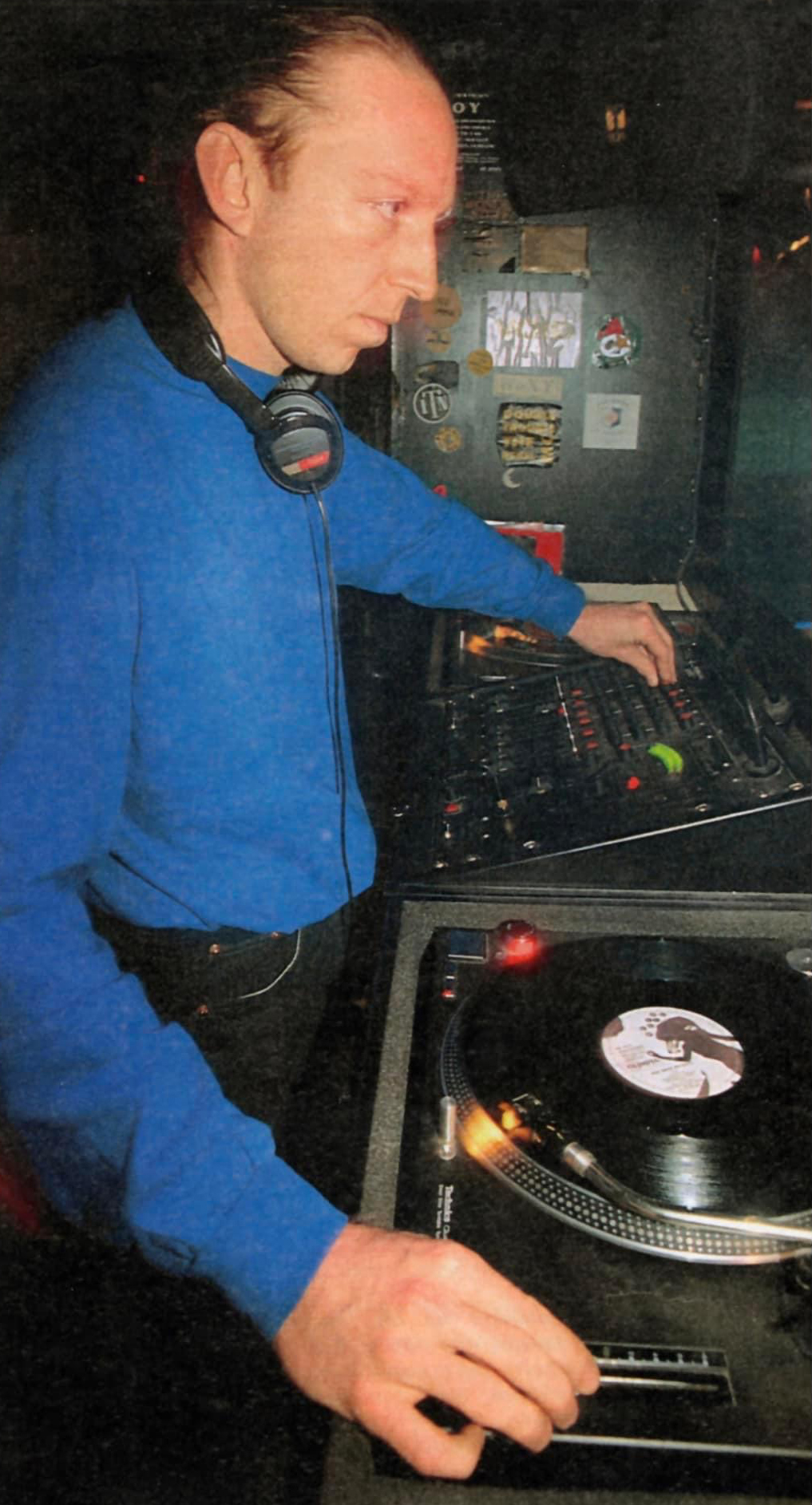 Mike Pickering in ’89/’90, playing Olimpia – ‘You Want My Love’ (Garage Mix)
RM: Talking about ‘Adonis’ though, I was quite new in the shop at that point, and was quite green behind the gills. The shop was on Cross Street, and we used to get a parcel coming straight from the American distributor out of New York, it would get flown to London. Then sent by Red Star, which was a freight train direct from London to Manchester, this would get into Manchester Piccadilly at about 9 a.m.. I was tasked with collection in a taxi to pick up the box. There’d be loads of people at the counter eagerly awaiting the arrival of this box. These boxes probably contained about 150 records. There would be things that had been reordered from the week before and general restocks plus new tiltes that the shop hadn’t had before. The rule was, every Saturday, everybody had to stand in the shop and wait until all the new things has been played, listened to and decied if they were going to be reordered… There was usually one to four copies of these. It was too risky ordering large quanities of records that you didn’t know, as they were initially ordered ‘blind’. So you’d get a couple and make a decision on whether you were going to stock it or not, then you’d reorder the week after and get 10, 20, 30 copies of whatever it was. Anyway, we open this box and there’s about 25 people in the shop, and it’s a really small, narrow shop. So it was packed! and we’re going through all these records one by one. Then this particular record comes on and everybody’s hands shot up in the air, waving around… “I want one!”, so I just dished them out to whoever and sold them. There might have been 5 copies, it wasn’t many. Later on, when everything had finished, I think it was Mike (Shaft) there, and they were like “Where’s that record gone?” I was like, “Errr, think I might have sold ’em”. It was Adonis ‘No Way Back’. I mean, I didn’t get a bollocking, but I felt like a div.
GW: I don’t think it was a Mike Shaft record as well. So you know…
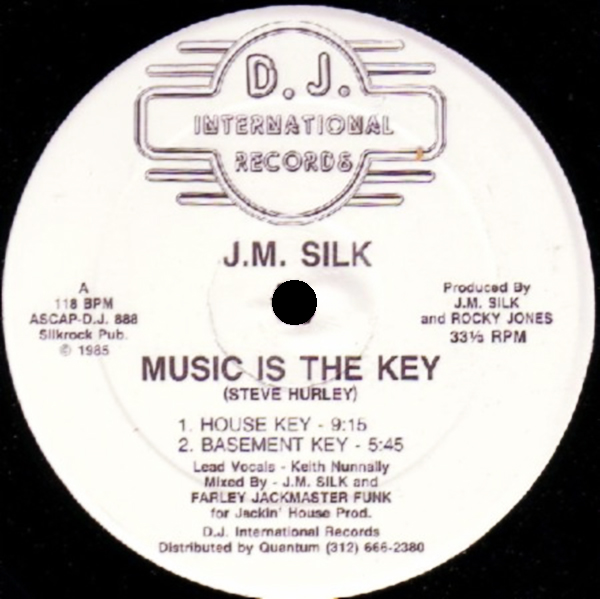
RM: No, he wasn’t a huge fan of House Music. He did play a few on his radio show. So I wanted to find out when the first House Music record was played over the airwaves in Manchester… when it went out on the radio, the first airing of an official ‘House’ record. Although, it wasn’t official at the time, because nobody called it House Music then. Anyway, It was J.M.Silk ‘Music is the Key’. I’ve still got all the tape recordings from Mike’s shows. I searched through them all until I found it. I checked the tracklistings that I’d written on the inlays, looking for the first House record and that’s it! Bingo! I listened to the tape and Mike just casually says “This is good…”.
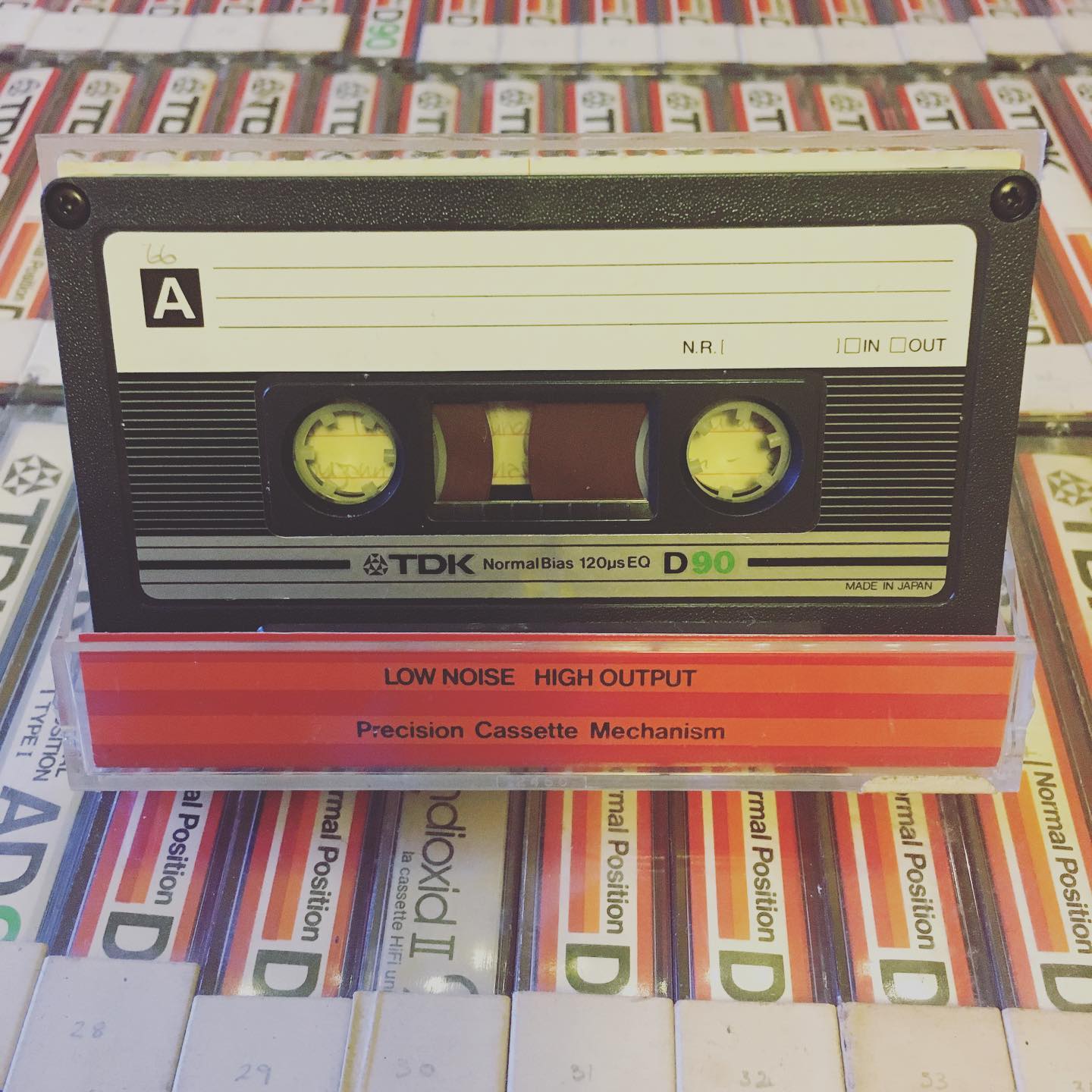
RM: (Re the image above): This tape provides an historically accurate timeline as proof of when Mike Shaft beamed the first Chicago House track across the airwaves over Manchester. It was October 1985 and it was JM Silk (Steve “Silk” Hurley and Keith Nunnally) ‘Music is the Key’. At the time it was just another record within the Soul / Funk genre. It wasn’t like this big epiphany, like this big revelation… “Oh my god!”, you know, it just was another record within the bunch of records that he’d got. It wasn’t a big deal. But, who knew what was to come?
RM: There were many other up-tempo records like this around at the time but they came out of New York. I guess they would have been called ‘Garage records’ there. As mentioned, tracks from Paul Simpson, Darryl Payne & Colonel Abrams had been moving black dance floors since ‘84, under the guise of Serious Intention, Subject, N.V. and Sinnamon etc. It’s wasn’t until ‘86, after Mike Shaft had left the station, that the Chicago House juggernaut gained momentum and ploughed right through Manchesters Soul scene. Mike was a Soul boy and although he played a few of those records on his show, I’d say he wasn’t a fan. He played more House stuff in the clubs because that got the better reaction. Colin Curtis (Colin Dimond) was the true trail blazer of the very early Manchester House scene, he embraced the music, saw how it worked and how it energised the crowd, so he delivered it to an eager dance floor.
 Colin Curtis at The Playpen
RM: Patrick Boothe from Broken Glass, was Mike Shaft’s warm up DJ at Legends on a Wednesday night, he was also an early purveyor of House, along with Hewan Clarke. After Mike’s last show on Piccadilly in January ‘86, an American guy called Leroy Brown took the helm. But for whatever reason, he didn’t last long, maybe Shaffy’s boots were too big to fill. That’s how it felt.
GW: There’s that now famous footage, that re-emerged from 1986 at the Moss-side community center, which is just fantastic! It’s Mike Shaft who’s playing at that point. The fact the YouTube clip is labelled Mastermind Roadshow, the fabled London crew who also appeared that night, is somewhat misleading, as it’s definitely Shafty DJing in the clip, the voice is unmistakeable!
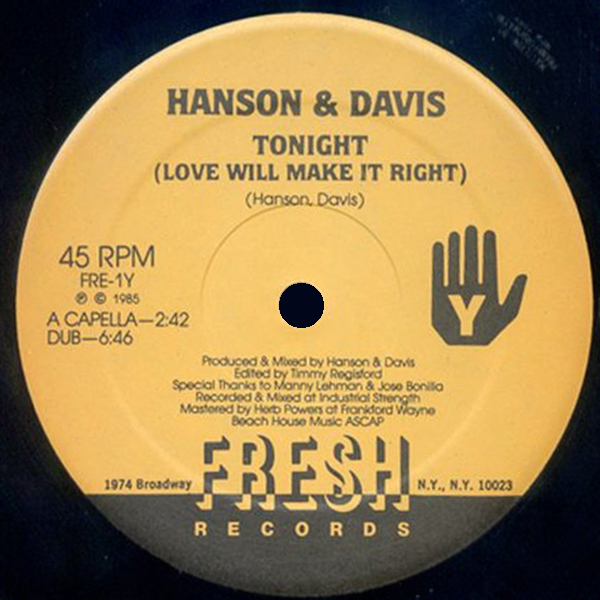
RM: I think he plays Hanson and Davies ‘Tonight (Love Will Make It Right)’, the dub version, which is a mega tune. But again, it’s a record that sounds like a House record, but came out of New York. It would probably now would be classed as Garage or Proto House. I guess that’s what they’d call it. But at the time, it was just this crazy-mad record with this mega bassline on it. And I think he’s mixing that with ‘Adonis’, and is flipping between the two. I didn’t know it was Mike DJing actually. I’ve just seen the footage, I didn’t realise he was on that.
GW: Yeah, yeah. I mean, that footage was remarkable! Because, up until that point, I had been arguing… Well, I mean, it wasn’t really arguing. I’d just been stating the fact that the black kids brought House Music into The Haçienda; people like Foot Patrol and people like A Guy Called Gerald, because he was a dancer back then. So, you know, they were the ones that had come out of places like The Playpen, The Gallery and Legend, and had brought this sound through. That’s what Mike Pickering and Martin Prendergast ran with at the time. Eventually, they hit the jackpot with that. Although Mike always says that his most precious time was before the Rave thing hit.
RM: Because it was not just the predominant way, it wasn’t just House.
GW: Exactly, because he was still playing Latin and there was a jazzy tinge in there too. He was playing the big, soulful, Street Soul vibes, and all the Mantronix stuff, so it was all-together. Then that all kind of changed with ecstasy. It’s like it all went one way, and that took the black crowd out of the club. I think one of the reasons why people disconnected was… Most people didn’t realize that the black scene in Manchester had much to do with House, initially. Because when they first went to The Haçienda – when it had blown up, it was predominantly white kids, everyone was packed in together, like sardines, doing big box – little box. That wasn’t the way the black kids danced to that music. So you know yourself, the black kids would have seen that their dancing space had been invaded, so they moved on and went elsewhere. That’s where Konspiracy came into play.
RM: Yeah, I don’t think they were massively into the ecstacy scene either, to be honest.
GW: Exactly. It was all strictly herbal, there was that kind of vibe about at the time. So it did split that scene up there, we could then see a separation; going more into a contemporary history of dance culture. But in terms of pre-rave, and what was happening, we’re talking about a cusp period of ’86 to ’88. Last year I did a great interview with Martin Prendergast, it was good because of the insight that he brought to it, from his angle. He did a fantastic record list of what was being played during that time. It fills in those gaps, because I think for a long time, the documentation of The Haçienda only went from 1988 onwards, it was like nothing happened before then. When I was there in ’83, it struggled. It really struggled. I think Chad was there for a little while, when it was still trying to find its feet. But when it did start to click, initially with the Friday and the Saturday that you’re talking about… I mean, they had it open seven nights a week, which was ridiculous!
RM: Yeah.
GW: Eventually, because they were pumping Joy Division/New Order’s money in to keep it all going… But the crazy dream, as it works out, becomes this global institution, so now most people know there was this fabled club called The Haçienda… I say that, but we’re moving into a time now where there’s a younger generation who don’t know about the Haçienda. I’ve had a few conversations lately with people and said, “The Haçienda”, and they say “Oh where’s that?” as I say “The Haçienda?” and they say, “No…”. So this history, I suppose, it’s very delicate. It is undocumented in lots of ways. Yet for me, it was the most crucial time, because it was such a catalyst, and a hybrid period. So many ideas were going around, it was so raw in lots of ways. It was the start of black kids starting to DJ as well. You know, that hadn’t really happened before, apart from Mike Shaft in Manchester and Les Spaine in Liverpool and a few people in London; Greg Edwards, Owen Washington and Trouble Anderson. But, come the early ’80s and then into the ’90s, you’ve got a whole different landscape, in terms of what people can do.
GW: So being at Spin Inn during that time… Obviously, Stu Allan is one of the main people in the story at that particular moment. He was crucial to it all, and again I’ve seen him being completely written out of the histories. I’ve seen him not mentioned in books. For me, you can’t tell the Manchester story without him.
RM: Yeah. So with Stu… Obviously, it was me and Ken (Grogan) that worked at Spin Inn. We were the young pups. Ken was a couple of years older than me. He’d started there about a year before me. So Ken was a Greg Wilson boy and I was a Chad Jackson boy [laughs]. He had that on me. So when Mike Shaft announced he was leaving, I think Leroy Brown took over for a few weeks.
GW: That’s right, yes.
RM: As mentioned, he didn’t gel. I don’t know if he didn’t like it, or they didn’t like him. I don’t know what the story was. But he didn’t do it for very long. If my memory serves me correctly, Stu was the engineer in the studio and they didn’t have somebody to fill the slot, so that’s how Stu got started.
GW: He used to work around the station, go in at night and help out.
RM: It wasn’t like he applied for it. I think it was just a fluke that he got it.
GW: Yeah, it was, absolutely. I never knew Stu at the time. I was away from things by the time all that was happening. But years later, I saw an interview he did where he cited me as an influence. And I was like okay, and I realized that he went to Legend. He was one of the white kids that did come along to Legend. So I interviewed Stu and it was a fascinating interview, and it’s so important now that he’s not with us anymore. Because it’s about his background in Anglesey and how he came to Manchester, how when he worked in a bar and was taken to Legend one Wednesday night by some black kids who came to the bar. Stu thought nothing happens on a Wednesday. But that night he walked into Legend and it was an epiphany for him! Then he heard Mike Shaft on the radio, playing things like Sinnamon ‘Thanks to You’ and similar records. So he came into it as someone who’d grown up in Anglesey, moved to Manchester, then all of a sudden, had gravitated to this music, through being open-minded, going along to something, and trying something out. Then Stu set his sights on Piccadilly Radio. I think, initially, he was just in there at night, doing anything he could, helping out. Then eventually he might have got some kind of role there. So he was in the right place at the right time and took over the show, so another slice of Manchester history was about so form. Shafty did an amazing job with that show. But then Stu came along and properly opened up Hip Hop and House Music over the airwaves.

RM: A big part that’s missing from Stu Allan’s story is actually Ken who worked at Spin Inn. Ken compiled all those charts for Stu’s show. It wasn’t Stu who did them. Ken was like Stu’s director if you like, for want of a better word. Stu wasn’t very confident about it at first. I think he felt a bit overwhelmed perhaps…
GW: I think he probably felt he was out of his depth.
RM: I think he did think he was out of his depth. He was like a rabbit in the headlights, but he took it on. So he looked to Ken for advice, you know, what to play and all. Ken really took that on and it was… you know, when you go in a radio studio and you have someone presenting, then someone in the background that’s the producer of the show. That was Ken really.
GW: So Ken was like, a kind of mentor figure to Stu?
RM: Yeah, but that’s not really well known. I did Stu’s charts occasionally, but only if Kenny wasnt around. Ken and Stu just got on really well.
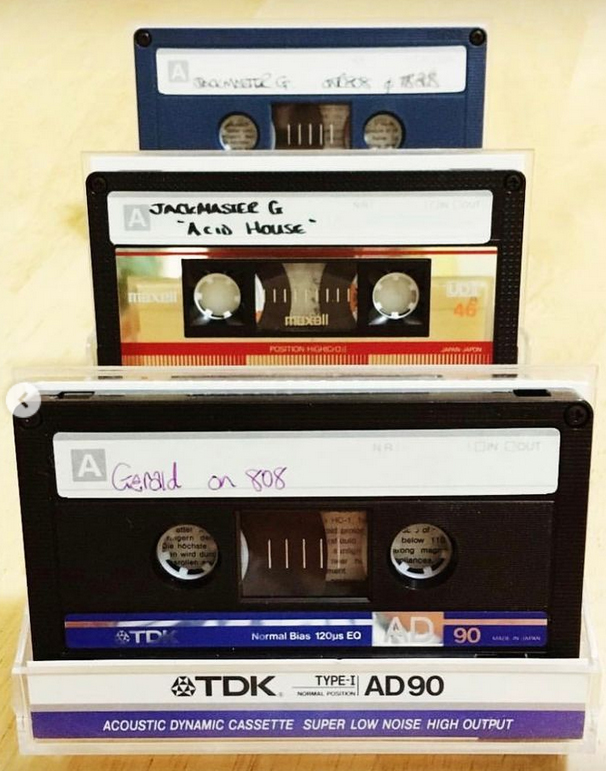
RM: (Re the image above): Three demo cassettes from Gerald Simpson aka A Guy Called Gerald. Gerald gave me these tapes when I worked at Spin Inn as he valued our opinion on his jams. As far as my memory serves me, these tapes pre-date Voodoo Ray, when he went under the moniker of Jackmaster G. These are ruff and rugged 808 & 303 House and Hip Hop workouts. They may possibly be the only copies in existence from this early period of Gerald’s career. Some time later, he dropped off ‘Voodoo Ray’ on a cassette, we flipped out! Gave it to Stu Allan, insisting that he played it on the weekly show (sponsored by Spin Inn) and the rest is history.
GW: So just to fill me in, with Spin Inn, you were on Cross street orginially? When did it move and where did it move to?
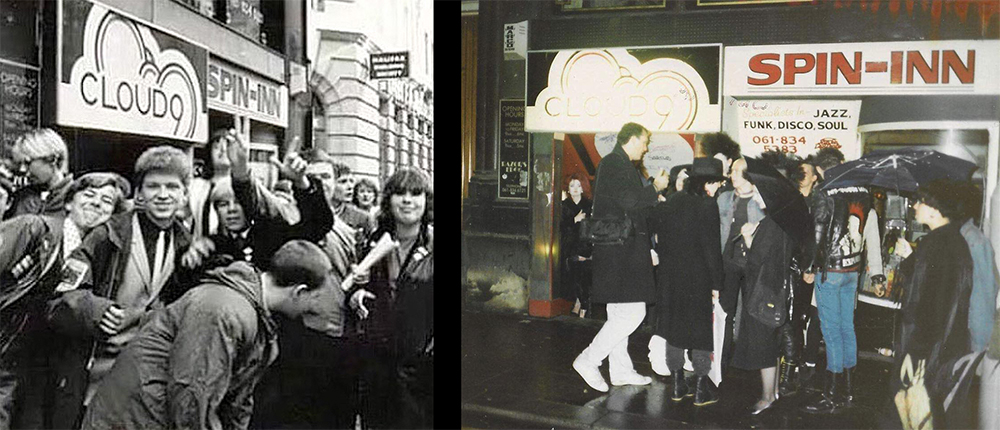 Spin Inn on Cross Street
RM: Yeah, it was on Cross Street. I started in ’86 and then it went to the underground market. So where Boots is on Cross Street is, if you go up the side street and around the back, there’s a car park entrance and the second Spin Inn was there.
GW: That’s right, I remember that site, because I was managing the Ruthless Rap Assassins at the time and there was a window display at one point.
RM: That’s right. Yeah. So that’s where it went to. That would have been maybe ’88?
GW: It would have been ’90, surely?
RM: No, no, Spin Inn moved about ’88, then we left and opened Manchester Underground in about 1990.
GW: So where did Spin Inn move to?
RM: Spin Inn went from Cross Street to the underground market, but then that got closed because they were going to turn it into whatever.
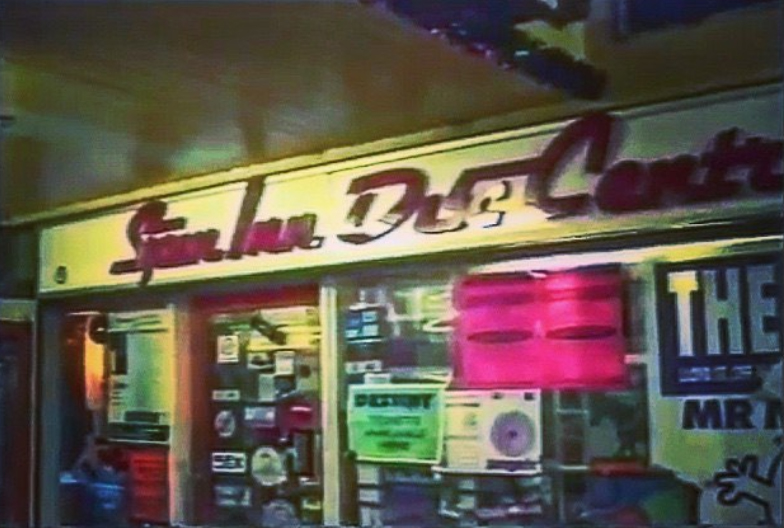 Spin Inn, at The Manchester’s Underground Market
RM: That was when my involvement with Spin Inn ended. But it went on to where Fopp is now on Brown Street. Piccadilly Records was on Brown Street for a while, then Spin Inn was on that street as well. Then from there, it moved to the Northern Quarter, opposite Afflecks Palace. I think Spin Inn ceased to exist after that. But from the ’90s, it was more of a Hardcore Rave shop. I guess, they sold some other stuff as well.
GW: Was Gary Lane still running it at the time?
RM: He would have been Yeah. He was a ruthless son of a gun [laughs].
GW: But you know, he was a guy who obviously… by opening up those channels in Manchester…
RM: Oh, without him and what he did there, there wouldn’t have been a black music shop like that in Manchester.
GW: They didn’t have something to the level of Spin Inn in other cities. I always felt that, apart from in London, of course. There were probably a few places here and there. For example, Liverpool, they had stores that sold imports, but imports that they were buying from Spin Inn. So they would probably get them a month after Spin Inn first had them.
RM: Yeah, surely places like… the shop in Sheffield.
GW: By the point that you get to your period, in the mid ’80s. I think a lot of people were waking up to dance culture. You had Morgan Khan’s albums; the Electro series, and the Street Sounds albums that sold massively. So I think you’re in a place where there’s money in dance music, and so more shops were starting to emerge at that point. But when I was about, in the early 80s, if I didn’t shop at Spin Inn, I’d go to London, generally to City Sounds, because they were more into the Electro side. Groove, I didn’t really like the vibe in there, I felt that they were a bit… they kind of thought that they knew best, if you see what I mean? I remember when I went in there once and the guy behind the counter pulled out a copy of ‘In and Out’ by Willie Hutch and I said, “No, you’re alright” – because I’d already bought it from Spin Inn. So I continued to buy my records and thought nothing of it, then Blues and Soul printed – in this kind of gossipy column – that I’d turned down Willie Hutch ‘In and Out’. So I thought, that’s not something to end up in a magazine, you know, so I did’nt go in there again. Also, they were just so off-key with that. They didn’t properly realise what was going on in the North at that time, when I think we were really ahead of the curve.
RM: Well this is the thing. Now you can find out anything that’s happened on the other side of the world in 30 seconds. Whereas back then, even with early clubbing as well, the flyer distribution, with all of that promotion, they didn’t get out of the region. So no, all these different towns didn’t really know that much about what was going on elsewhere, especially when you’re traveling the breadth of the country. No one knew what was going on up North. Similarly, no one really knew what was going on down South that much.
GW: But that did change in those times. I think that was the kind of start of people like Norman Jay coming up to Wigan and Derek Boland. I remember Derek B coming to Wigan Pier. There was a lot of clued-in people there, who did come up and check out the North, and I think that was to their benefit. Because I was always going down South, I knew what was going on there. I was seeing the clubs and I always thought we had an advantage in that way, because we knew what was happening there, but they didn’t necessarily know what was happening up here. It was very controlled in the early ’80s there. There was a group of DJs, the Funk Mafia guys; Chris Hill, Froggy, Greg Edwards, Robbie Vincent, Jeff Young and Pete Tong. They were a powerhouse and they had all the power in London, and in the UK media, and in the records shops. They were anti-Electro. So as a whole unit, they went against Electro and that stifled its growth in London. Whereas, at that same moment, it was flying through the roof in the North! It was going off the scale and becoming the predominant music. They’d got stuck in a hole, at the kind of more soulful, Jazz-Funk side of things. But like you said before, about Soul music in the mid ’80s, it was getting tired.
RM: By ’84 or ’85, It was okay, because you had things like Mary Jane Girls and Dennis Edwards, they were big tunes. But then by ’86 or ’87 it just got really soppy. It lost its edges. It’s appeal for dance floors if you want. I mean, I’ve actually got something you might find of interest, in some fashion. I don’t know how you’d want to look at them. But it was called ‘the book’ at Spin Inn, where every American record that arrived got written in on the day it came in. So every Saturday, whatever day the box turned up, every new release, was entered and dated. They’re all in there. I’ve got them from ’87 till ’96.
GW: That’s incredible!
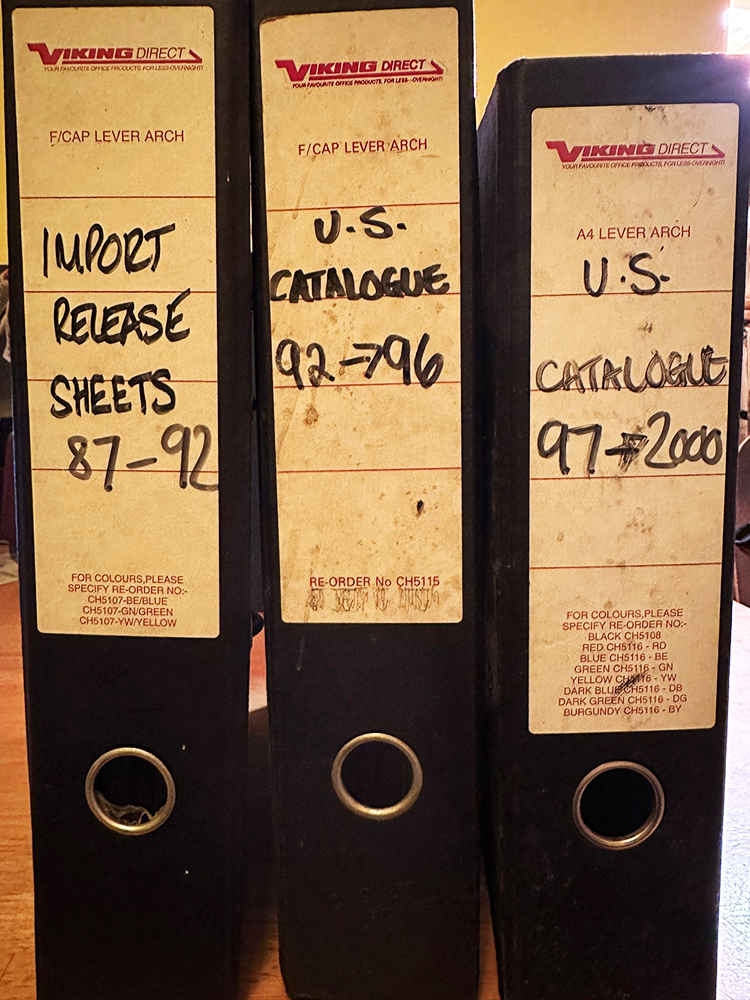
RM: Unfortunately, I don’t have the most crucial one, which would be ’87, backwards – maybe to ’83. I don’t have that book. I don’t even know where it is. So I’ve got a very concise record of what records came through, by date, from the beginning of 1987.
GW: That’s amazing!
RM: If that’s of interest to you in any way? I don’t know if it is.
GW: Well that’s definitely something that will be of interest to someone. It’s definitely something you should document in some way, because it’s such a thing!
Vinyl stock lists taken from ‘The Book’ at Spin Inn, ’89 to ’96 – In no particular order
GW: Can you remember when Stu was on the TV? On BPM, because on that he’s actually filmed in Spin Inn?
RM: I don’t think I’ve seen that clip.
GW: I only saw it recently. He walks into a record shop. He’s kind of got all these tracks bagged up for him. He’s commenting at the time.
RM: Do you know what, actually I think I might have seen the clip. That’s from, I think, the 90s. When he went back to the old Spin Inn after he decided he didn’t want to pay for records off us at Manchester Underground [laughs]. We were financially fucked after Harry passed away, so giving Stu 20-30 new imports for free every week wasn’t something we could afford at that time. We said he would have to pay cost for them. Next week, he never turned up. He just never came back in. After looking after him for 4 years solid. Not cool! Thats when he went to Spin Inn and became a Harcore DJ, because that’s what Spin Inn sold then.
GW: There’s also that photo from the shop, where Hewan’s being served.

RM: Yeah, that’s Spin Inn, in the underground market. I’m actually in that photo but all you can see is one of my arms. So you’ve got the back of Stu Allan’s head, Mike Carlon is at the counter. Ken’s holding the record up, showing it to Hewan Clarke. I’m stood behind Mike who’s completely blocked me out, but you can see one of my arms poking through – I’m doing something, I don’t know what it is, but the only evidence that I actually worked in Spin Inn is my arm there! [laughs]. Along the top wall is graffiti artwork that kids brought in to display. Getting your piece on Spin Inn’s wall was the highest accolade achievable back then. Some of those artist are now major heads in Manchester’s graffiti history.
GW: I’d love to speak to Kenny Grogan. Also Kev Edwards who, along with Harry Taylor, I had the most dealings with when I was buying from Spin Inn. I will approach him at some point, it would be good, because, even though we did clash, I’ve got a lot of respect for what he did.
 Kev Edwards, Mike Shaft & Greg Wilson
GW: Later down the line, when we met up, Kev said he’d got it wrong with Electro. Because obviously, when House came along, he was full-on into it. My attitude then was a little bit, “Okay, you know, you weren’t into the Funk based electronic music. But if it’s a straightforward four on the floor, and it’s electronic, it’s fine?”. But I think it just takes some people a little bit of time to loosen up to the way that things have changed.
RM: Yeah Well people don’t like change, do they? Something alien comes along and if you’re all Soul boys, then this new music comes in and you’re like “I don’t like that” but all the kids are going “Yeah!”, there’s always going to be resistance. It’s like “We know best”. But the kids know best. Kids know what’s going on! [laughs]
GW: Definitely.
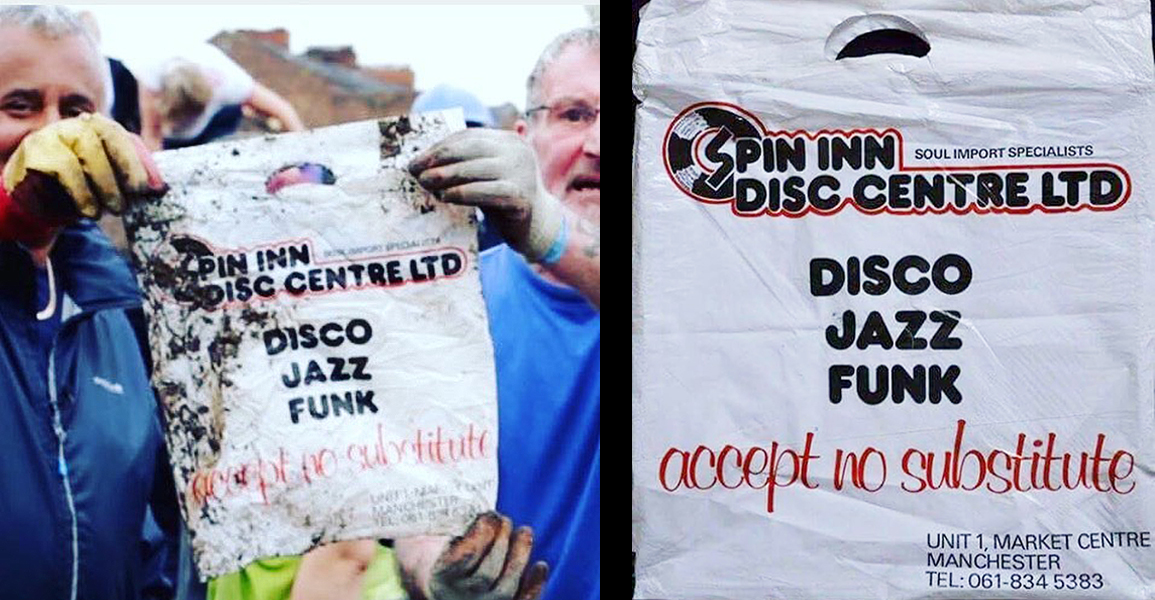 Spin Inn carrier bag, circa 1986. Unrearthed at the site of the Reno club excavation, 2017
RM: Walking around Manchester with a Spin Inn bag was like being bestowed with a badge of honour of the highest prestige.
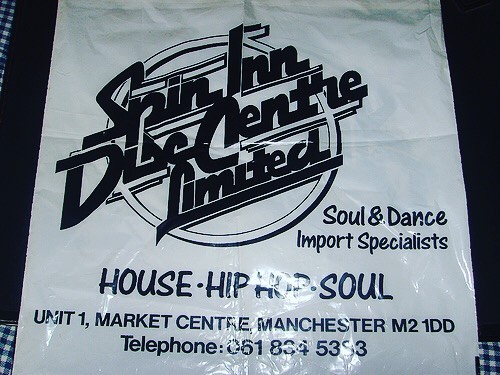 Spin Inn carrier bag, circa 1988. Now saying ‘House + Hip Hop’
GW: Somewhere like Spin Inn was also culturally important, because the records that were coming out of that shop were changing people’s tastes. They were making an impression, certainly within the ignition of, and eventually with the explosion of a scene.
RM: I have this thing about record shops, not just Spin Inn… I’m talking about all record shops like Spin Inn at that time, where they don’t get enough recognition, more the staff in those shops don’t get the recognition that they deserve. The DJs who play the records get all the fanfare for playing the records, but it was the guys in the shops that decided what records they would sell in the shop in the first place.
GW: Exactly!
RM: So it’s like, we had to say, “They’re shit. They’re good. That’s the pile of good ones. You pick the ones out of there”. So it was the shops that decided what was available. The staff in the shops were the initial tastemakers, not the DJs.
GW: Yeah.
RM: You know, to a point. I don’t think record shop staff really get acknowledged enough. Unless the staff in the shops were DJs as well. But not all the time they were [laughs].
GW: I’ve always cited Harry with ‘Dirty Talk’ by Klein MBO. My first point of contact for that record was with him. He sold it to me on an Italian label, so that was early doors. No-one had that record, apart from a few guys on the gay scene, because it was a European track. But he’d heard what I was buying and the music I was into, so he thought that might work. Within 2 weeks, Russ, that was the biggest track on the scene. It was massive! It worked at Legend and just became this whole thing. Later down the line, Hewan played it in The Haçienda and New Order heard it and it became a template for ‘Blue Monday’, so there’s a history there, dating back. But it’s Harry there in that first instance. I know if it was Kev, I wouldn’t have even seen that record. But Harry was looking after my interests. He’d pull out a few things that fitted in; the defining one was ‘Dirty Talk’. That was the one that became a classic. It was even being played at The Haçienda in the Rave era.
RM: Yeah, of course.
GW: Tell me about Manchester Underground.
RM: Harry, Ken and I left Spin Inn and the three of us opened Manchester Underground. The original shop was in the basement of the Corn Exchange / Triangle, on Fennel Street. Underground was the go-to shop for all the U.S. House and Garage stuff, where as Eastern Bloc catered more for the Techno clientel, there was overlap in both camps though. Underground serviced all the Hacienda DJs: Mike Pickering, Graeme Park, Tom Wainwright, Kath McDermott, Tim Lennox, Paulette… they all bought records from us. Mike and Graeme were top of the pecking order by this time. They got first dibs and everything new was bagged up weekly. In the end Mike trusted my judgement that much, I actually marked which mixes to play on the records he bought. The shop was doing really well overall.
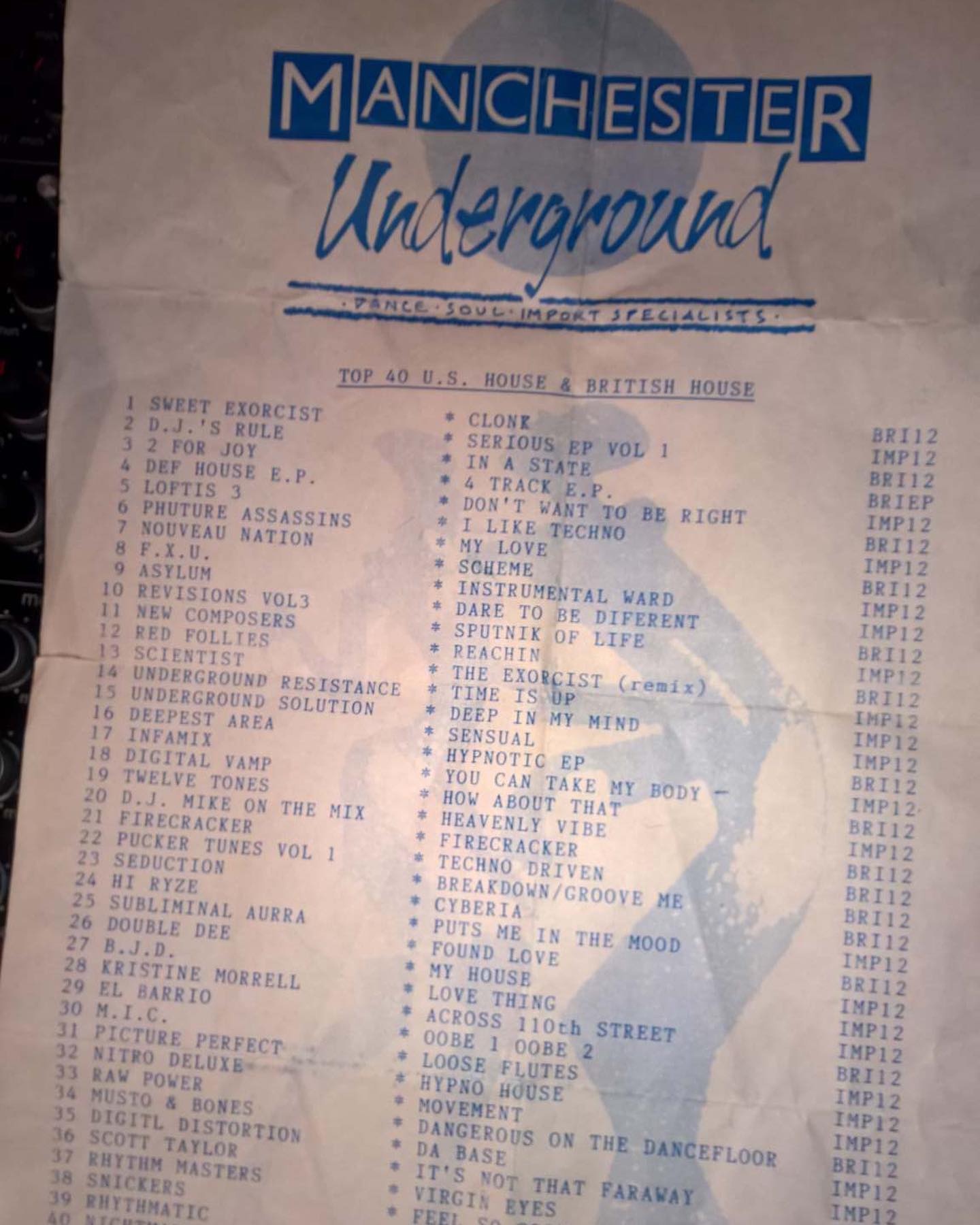 Manchester Underground stock list, the format taken from the legendary Spin Inn lists
RM: Sadly, Harry died from AIDS and during his illness had brought the shop to its knees, spending shop finances on extravagant, personal things that had nothing to do with the business. Ken and I took over the helm, and with about 400 quid each, to buy stock with, we traded ourselves back into a position where we weren’t going to lose the shop. We dug deep and managed to trade out of the mess – until the IRA bomb messed it all up again.
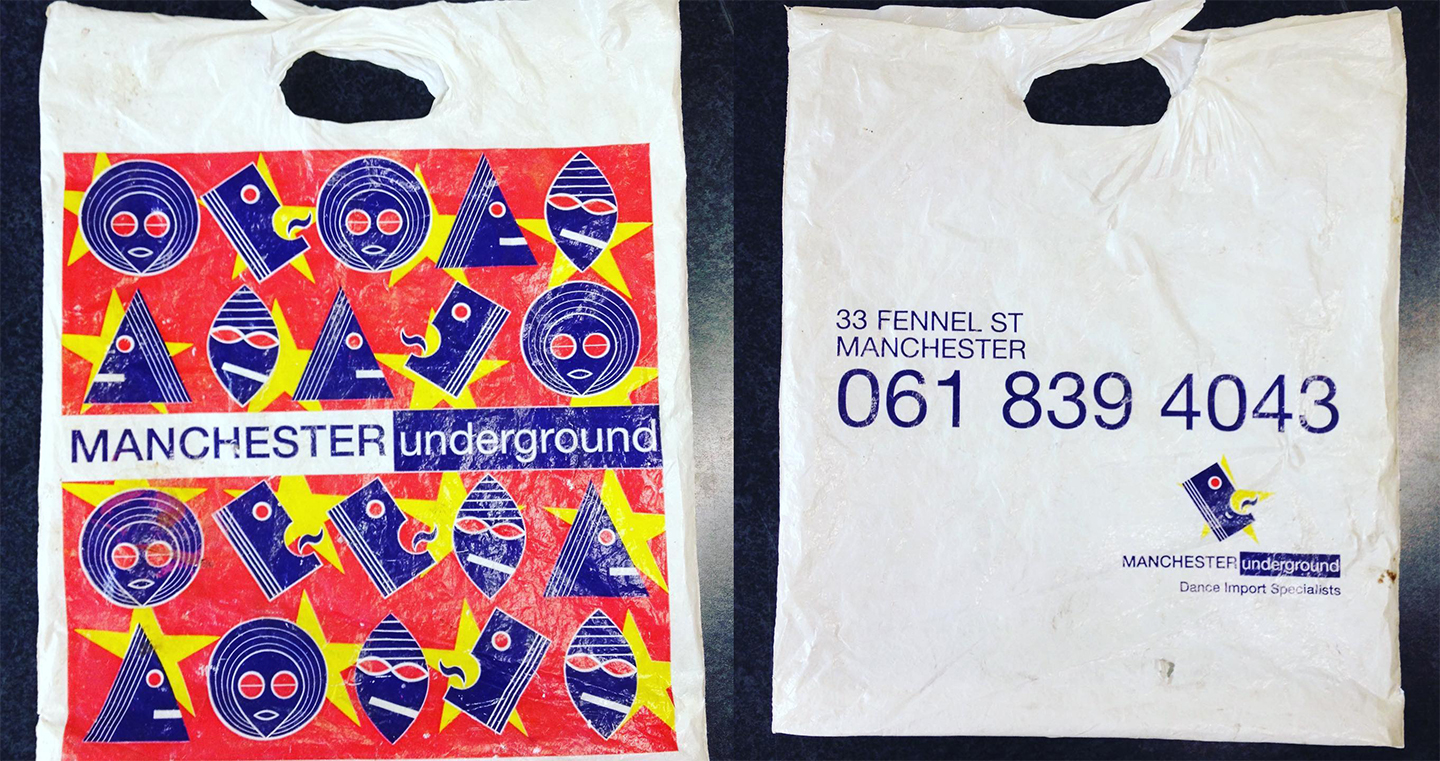
RM: (Re the image above): Rebrand of original Manchester Underground carrier bags that Ken Grogan and myself decided on, after Harry had passed away.
RM: In ’96, the IRA bomb closed the original shop for good. When that happened I was DJing on tour with M People at Alton Towers when news came through that a bomb had gone off in Manchester. It was the last gig of the tour, so I don’t think anyone there grasped the gravity of what had happened and we carried on in party mode and thought I’ll worry about that tomorrow.

Manchester bombing devastation. June 1996
RM: On getting home I drove into town to try and get in the shop. The whole city centre was cordoned off and I couldn’t get anywhere near. Seeing the devastation brought home the seriousness of the event. I phoned Ken, he didn’t answer and I’ve never spoken to him since. Basically, Ken went AWOL and left me to deal with everything. There’s more to this story but I’d rather just leave it at that. So, a week later I was given an hour window to get into the shop and get what I could out. It was eerie walking into the shop. All the lights were on, the turntables were dutifully turning around, there were half eaten bacon sandwiches and cold mugs of tea on the counter. I took whatever I could, but in my haste didn’t think to take my large collection of original Haçienda posters that were up on the walls in the back of the shop.
I opened a secret little shop which was a room in Ducie House and traded from there for over a year. This was to ensure we got a full payment from the insurance. If we hadn’t carried on trading it would have affected the amount they would have given us. They tried their hardest not to payout too.
Then the shop in the Colosseum lasted a couple of years maybe, but we couldn’t pull back from what we’d lost and trade out of the debt from the original shop. Manchester Underground ceased to exist in 2000.
 Craig Edwards & Russ at Manchester Underground in the Colosseum
(Craig worked at Manchester Underground from ’93 until its closure. & was warm-up DJ at Out In The Sticks ’94-2002)
GW: Tell me about the M People tours, how did that come about?
RM: I was honoured to be asked by Mike Pickering to be M-People’s tour DJ. From their humble beginnings of being an underground club sensation, through their rise to pop super band, I played on 5 U.K. and Europe tours from the mid to late 90’s. The gigs started in smaller venues, 1000+ with a loyal E’d up club crowd and ended up at 15,000 capacity arenas. I warmed up for the band at Wembley Arena, Glasgow & Birmingham NEC, plus gigs in Sweden, Germany, Denmark, Belgium, Holland, Switzerland, Italy, France & Ireland. The earlier smaller gigs were better as the crowd was proper up for it. By the time the band came on, I’d have the crowd completely bouncing!
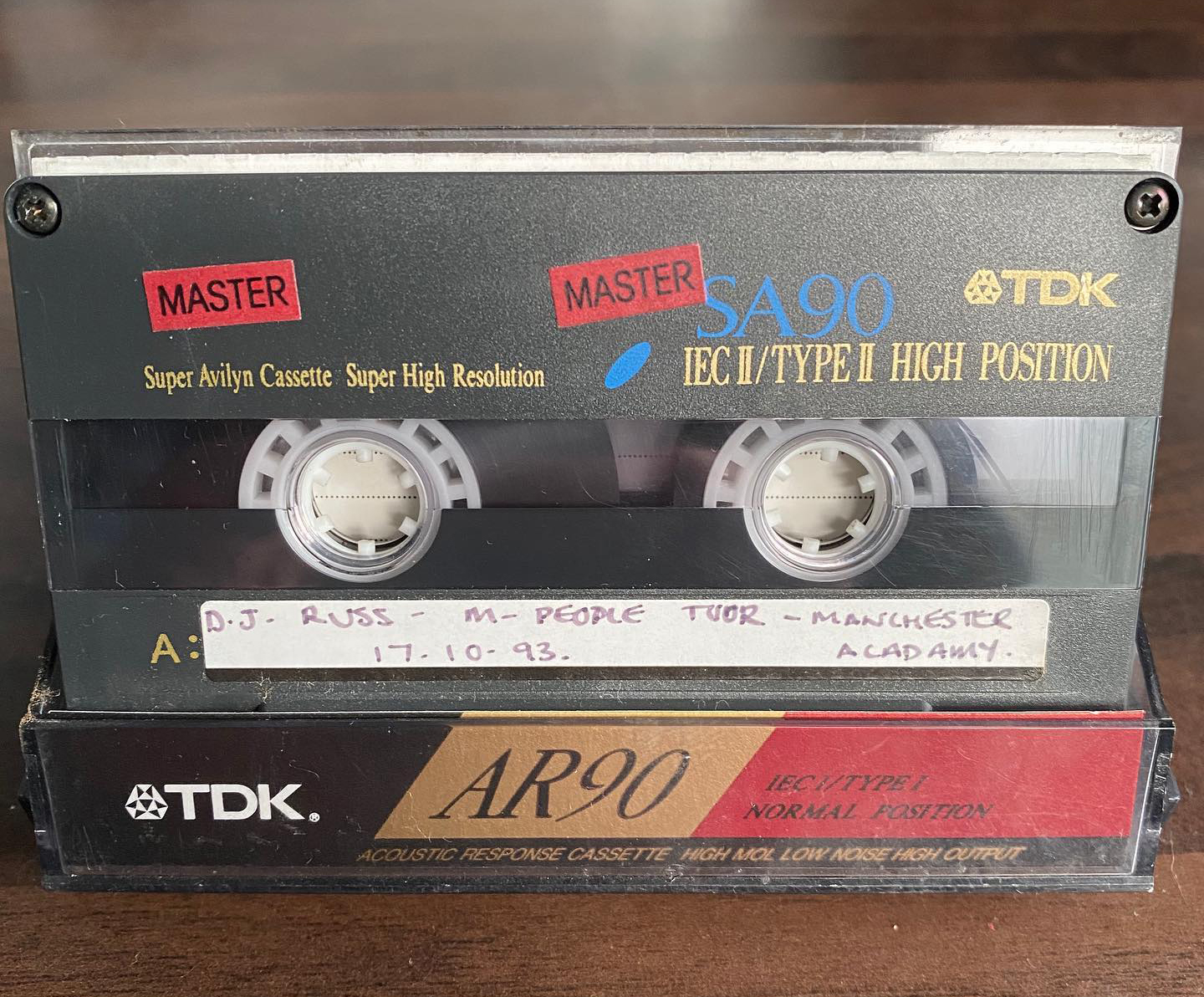
GW: When was it you DJd at The Haçienda?
RM: I did ’91-’94, warming up for Mike Pickering.
GW: Where was Graeme Park at that point?
RM: He was doing the Fridays.
GW: Okay did they split that off?
RM: Yeah, they did it together for a bit, then Graeme got the Saturday and Mike did the Friday, which was his flagship night. So I warmed up for Mike, and Tom Wainwright warmed up for Graeme. They all bought their records from me. I sold them all the records [Laughs].
GW: So we are part of the same lineage in that respect, because I did the Fridays in 1983. That was the start of it; Trying to do a dance night, then Mike took it on himself, and Martin came in, then Graeme came in, with yourself. So yeah, you know, that Friday night, a lot of people run through that night, I suppose.
RM: Yeah, the best night, Friday. A bit more edgy. Not as touristy.
GW: Exactly, it was always the night, the Friday.
RM: Another track to mention is T.C. 1991 ‘Berry’. Owning Mcr Underground records had its perks… I got first dibs on everything. This promo came in on a Friday and I swiftly claimed it to play that night at Haçienda. Warming up for Mr Pickering was an honour. I dropped this toward the end of my set, where upon Mike swiftly claimed it from then on. It was the first time it was played in the Hac and the only time I got to play it in there.
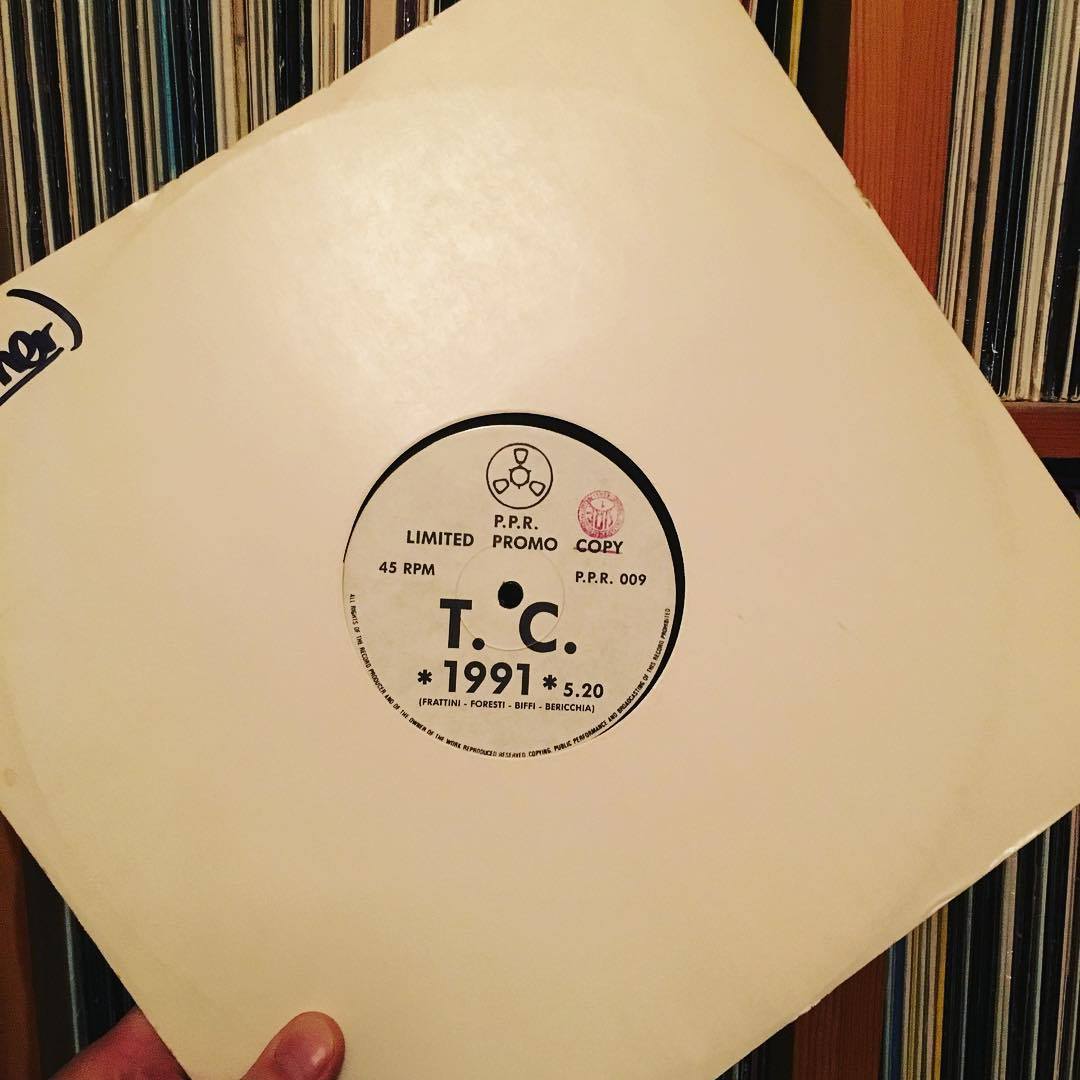
RM: It was a privilege to have been able to play records at the Hacienda and warm up for some of House Music’s luminaries; Frankie Knuckles, Tony Humphries and Lil’ Louis, to name a few. Never in my wildest dreams did I imagine I’d end up warming up every Friday for Mike Pickering, as I stomped around the back of the stage off my nut. I used to say to friends, I’d love to play one record from up there, pointing at the DJ box on the balcony… When Mike came into Manchester Underground for his weekly fix of new records and asked me to be his wing man for the Friday ‘Shine’ night in ‘91, when the club reopened after a short closure due to trouble, I readily accepted and was completely gobsmacked and elated at the same time. I remember the first night waiting in the house to set off, anxiously pacing around the house… this was a big deal and I was shitting myself!
RM: I left The Haçienda in ’94, probably 6 months after Mike had left. I started my own night ‘Out In The Sticks’ in Todmorden, which ran weekly for 9 years. I was promoter and resident DJ.
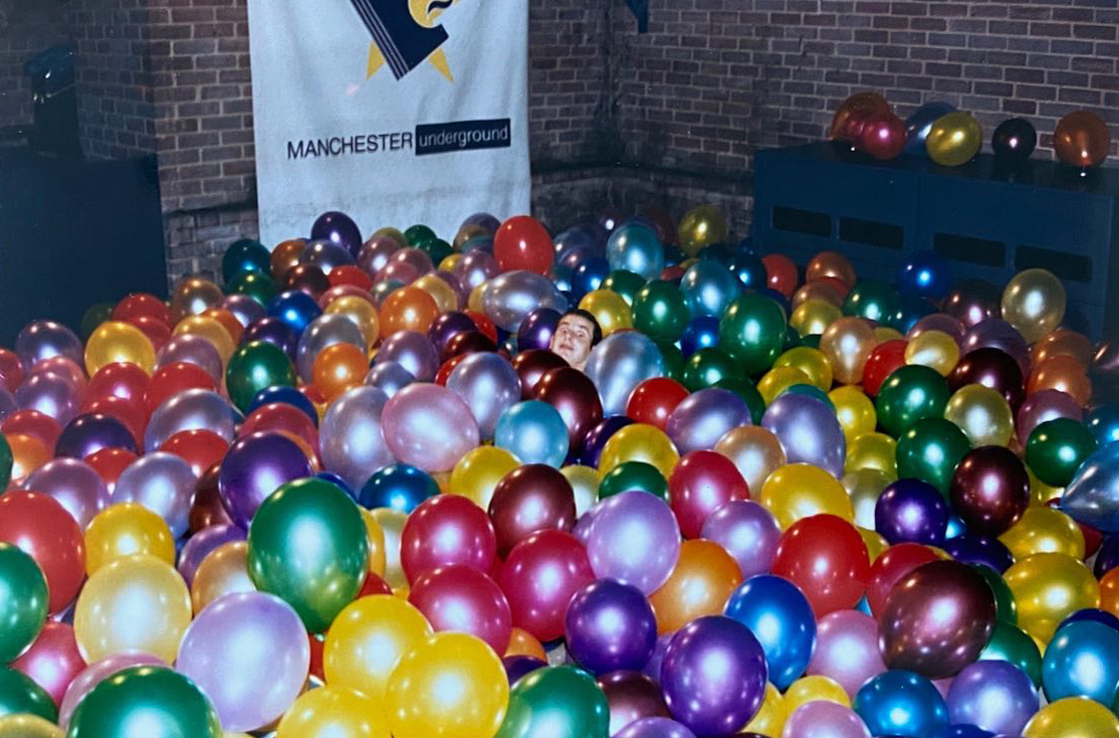
RM: We had the 30th birthday recently. I normally put on about 4 Out In The Sticks events a year now at the Golden Lion. They’re kind of like reunions, with the old guard – original punters plus the second generation Sticksers who come out and party with their parents.
RM: I also run a night called Sonic Tonic, which you’ll be playing at end of October.
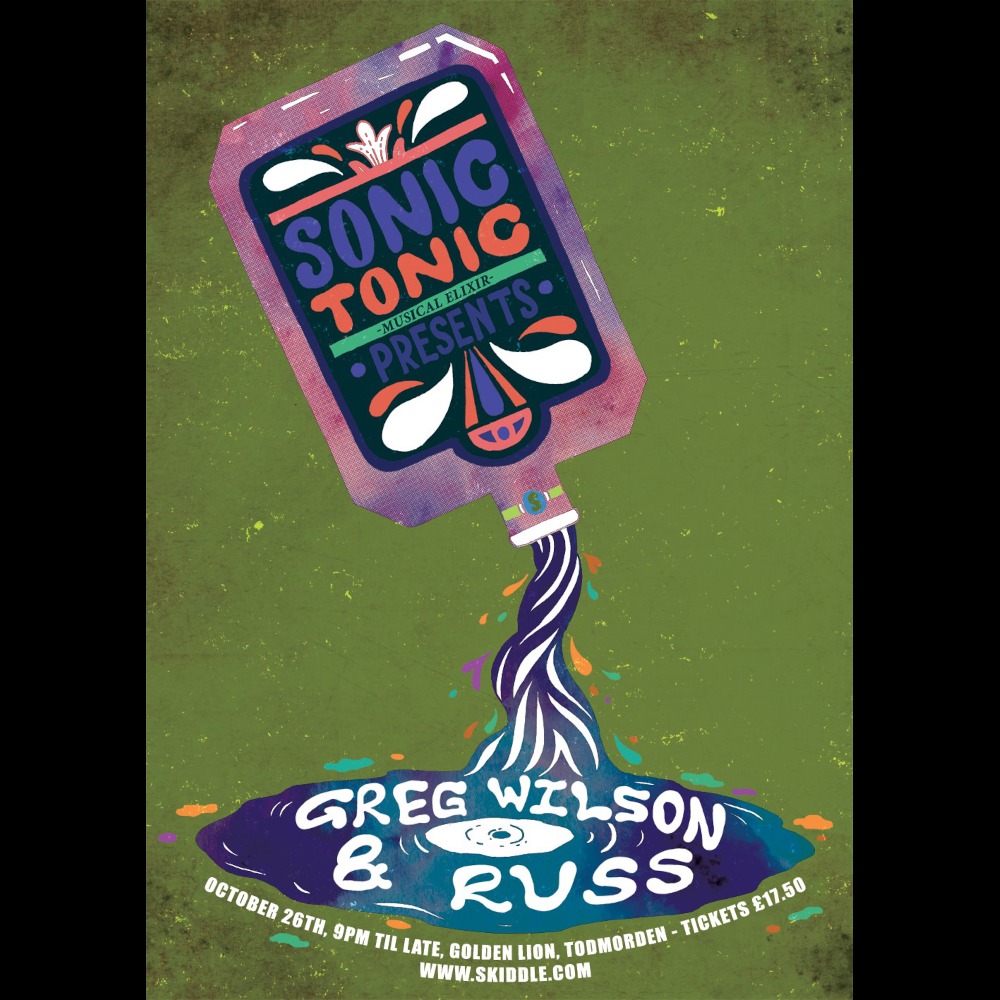
RM: I love the Golden Lion. Everything about it is special. It’s managed to assert itself as a main player on the DJ / clubbing scene without falling for the corporate pitfalls that come with popularity. It’s a small and boutique clubbing experience that feels like a great big house party; It feels real and familiar, like you’re at home with friends.

© Greg Wilson, October, 2024

