

IN CONVERSATION

A Northern Soul enthusiast who started DJing at the Nottingham Palais as the scene was on the wane in the late ‘70s, Jonathan’s main claim to fame in Northern circles is that he was once the owner of a rare copy of Frank Wilson’s ‘Do I Love You (Indeed I Do)’, the only one uncovered at that point, which he paid £500 for (the same record last sold, in 2020, for a reported £100,000).
Whilst, in a Northern Soul context, he was a bit too late to the party, Jonathan would thrive as a Jazz-Funk DJ. He’d follow the trajectory of friend and mentor, the former Blackpool Mecca DJ, Colin Curtis, who’d taken his place at the vanguard of the nascent Jazz-Funk scene in the North and Midlands.
Deciding to cash in on his Northern Soul collection, including the Frank Wilson record, which he exchanged for a big stack of US Soul and Funk import albums and 12” singles, Jonathan fully embraced Jazz-Funk in 1980, running coaches to all-dayers and subsequently being booked to appear on an increasing number of line-ups.
Our paths crossed around this point, when we were frequently both on the bill at some all-dayer or other taking place in the North or the Midlands, these events happening most Sundays and Bank Holiday Mondays.
However, it’s his association with one of the key UK venues of the ‘80s, Rock City in Nottingham, that’s perhaps the most fascinating aspect of this conversation. As with my own club nights at Legend in Manchester and Wigan Pier, Rock City, along with Birmingham’s Powerhouse all-dayers, took up the baton, welcoming a largely black audience into state-of-the-art venues, rather than the generally rundown nightspots that this audience was accustomed to. The Electro-Funk sound held sway in these environments – its futuristic sonics perfectly suited to the superior sound systems these clubs possessed.
Given the length of the interview – one which stretched out for much longer than either of us had anticipated, as we lost ourselves in the conversation – I felt that, given Jonathan’s Northern Soul recollections are available elsewhere, the onus should be on what happened after this, so we start at the point where Jonathan’s emphasis switched from Northern Soul to Jazz-Funk:
GREG WILSON: So we are at the point where the Jazz-Funk scene is coming through and the Northern scene is in terminal decline – it seemed that way. It was revived later, probably with the 100 Club in London, would you say, that revived it going forward?
JONATHAN WOODLIFFE: Without knowing what was going on, it would be wrong of me to comment and say what reignited it. Purely from an outsider looking in, I would say it probably got reignited because the people who, let’s take the time period of late ‘70s/1980, would be going to Northern Soul all-dayers and all-nighters. You’d probably meet your girlfriend at one of those all-dayers or all-nighters. You’d end up getting married, you’d have kids. The kids would grow up. They’d leave home. So 20/30 years have passed and then suddenly you’re like, “The kids have left home; I want to get back out again. What did we enjoy when we were in our teens? Northern Soul, right?”, so I think that that was the catalyst for the scene to have a second life.

JW: Not everybody would have done that. There were some people who stuck with it through thick and thin, because it was in their blood and they collected and bought and sold records. Hats off to the people who carried that torch, not only the DJs, but the collectors and dealers too. That’s all they’ve ever done and they did, all the way, through thick and thin, and I guess through that lean period of the mid-‘80s where you could have gone to various weekenders, Northern Soul weekenders or a weekender with a room with Northern Soul in it. Where you could have gone and rebuilt your collection for next to nothing because there were plenty of copies of records for sale, but nobody wanted them. The supply was there, but the demand wasn’t. Over the last twenty years it’s had a whole new lease of life and people have come back to it again, or there are another generation that are finding out about it through the internet, films that have been done, an awful lot of books and then suddenly other people have gotten into it. I think that is why it has come back into focus again, all because of those people getting to a certain age where, you know, kids have left home, they want to get back into something and suddenly they’re going out again.

GW: So moving to Jazz-Funk, we’re looking at quite a cultural moment here, where the black community is coming into city centers and there’s a cross pollination with people who basically have never even met black people before, but they love the music. Now we are looking at one side of it with Northern Soul, there are films made about it, there’s books, but we’ve got almost the extreme opposite with Jazz-Funk. It was almost completely forgotten. When Rave happened at the back-end of the ‘80s, it kind of swept everything away before it. One of the big things that I think that was swept away was Jazz-Funk and also the Electro-Funk period which followed that.
I did an interview recently with Gilles Peterson and Bluey from Incognito, I’ve been doing a bit of stuff on Brit-Funk – there’s currently a real interest in it. There are rarities being pulled out at the minute and stuff going on. There’s the documentary that Rodney P did recently, so there is a fresh interest, thankfully in this movement, because it was dismissed for a long time.
I remember the term that used to come up was ‘white socks and fluffy dice’, which was to do with the suburban Soul movement in London, but was dismissive of the whole scene. I remember reading somewhere, they were saying ‘it was all Kenny G and Spiro Gyra’ and I’m like, are you mad? Do you know what music was played here? Do you know what happened here? Do you know the level of the dancing? Do you know the dedication of the people? How they would travel. Just like with Northern Soul, this was an incredible youth movement, but we don’t have the documentation of it. So I just wondered if you’d ever thought about this?
JW: Well yes I have and you’re absolutely right in what you’ve said here. As that Jazz-Funk scene developed and, of course, let’s not forget that the whole idea of new releases. The style of that was being led by America, so as the music changed, what we were given as new releases we would sift through and choose what we would play, out of those new releases each week. Colin Curtis would go to Spin Inn and a couple of other places and I would go to Arcade Records in Nottingham and maybe drop into the odd other shop to secure as many of the new releases you could each week, then vet through them, work out what you were going to play at the all-dayers and then off you’d go. You’d go to these record shops two or three times a week, because there’d be shipments coming in from the States, two, three or four times a week in London. Then the lads at Arcade Records and obviously Spin Inn bought direct from the States. You’d have a situation where records would come in and the importers, whether it be Spin Inn, or Record Corner, or Greyhound in London. They’d try two or three copies of that record. One of them would go round the van in London, the other two or three copies might go to the record stores. So you had records that would come in, in very small quantities, and if the store sold it and it wasn’t an instant hit, it would disappear within a week or so. But sometimes some records would take longer than a week, or so, to become dance floor destroyers, to coin a phrase.
 Jonathan & Colin Curtis at Rock City (Photo source – Eddie Robinson / Facebook)
JW: Other times you’d get a release where, I’d be on the phone to Colin saying, “Right, what did you pick up at Spin Inn?”. I’d tell him what I picked up at Arcade Records and they’re a pretty similar list, then every now and again I’d have something that he hadn’t got, or he got something I hadn’t got. Then that weekend, wherever we were, if we were on the same bill, I’d play that record and he’d be like, he’d go looking for it, or he’d tell me about something and I’d go looking for that, so we had this weekly conversation with the new releases. This was ’81/’82 time, when we’d be on the phone every week because it had already been drilled, indoctrinated into me that when you came to an all-dayer, you’d come armed with every record that… You know, you don’t come to an all-dayer and not have gone record shopping that week, because you’d be on a hiding to nothing!
You had your favorite stores and you had somebody who worked in that store who had your ear and would go, “You need this, this is something you’ll like”. They’d turn you onto things, or you’d have the buying power to go, “Right what’s come in this week?”, and you buy everything you wanted. Colin and I were pretty much like that. I mean, yes, we’d buy everything, but there would be some that didn’t make the grade, then it wasn’t bought, or it wasn’t played.
GW: It’s like taking the risk isn’t it? It’s almost like you’re gambling. Its like, “Anyone for this one?” – for another fiver of your money… “Go on, I’ll take a chance on that album, it might have a track on there”.
JW: Exactly. You’d go home and you’d read the sleeve notes on those albums and you’d learn about artists, session musicians, studios, and then suddenly, names would start appearing. So you’d know about DJs in New York, because they were doing mixes on 12″s. You’d know about Sigma Sound in Philadelphia, and you’d know your knowledge of the people making these incredible albums, or incredible 12’s; all these names from looking at the labels, because we did. You’d read that information… “Hmm, Tom Moulton makes some good mixes”, and you know the names, of Larry Levan, doing ‘Padlock’ by Gwen Guthrie and Skyy’s ‘First Time Around’.
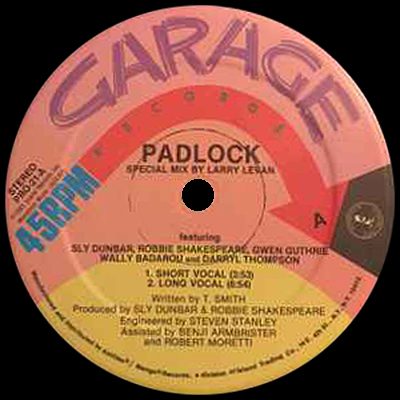
JW: These were all things that we were learning about at the time, but we didn’t know who these people were. We knew they were obviously, either club DJs, because they’d been commissioned to do these mixes, or they were studio engineers who did mixes, because Tom Moulton wasn’t a club DJ, but he was a brilliant studio engineer that would remix records. So yeah, you would go to the store and you’d end up spending far more money than what you we’re hoping to spend, but it’s the fear of not having that record.
I’ll give you an example; I’ll put my hand up, where I missed something. I remember going into Arcade Records and Kev & Paul Thomas were there behind the counter and they’ve got a white label twelve, they played it and I was like… because I’d bought the album previous to that… it was a great Jazz album, and then suddenly there was this record that was completely different, off the second album. I passed on the 12”. So, you know, I went out the following weekend DJing, and lo and behold, the biggest record was that 12”, that I’d passed on.
GW: What was it?
JW: Tom Brown ‘Funkin’ for Jamaica’.
GW: Ah, okay.
JW: Well, yeah, it was just because I’d listened to the first album, which was a great Jazz album, and this was something completely different, but I learned my lesson that day (laughs). It took me about another two weeks before I got a copy, because it was just a white label 12” and the album hadn’t come out.
Tom Brown ‘Funkin’ For Jamaica’
GW: Something you touched on a second ago was, we didn’t know anything about who these people were. New York Disco culture, we didn’t have it. We didn’t have an insight. Maybe Ian Levine did, of course, because he went over there and went to those clubs and had success with his own music within that scene. But the rest of the (British) DJs, I suppose, we were a bit blind to it, until, like you say, these names start popping up on the records. For me, it was like that in the early ‘80s period especially. I knew there were remixers called John Luongo, and Tom Moulton, then when you got to the early ‘80s, Larry Levan… The one that really got me was Tee Scott because of the track ‘Happy Days’ by Northend, where on the other side was ‘Tee’s Happy’. That impressed me because I realised now that this was a DJ who was remixing, and they’d named the record after him.

GW: And from my point of view, I knew about the New York Disco that had come into play. Obviously the Blackpool Mecca was playing quite a bit of New York Disco. It was certainly being played in places like Global Village, to the Crackers crowd and crossing over into the London scene too. So you’ve got that, and the Jazz-Funk influence coming through as well.
A thing that a lot of people don’t understand, because UK dance culture… the way that it’s shown to have been very Americanized – they’d almost imagined that we were following America all the time, but we were never following America.
JW: No, we didn’t, no. Far from it!
 National Funk Day, Skegness, 1980
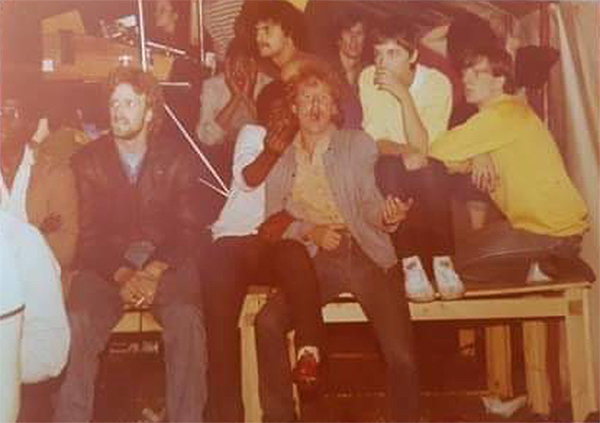 National Funk Day Crew. Jonathan, sat left. Image courtesy of Colin Curtis, top centre
GW: As you know, the lineage goes way, way back before us – people were obsessive about it in the ‘50s, listening to Rhythm & Blues. So, we know that, but people would imagine that the Americans did it first, then we followed – but it wasn’t that. The way I always see it is as a collision course; starting to understand more about American culture, but having all this culture of our own, for many, many years previous. I think that’s why Rave happened later in this country – it couldn’t have happened anywhere else because it was that meeting of minds. It was the New York Disco culture of the mixer, sound systems and everything – things that we didn’t have in the ‘70s. Most clubs had really shitty sound systems. Later that changed with places like Wigan Pier, Camden Palace, The Powerhouse and Rock City. These places started to invest in that. It was an Americanization of it, but we had our own approach to all this – there was no Jazz-Funk scene in America, there was no specific Electro-Funk scene in America. Those records might have been played, but in different ways to the way we were playing them here.
JW: Yeah.
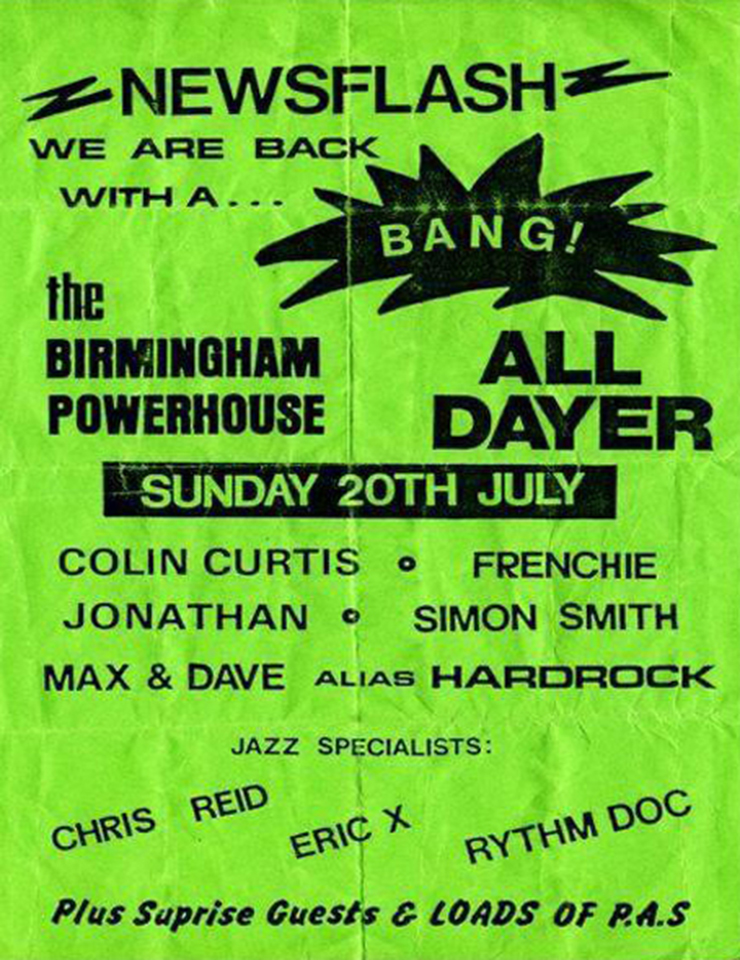 Powerhouse, Birmingham, 1980
GW: So I find that really interesting, now that we’re moving into that early ’80s period, when Jazz-Funk scene probably hit a peak by ’81/’82. It was the moment that it took over from Northern Soul almost completely. The Casino had closed, it had gone and Jazz-Funk was at the top. It was soon after that Electro came through and blew it all apart again.
JW: All the way through what was happening, what they were making in the States shaped what we played. However, we had a different approach to selecting the tunes we were going to play. You know, over the years, I’ve listened to a lot of tapes of Larry Levan playing at the Paradise Garage and then thought, right, I know what year that is, and then listening to what he played and then knowing what I played at the same time at Rock City, and there are different records.
GW: Yeah, there’s a crossover but there’s stuff that’s completely different.
JW: It’s like 50% of what he played is what we played over here and then the other 50% we knew about, but didn’t play because it didn’t make the grade. But we’d got these other records that were made in this country. Or records that had come from the States that they’d dismissed or didn’t know about, and we made them big over here.
GW: Yeah.
JW: So you had some of those records that… you’ve just mentioned about the Electro thing. I think one record that would probably stand head and shoulders, certainly for the Midlands and the North, was a record that was absolutely massive; Hashim ‘Al Naafiysh (The Soul)’.

GW: Yeah. Later revived at The Haçienda, that was still being played the Haçienda peak Rave era.
JW: Yes, exactly, but that was quite a few years after it was played as a stone cold new release.
GW: Yeah, ’83…
JW: A dance-floor destroyer from day one for me and I guess for you and other people who played that record. That was just like, from the minute it went on, everybody was like, “what the hell is this?” Bang! It was just one of those records that was just massive, but that there were so many like that, because there were so many records coming out.
GW: When you we’re in the Palais with Colin Curtis, you were warming up for Colin at this point, can you remember when you did your first all-dayer, how you got your first all-dayer booking?
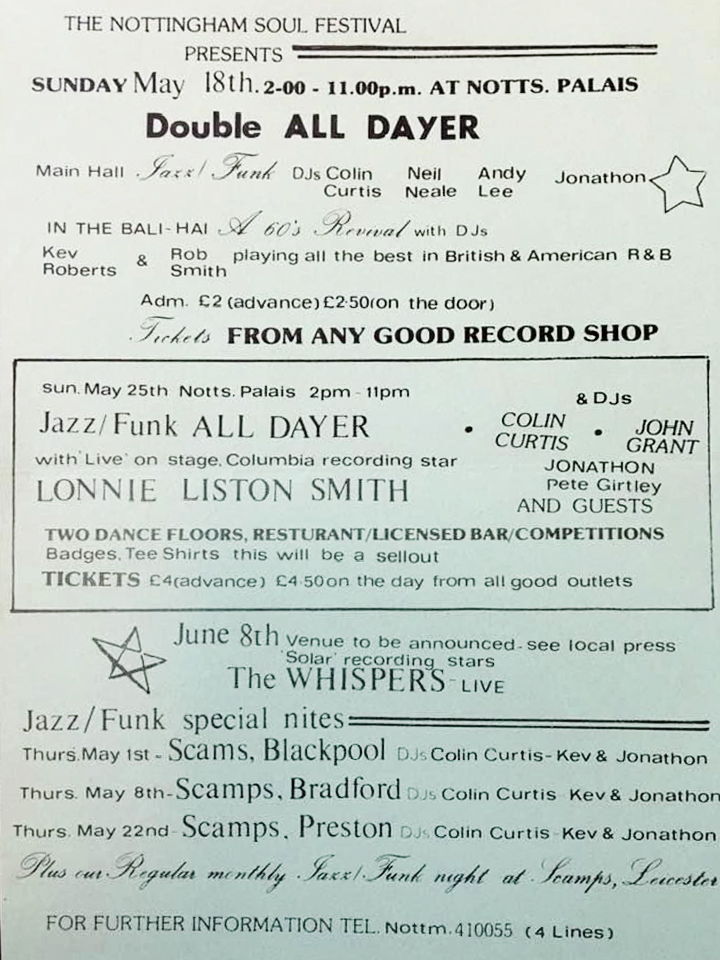 All-Dayer, Palais, Nottingham, 1980
JW: Playing Jazz-Funk? It was probably, well it would definitely be downstairs at the (Nottingham) Palais and I’d be doing maybe the first or the second hour. I can’t remember the exact day or date. I just remember doing the Bali Hai downstairs and that was it for me. It was like the start of the voyage on another scene and meeting a whole new set. There were some people who came that used to go to the Mecca that then went with the Jazz-Funk scene, following Colin. So it wasn’t as if I was walking into a room where I didn’t know people, there were a lot of people that I did know. But suddenly, the doors open and there was another set of people that were starting to come who had heard about this music, they embraced it and got into it. It was a black crowd from Nottingham, as in every other big urban city, who suddenly discovered this music that was being played, by predominantly white guys, but they accepted us for who we were, as tastemakers and players of these records. There was never any animosity. I didn’t look in the room and think, “Oh, my god, 90% of the people in this room are black”. I was like, “100% of the people in this room are into what we’re playing”. I didn’t look at people and think, well, you’ve a different skin tone to me. It was like, we’re here for this music and this is what it’s about.
GW: And they didn’t think that because all that they were interested in is what was coming out of the speakers. I mean, it took away any kind of issue of race because we were all interested in…
JW: One nation under a groove.
GW: Yeah, exactly. And also, obviously, with the black kids it was the dancing, the level of it! You had that on the Northern scene, you had white kids… Some of the top Northern scene dancers were black guys. One of the guys in the ‘This England’ documentary, who’s spinning… I’m not sure who he is. The guy who used to work at the Pier on the door.. Phil Hongkins, used to go to the Casino. But there were few black people, in terms of the amount of people in there. What would you say the percentage was in the casino, 5%?
JW: 5% Yeah. 5%, If you’re lucky, yes.
GW: Whereas now we’re talking about scenes where it can go the other way, it can be 5% white in there, although generally there were probably more, because there were more white girls who came down as well. These scenes really changed around in that respect, from the Northern scene. So you’re talking about the same environment that once saw predominantly white kids dancing to Northern Soul as it started to cross over. So you’d see more and more black kids dancing to Jazz-Funk, or not even Jazz-Funk, they’d be dancing to Jazz.
JW: Oh, yeah, your set would encompass playing the latest new releases that were Disco, or what was then the end of Disco, with the electronic sound that was emerging. And then also Jazz for the Jazz dancers, and you’d be playing new releases and a few old things that you’d discovered.
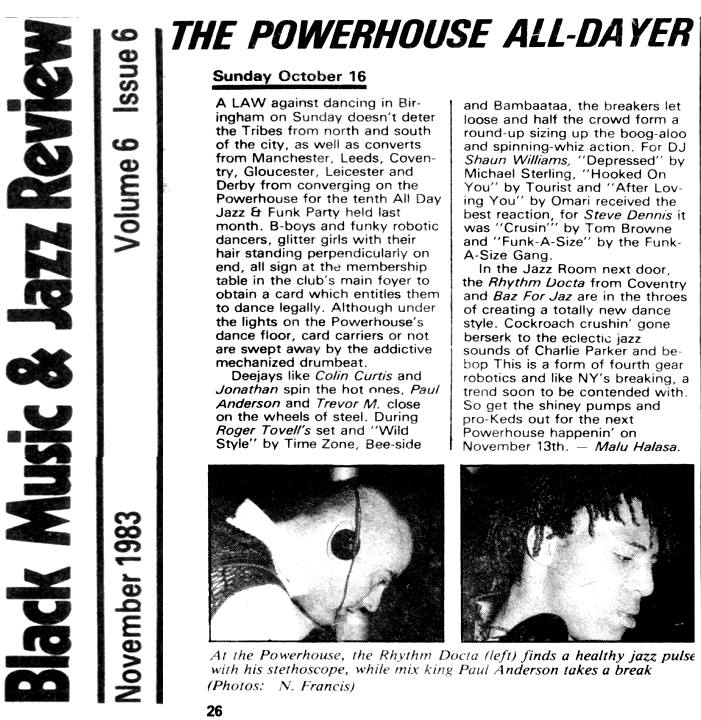
JW: You’d had groups of people that came down that were really into the Jazz and would be pestering you to play… whether it is Manfredo Fest ‘Jungle Kitten’. Or Neil Larson or Jeff Lorber. Or John Klemmer ‘Brasilia’. Then you had other people who, didn’t mind those records, but didn’t dance to them because they wanted Slave, Cameo, Brass Construction, Change, the list goes on, you know, Jupiter Beyond ‘River Drive’, or they would want different things; it was all of that, mixed together in a set. You know, it was just a phenomenal time!
 Rock City All-Dayer, Nottingham, 1983
JW: When I go back down to Nottingham, as I occasionally do… Colin and I do an oldies night there and you walk into the room and all the old faces are there. Not everybody, but a lot are there. There have been some people when we’ve done them… we haven’t done one for, I think, probably two to three years now – Covid put a stop to it…
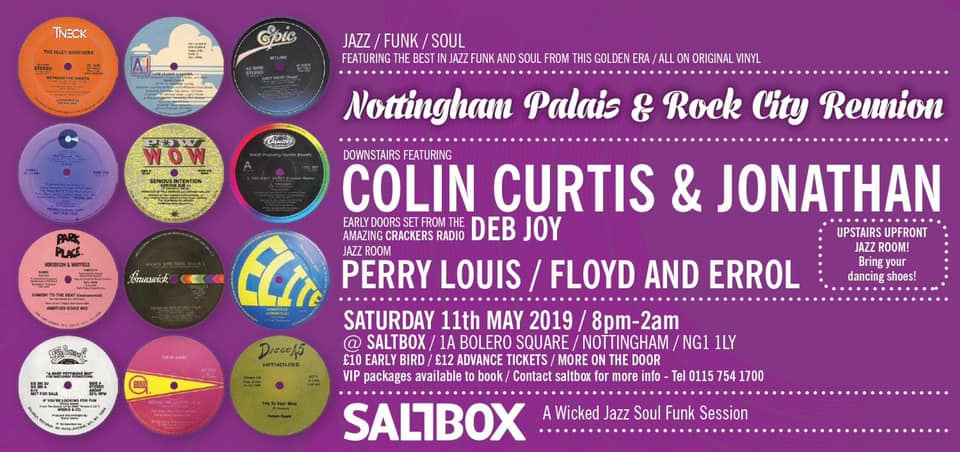
JW: For me, obviously, leaving my hometown and living in Darlington, and then going back there and seeing people that you haven’t seen for five, six or seven years, then people turn up who I’ve not seen for ten, twenty years, and they’d come down to see you, because they knew you were doing the night and they knew what you were going to play. These were all the records they’d heard as teenagers, and me, being in my early twenties then, would play those records, and they’d respond to them. They’d come up and shake your hand as if you were like an A’ list celebrity, and I’m like, look, you know, I’m just a guy who played the records, I’m not some superstar. I’ve never made a record, I’ve never even remixed a record, I can’t play an instrument, but I think I’ve got a good ear for a tune (laughs). I’m quite humbled by the response we get when we put these events on and people come along. I think Colin and I have done four or five of them. We won’t be in the same place next time, we’ve got to find a different club now.
GW: Did you do this as a Palais Revival or Rock City?
JW: Yeah, we found that it had to cover what was played at the Jazz-Funk all-dayers, because there were two rooms, we did two rooms when we did it in Nottingham; one room playing jazz, then in the main room we would play a little bit of Jazz, but it would mainly be anything from the Palais all-dayers, right up to the end of Rock City and the early House records that were played – so up until about ‘86. So anything from ‘76 to ’86, that time period. Obviously, as always, when you do an oldies night, the further back you go, you’ve got to play the big bullets. I remember doing an oldies night, I think the first Jazz-Funk oldies night we did at Rock City one Friday night, and this will probably be about ‘84/’85, I played Charles Earland ‘Let the Music Play’, which was massive back in the day. I put it on at Rock City, bear in mind, you know how big Rock City was… And there was like, six people from Birmingham dancing to it. I was horrified! It made me think, I’ve gone a bit too far back here. I’ve picked a record that was obviously massive, but not to all these people in the room. You get odd nights where you’d drop an old record and it sends a room to another place! Then you get these odd situations where you play it, when probably three or four people are asking for that record that night. So I put this on and I was just like, wow, that didn’t work! (Laughs).
GW: Like you said before, with the Northern scene; the people that went to the Mecca, where it was Northern Soul, they followed Colin on through to the Jazz-Funk. They progressed through it, they don’t stop and go back, they moved on to other things.
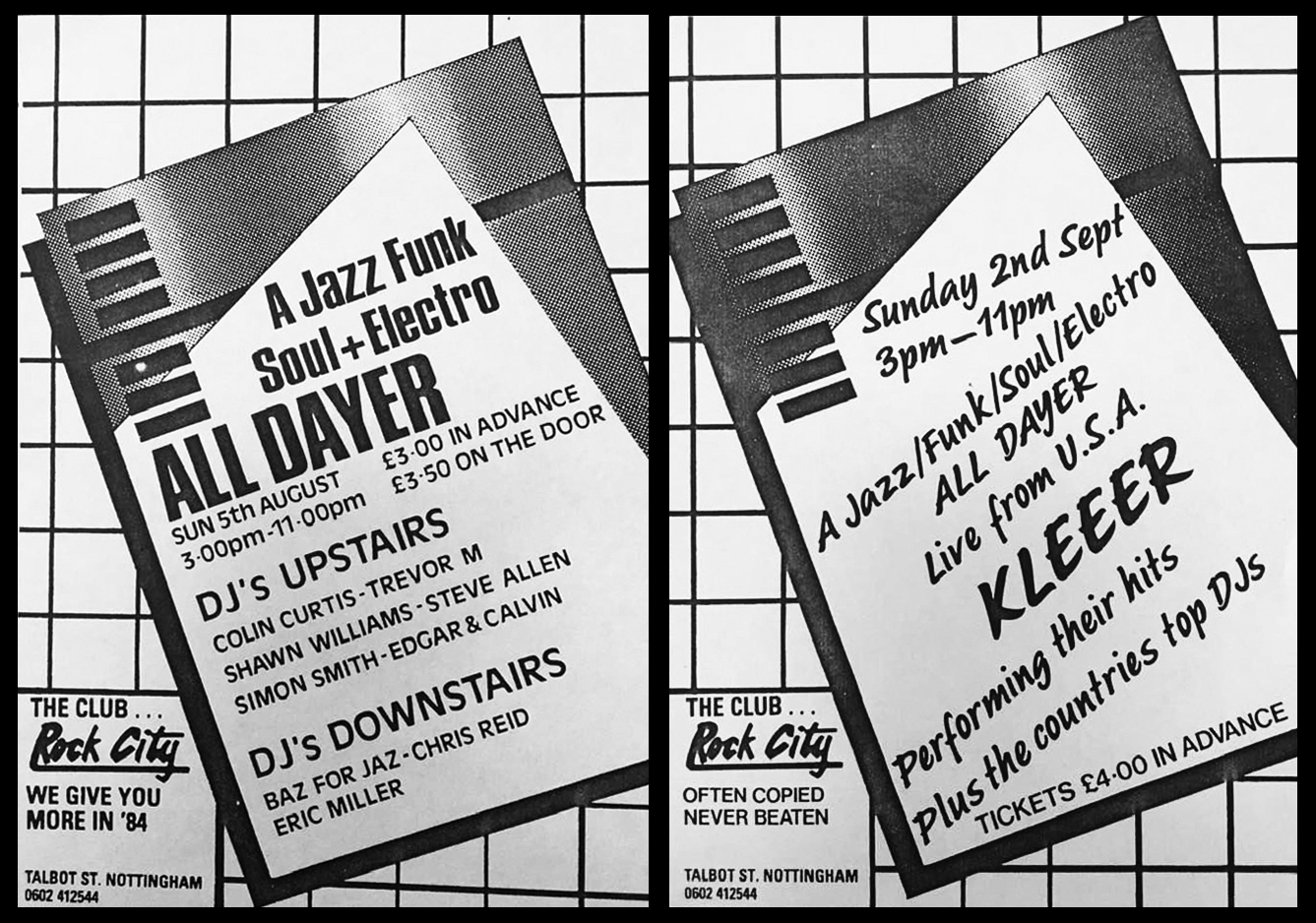 All-Dayers at Rock City, Nottingham, 1984
GW: Regarding your trajectory, I first would have come across you through Blues & Soul Magazine. I didn’t know much about you, but you had just one name, you know, as ‘Jonathan’, often spelt wrongly? I reckon.
JW: A few ways of spelling it. Yeah. Well, sometimes wrong. Yes.
 All-Dayer at Tiffany’s, Blackpool (Blues & Soul Magazine advert, 1980)
 Jonathan, 1982
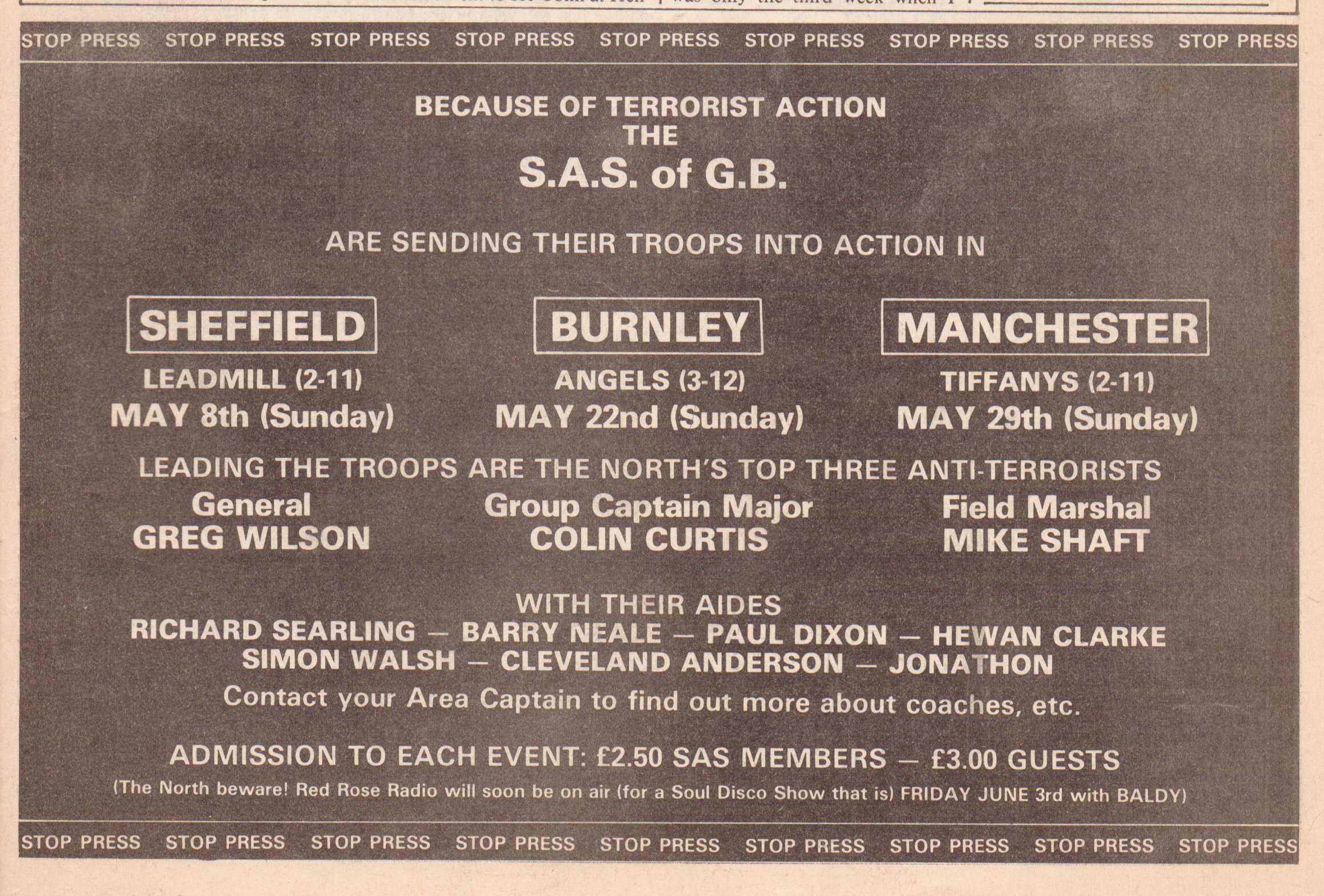
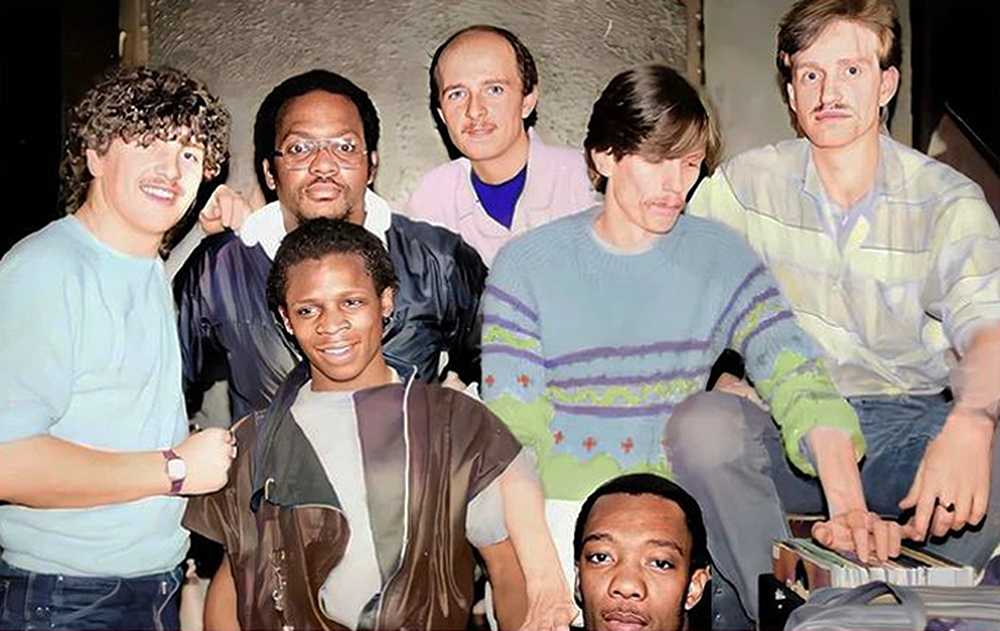 Tiffany’s All-Dayer, Manchester, 29th May 1983
L-R: Greg Wilson, Mike Shaft, Cleveland Anderson, Richard Searling, Colin Curtis, Hewan Clarke and Jonathan
GW: You were in the faraway Midlands, and I had just come in at Wigan Pier, where I was the four-nights-a-week resident there, but the Tuesday night was a Jazz-Funk night and that really caught fire. The same owners opened Legend, in Manchester. I went there and it took off massively, where all of a sudden, I had a power-base. Electro came within this moment, to both club environments, which were state-of-the-art. There’s nowhere that could compete, in terms of sound and lighting. The sound systems especially were way ahead! We had Technics 1200s at Legend, no one had them when Legend opened. So, new music, in this environment, with this crowd as well. It all blew up at the same time. But I kind of gate-crashed the scene, in a way. I didn’t come from the Northern Soul trajectory that everybody else came from. Liverpool wasn’t a Northern Soul city, as you’re probably aware, it never infiltrated there, so when I was a teenager, I was 16 or 17 and going into the clubs. I was already DJing at 15 and I was going over to a club called the Timepiece in Liverpool, where Les Spaine was playing. He was right on the cusp of Funk. He quit to go and work for Motown in ’77. So that was where my basis lied. Whereas all the DJs on the scene, they obviously worshipped Colin. I actually came along probably with a little bit of a (perceived) upstart attitude, where I didn’t have that background. I didn’t go to Wigan Casino or the Blackpool Mecca. I went to, as I say, The Timepiece or The Hamilton which was another, kind of, big Funk club on Merseyside, where Terry Lennaine played. So, coming into it, within this context, at the same time… I’ve since had conversations with Colin, about that time he got ill, when it was so on top for him – He was behind the booth working while having a panic attack and having to get out of the club. I only learned this later on; of how affected he was at that time. Also, because the music was changing as well. There was a lot of criticism of what I was doing. I was this heretic, that was ruining the scene and polluting it by playing these electronic monstrosities. It was hard, you know, I was a young lad of 22/23. While all this was happening, I wanted everyone to pat me on the back and massage my ego.
For a period of time, I was very much on the defensive, but I could see that the kids that were coming into my venue; young black kids who were just amazing, with their energy, the dancing and everything. They were so into it. Then I’m thinking, y’know, who’s criticising me? They’re all middle aged white guys (Laughs).
JW: Well, exactly. They came from a different time, where they’d got a different… It was the same thing for me, I came along in 1980. I did that trip to the States, I came back in June of that year, then I started going out and selling records. I’d go into a shop called Lido in Nottingham, to buy clothes. It was a real independent, up-market clothes shop. When you wanted cutting edge clothes, that’s where you went. The manager there was like, “I know a club that is looking for a resident DJ, if you’re interested”. So this would be probably be September or October of 1980. So I went down, it was called Camelots. The busiest night there was a Monday night. It was absolutely chocked to the rafters. The lad who DJ’d there had handed his notice in because he was going to work at Isabella’s, a new club that was opening up. Now some of the lads in the shop knew me from the Jazz-Funk all-dayers and they just thought that music would be great to have in that club. So I got the full-time job as resident DJ. The Monday night was the busiest night of all. I’d go in there and I’d be playing new releases from the States, just like I would do at an all-dayer, except all the people in there we’re like, you’ve got all the Forest football team in, you’ve got a plush restaurant at the back and then this small sort of pit with a low ceiling and 200 people in. It had a good sound system, not brilliant, but because it was small, it worked, and I got away with murder… All the girls who were models, they did all the fashion shows in Nottingham and they’d all be down on a Monday night. They’d all have the music in the car. They’d say, “We don’t hear this music in any other club it’s brilliant! Will you do us tapes?”. So I did these tapes for the girls on a Monday night and I really enjoyed it. The rest of the week was a bit of a struggle in there because everybody was, “Oh, if you’re going out on a Monday night, that’s where to go!”. I guess every city had those clubs. If you went out, that’s where you went. The rest of the week was just… I was almost… not really trapped. I knew that I couldn’t push new music as much as I did on a Monday night for the rest of the week. It was what it was. It served a purpose, because within a year and a half of doing that, which would bring me to the summer of ‘83. Also what happened unbeknown to me, was the then manager of Rock City used to come down on a Monday.
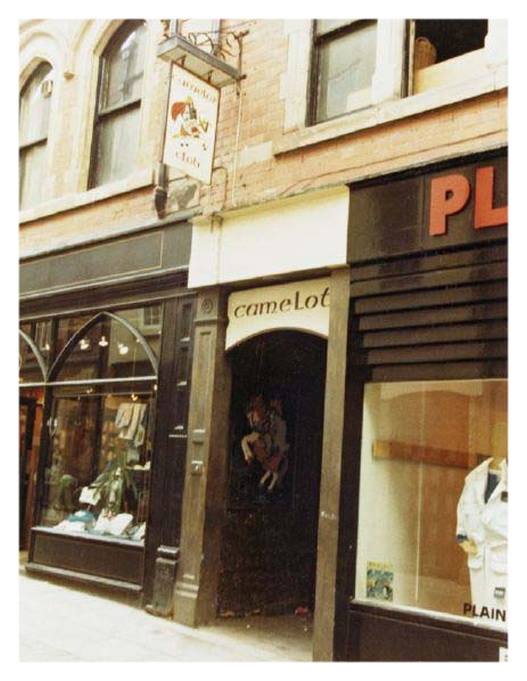 The Camelot Club, Bridlesmith Gate, 1984
(Photo credit: Reg Baker. Source: Facebook)
GW: Can you tell me when Rock City opened?
JW: Well, I was aware of Rock City before I started working there, because it was originally Heart of the Midlands, which was like a cabaret club. I remember going down there, I think I saw the Platters there. Not the original Platters, but the third generation of the Platters, Then the venue was sold. Then it was completely turned into a live venue. I probably went down there in ‘79 or ‘80, when I was doing Camelots.
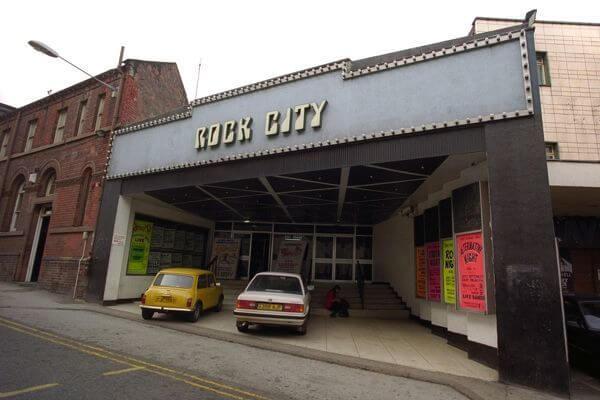 Rock City, 1980
GW: It was as early as that?
JW: Yes, but originally, it really was just a rock club. Well, not really a rock club, it was a venue that put bands on. So I think the first band that ever played was The Undertones. So you’ll be looking at ’79, something like that.
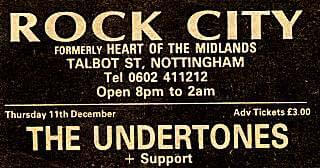
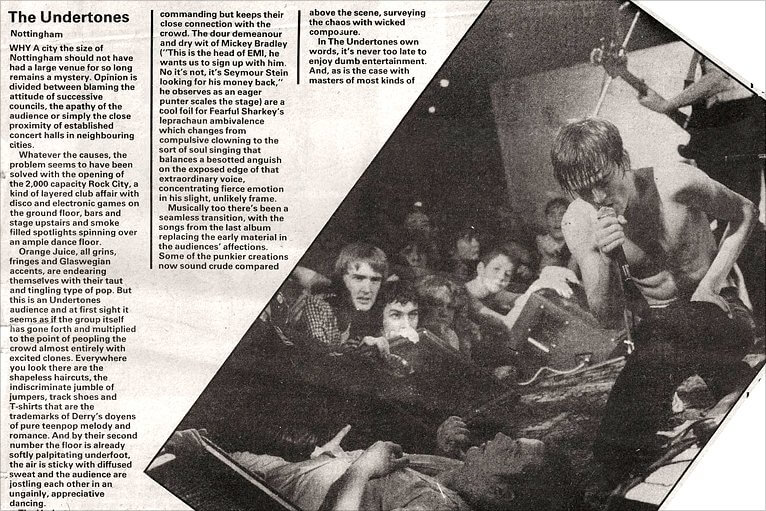
GW: But did they have a refit at some point?
JW: Exactly. So what had happened was, Paul Mason was then the new General Manager and he used to come down on a Monday night to Camelots. He said, “I want to meet up with you. I’ve got a proposition”. I was like, “Okay”, so I went to meet Paul and he said, “Look, I manage Rock City. It’s closed at the moment. We are having a refit. So the venue is going to change. It will be a club three nights a week and a live venue three nights a week”. Monday, Tuesday and Wednesday would be live bands or it didn’t open. With Thursday nights, their idea was that they were going to do a student night. Nobody did a student night in Nottingham in a big city centre club. Student nights were in grotty little working men’s clubs. So I met Paul, and he took me down to… trying to remember the name of the company that installed the sound system… Anyway, we went to this warehouse, and they’d got the sound system.
GW: Where was it?
JW: It was a company in Nottingham that installed it, we went into their warehouse and they’d put the system on, it was all stacked up and they switched it on and I was like, “Bloody hell!”. Then I went to see the club whilst they were installing the system. After hearing it and I was like, I want this job! It’s a massive challenge because the dance floor at Rock City was as big as the Palais and I was like, ooh… my mind was racing! “Right, this is what I want to do!”.
GW: I understand totally, because this was me with Wigan Pier, when I realised I’d got it (laughs).
JW: I think we met there? Did you do an all-dayer at Wigan Pier? Were you doing the lights at that?
GW: I might have jumped in on lights, if it was an all-dayer. Yeah, but I mean, I was promoting those, pretty much.
JW: I know that’s where I met you. I remember it was at Wigan Pier, at an all-dayer, 100%!
GW: Yeah, right. Okay. Yeah. In the frog (laughs).
JW: I’d heard about the club and then I’d seen it.
GW: Do you think you’d been to the Pier before you’d seen Rock City?
JW: No, it would be after. I’m pretty sure, but not 100%.
GW: Yes, probably an all-dayer, about ’82? Not one of the earlier ones.
JW: Yeah, it would be, just as I started Rock City, or just before.
So, I’ve gone into Rock City and I was like the club is black. You’ve got two bars, a balcony and a great big stage for putting bands on. You’ve got a dance floor that’s wooden and sprung, and you’ve got a sound system that’s all the way around the dance floor, not around the rest of the club. And you’ve got a lighting rig with a laser that is just to die for! With the lighting technician, Vince, where it was all touch panels.
GW: Yeah, that’s what we had at Wigan. I mean, to be honest, there’s no way they would not have been to Wigan Pier and had a look at it there, because everyone came to visit. When Legend opened up, you had people come from Japan to take a look.
 Legend, Manchester, 1982
JW: So yeah, there were two video screens that came down on the wall either side of the stage.
GW: That was something we never had, video screens. We had them installed for one-off nights. Obviously The Haçienda had them as well.
JW: But obviously Paul ended up leaving Rock City.
GW: Yeah, I know! I want to get to that eventually with you (laughs).
JW: So I went in and Vince had got a Chromascope. He could put images on and run it through this Chromascope and it just turns into a liquid moving wall on two projector screens.
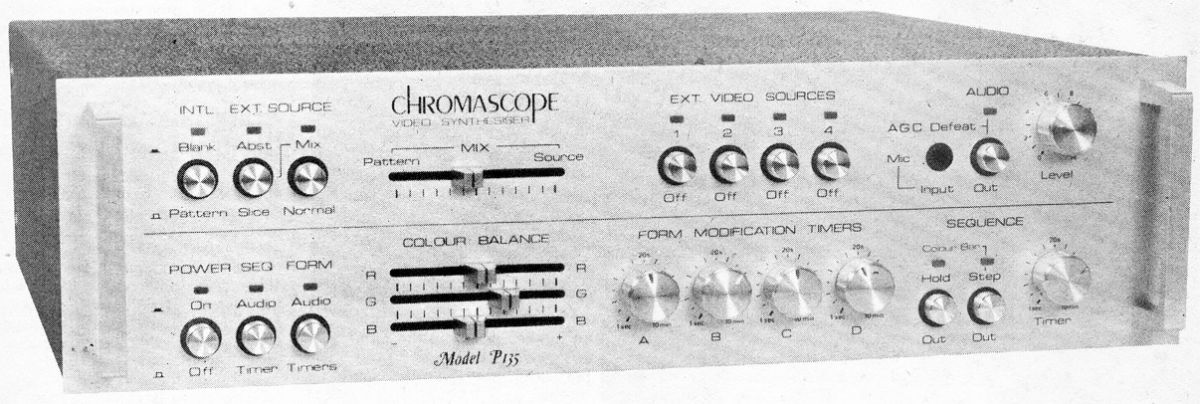 Chromascope (Electronics & Music Maker, 1981)
Chromascope visuals
JW: Record companies would send me videos of Cameo and stuff like that, so I could have them on the screens too. This was just right at the infancy of MTV. It was such a great thing to have. And of course, they had the camera as well.
GW: Did you have an actual VJ there as well?
JW: Yes, that was Vince. Vince did lights and video.
So I went in, like you said, Technics 1200s and a decent mixer and I started doing the night. We started in the September of ’82 and we did the student night on a Thursday night. I walked into the student night not knowing what I was going to play, because, I was like, okay, there’s going to be a bit of dance music, there’s gonna be some indie stuff and we’ll see what happens. We started from scratch. There were a couple of hundred people at first. So it wasn’t as if I was walking into a club that was 1700 at capacity, sold out and you’re playing the wrong records. I was building the night. So I was learning as the audience was learning.
GW: Why don’t you think it took off immediately?
JW: Well, on the Thursday night, by the end of that first term, we were up to about 1000 people. What Paul wanted to do with the Thursday night was, he quite liked what Mel played over at the Blue Note in Derby, which was kind of New York dance, but the New York dance that I didn’t really like, which was a mixture of Kraftwerk, and the electronic pop that was big in this country.
GW: Like the more New Romantic, Futurist side, would you say?
JW: Yeah, but even a bit more hybrid than that, because on the Saturday night it was a Futurist night. So I ended up starting when they already had a Futurist night on – before the refit. After the refit, the Futurist night continued on the Saturday night.
GW: Did you do that?
JW: I did. I came in and there were two other guys DJing. I was the third DJ, so three of us did the night. Paul didn’t want wholesale changes, because he’d already got this night going, so I worked with the other two guys. So for me, musically, I’d got to wear three different hats. The Thursday night was a little bit of Saturday, with a little bit of what I played at the all-dayers, and also whatever the students wanted, which was a real mixture of music. So I was like, well, I get paid a lot of money, so I’ll go to the record shop and just buy everything I need. Then with the Futurist night, I went down and got to grips with that and just went on a massive buying spree, buying all the records that I needed, records that were currently big, or had been big, so I locked into that too. So I ended up with the three nights.
With the Friday night, through that autumn, we never got more than about 300 people in. It was a pretty big room. I’d say to Paul, “It’s not working in this room, I want to do something different”. I’d already been badgering him about doing all-dayers in there. There was a little bit of hesitancy about it. I said, “Look, I’ve got a gut feeling that I can make this work, just run with me”. So, at the beginning of ‘83, we sacked off this ‘electronic’ night and he let me do what I wanted to do. So we did Fridays as Funk and Soul nights. Obviously everything that was new at that time was thrown at it. I went in and I was like, “Right, this is what I’m going to do…”. I just told everybody at the all-dayers, I said, “Look, you know I’m doing this night…”, the first thing they said was “Are we going to be allowed in?”, because in the past I’d done other nights during the week in smaller clubs in the city, where they would have a very racist policy on the door. So, I’d like, fucking walk out! “If the people who listen to my music can’t come in, then I’m not playing it!”. I did that with Isabella’s, I said to everybody else, “Look, if you’re gonna come down, you’ve got a come dressed smart, otherwise they won’t let you in. You can’t wear what you wear at the all-dayers. You’re gonna have to make an effort”, or not so much use the words ‘make an effort’, but, “You’re gonna have to respect their door policy on dress to get in”. But that door policy wasn’t just on dress, it was also, “We’ll let some coloured guys in, but there’ll be a token number in the club”.
GW: Yes, that was it, and that was the frustration for a lot of those guys.
JW: It was the frustration for a lot of us DJs too!
GW: Yeah, of course, because they made an effort, then they were still knocked back, because there were too many.
JW: Yeah, and then at the weekend, I’d be like, “Why didn’t you come down to Isabella’s?”, and they’re like “We did, but we got turned away”. I was like, “Right that’s it, I’ll stop doing it! I’m not going to play, if my people, who are into what I’m playing, can’t come in, so I’m not getting involved with this”. So there was a little bit of hesitancy at first with the Friday night at Rock City, but I said, “Trust me, I will make this happen!”.
GW: So they basically knew the moment they said yes to this night that Jonathan was putting forward, they knew they were going to have a black crowd there? That was the hesitancy at that moment in time?
JW: A little bit, because it was it was an unknown. It was a bit like when Paul was going to the owner, “Right, I’m going to put on a student night”, it was the fear of the unknown; of them not knowing what they were going to get. I mean, the Futurist night was doing about 500/600 people, they were all dressed up as either Gary Newman or David Sylvian. Or there were a few of the old punks left from ‘77 that came down. That’s what Saturday nights were about. They were into Bauhaus at the beginning of the Goth thing, you know, post-punk. It worked really well.
GW: It was probably like a very early Haçienda crowd, pre the black crowd coming into The Haçienda, which built a lot more slowly. Again, we’ll get to this eventually, but Paul Mason connects these things too. These lineages that we’re talking about, a lot of people don’t properly know… it’s a drum that I beat, Jonathan, because this, for me, is the missing link. If you don’t know about this period of time, then you don’t know about dance culture, yet so many books have been written about dance culture that start with the Rave era, then they try to work it backwards. They get a lot of the Northern Soul, because there were so many obsessive people that were writing about that. But black kids weren’t writing. They weren’t encouraged to write. They weren’t journalists, so we don’t have the documentation and people weren’t taking photographs.
JW: Well, that’s exactly what I was just gonna say. I’ve got next to no photographs from that time period. I didn’t have a camera. I bought records, I wouldn’t buy a camera. It was the same thing with Colin. Although, luckily, Colin had a friend, Ged with him. Ged took photographs everywhere. But Colin and Ged have fallen out over the years, so that connection is not there now. Ged lost some photographs too, so we haven’t got those either. Ged would take his camera everywhere. I never used to see Ged out without his camera. He’d be taking lots of photographs, he must have taken thousands!
GW: How important, as a cultural relic, are those photographs, when you think about it. With Colin, and everything that happened.
JW: Yeah, exactly, but it is what it is, unfortunately.
 Jonathan & Colin Curtis with Jean Carn
JW: So we started on the Friday night. I said I wanted to do word of mouth on it. I wanted the right people to come. So at the all-dayers, I mentioned that we were going to start this night. We started in January of ‘83 and it was just 300 people at first. By March, we had 1700 people in the club on the Friday night. It was like I’d lit the fuse and it just exploded!
GW: At what point did Colin work with you there?
JW: Well, I was the resident DJ and I was playing all night. I would have Colin as a guest DJ occasionally, and it really was occasionally. Colin was doing the all-dayers with me, because obviously, anybody who put an all-dayer on across the Midlands would want me and Colin on, because we were the lynchpins to making the all-dayers successful.
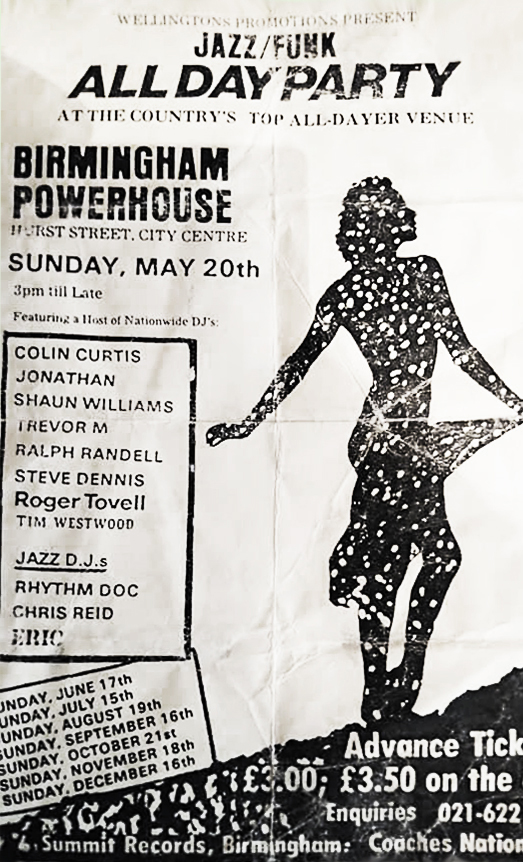 Powerhouse, Birmingham, May 1984
 Powerhouse, Birmingham, September 1984
JW: So Colin was there at every Rock City all-dayer, but not every Friday night. He wasn’t a resident on a Friday night. But the policy I had, I knew that it would work from day one; we opened from nine o’clock until 11, I would play all the new records that had come in that week. Then, with very few lights on… What we’d do then was at a certain time, which was probably at about half past 10, depending on whether we had enough people in, then at the optimum moment, we’d flick the switch and off we went! So they were coming into the club and listening to these new records, a few people would dance to them. But we would hold back on the lights. I would pick a record that we’d already worked out a light show to. That would be the record that would start the night at the designated time, and off it went.
We did the same thing on a Saturday night, and on a Thursday night. It absolutely worked, but with the Friday night, because of the sheer volume of new releases each week… We were breaking records at a phenomenal rate. Absolutely! I’d go into the record store on the Saturday and they’d go, “We know exactly what you played last night”, because they were going to the shop on a Saturday morning and asking for all the records that they’d sold me earlier on in the week. They’d have a shipment on a Monday, Wednesday, Friday and one on a Saturday. So I would go in on the Mondays, Wednesdays and Fridays. Because I was the biggest spender in the shop, probably 90% or 95%, of all the records that came in were in a cubby hole ready for me. The deal I had with them was for them to put everything they had in a pile, I’d buy ‘em all, but on the agreement that a few records might come back… But if they started stitching me up with duffers, they’d get more back. To be fair, Kev & Paul, stuck to their word.
GW: Your status, all of a sudden, would have just escalated, you know?
JW: Oh massively! For them, it turned that shop into a gold mine.
GW: No, I understand. That’s the politics at the record shop level; that you need to be treated right, because it was an important thing. I’ll give you an example… I had this situation with Spin Inn, one time, when a record was held back from me. I know this because I found out in the end. It was Arthur Adams ‘You Got The Floor’, the biggest fucking track that was out at that moment!
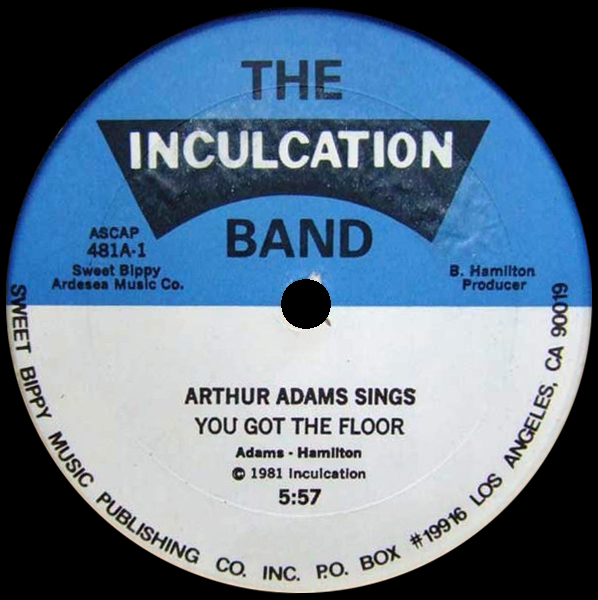
GW: Some kid came into Legend and said, “Arthur Adams, You Got The Floor?”. I said “Well, sorry, I don’t know it”. So I went to Spin Inn and said, “Arthur Adams, You Got The Floor?”. They said, “Oh, yeah, yeah, we’re getting some of them in later in the week”. Then later in the week it didn’t come in. It got to the next week, I went to the club and some kid came to me… Well, I absolutely knew it at this point that it was massive… and I hadn’t got a copy! Kid said, “Arthur Adams You’ve Got The Floor?”, I said, “Mate, I haven’t got it, I’m really embarrassed!”, and he says, “I’ve got a copy in the car”, which he’d bought just a few days earlier. I went mad! I went and spoke to Gary Lane (the owner of Spin Inn). I said, “Gary, look, the amount of money I’m spending in the shop, I have to have these records. Or I’ll go to London. I’ll shop in London if I have to”. But he did change it up. I hadn’t got to my full level then. That was ‘81, so I was still not in that top tier, quite. But that all changed within the next six or eight months with the Electro coming through.
Colin told me about Nottingham and how, from his side, when it came to Nottingham, he went for the Electro. Like you were talking about, with Hashim being big, there was a period before then, which was a very resistant period. Did you find any of that resistance? Or had it already been broken down by then?
JW: Well no, there was a resistance to that new music coming through, because as always, with change you find that some people are like, “Well, I can’t dance to that, because I like these kinds of records”. We did find that there was resistance, but it’s getting the balance in the club, where you’re not just playing one style of music, you’re playing a whole range of music, and you’re going back to… things like unusual Electro records; something that was massive for me and Colin, but was a real cutting edge thing, was ‘Riot in Lagos’ by Riuichi Sakamoto.
GW: Yeah, it was for me too. I revived that in Legend in late ’82, because it was a record were its time had come around. It was a 1980 record that sounded like nothing else then, but all of a sudden it made sense at that time and in that context.
Riuichi Sakamoto ‘Riot In Lagos’
JW: Yeah, that was one of those records that brought the footwork dancers.
GW: Yeah, I’ll tell you something, apart from Jazz tracks, in terms of new American music and the Electro, the only two ‘oldies’ that I ever played at Legend were ‘Riot In Lagos’ and ‘The Adventures Of Grandmaster Flash On The Wheels Of Steel’, which was an ‘81 track, revived in ‘83. Again, I tell people about that Grandmaster Flash track, and you’ll remember this yourself, you would never have heard that played on the Jazz-Funk scene. The reason you wouldn’t was because Blondie and Queen were in the mix. We were so snobbish, and everyone was like, “We’re not going to be seen dancing to Blondie, a Pop track”.
JW: Yeah, exactly, you couldn’t play that.
GW: It negated one of the greatest records of all time from being played on the black scene. Weird! (laughs).
JW: Yeah, because over here, they’d be like, “What are you playing this for? It’s got that in it. They’re not our music”. It was, but it was coming from a different angle.
GW: Yes, and when they’ve heard stuff like ‘Break Dancin’ – Electric Boogie’ (West Street Mob), and all that kind of stuff, it’s like, “I get it. Now I’m getting it. I’m starting to understand what’s going on here. This is amazing!” You know, “Wow!”.
JW: For us at Rock City, the other thing that happened in that first autumn, was they had some break-dancers come over from New York. And it was to do with a Milk Marketing Board advert (promoting a new milkshake on WFLA). Danny and Jessica came over from the Danceteria in New York. One of them was the VJ and the other one was a DJ. So Danny and Jessica came with them and we had these kids breakdancing. I forget what night of the week it was, it might have been a Friday night, it might not. But we put this thing on, it was aimed at kids. There were a lot of kids with parents; parents who had been to the Jazz-Funk all-dayers. Because, with the community that I was drawing from, some of the girls had had babies quite young. So, there were people there that had got pregnant three or four years ago, and they were now coming out again because their mums or dads could look after their kids when they came down on the Friday night. Or they brought their kids down as it wasn’t an over 18’s night, it was opened up for everybody. Obviously the bar was still serving alcohol, but we kept it sensible. Suddenly it connected with a lot of people; that there was a dance culture that went with this music, and they were seeing it coming from New York, to Nottingham and in Rock City on that night. Body-popping, breakdancing, and the Malcolm McLaren skipping stuff.
Malcolm McLaren Presents Double Dutch
Everything was there and it was a great show, but it also shone a light on an area. It suddenly connected all the dots to that music culture in New York, because they saw it first-hand. Suddenly it was a catalyst for more interest in what was happening with that street culture in New York, alongside some of those films as well. The other thing you mentioned, which came along, probably around ‘84, was the Saturday afternoons at Rock City – The Hip-Hop Jams.
GW: Was that under 18’s?
JW: Yes. How that started, it’s quite funny….
GW: But then again, you would have had over 18’s going as well?
JW: Oh yes, absolutely. The bar was open, but it was soft drinks only. So what happened was that Trent FM radio wanted to do a kid’s disco. So their radio DJs would come down and do this kids disco on the Saturday afternoon. Well, it soon became apparent, because of Friday nights being so big, that the kids who couldn’t get in on Friday night would go down on a Saturday…
GW: Could I just get the demographic of the audience on a Friday night? What would you say was the percentage of the black crowd you were you getting in?
JW: When that started, it was probably a 70% black crowd.
GW: That was almost immediately from you starting that night?
JW: Yeah, pretty much, because it was just poured over from the all-dayers. Like, “Oh, we’ve got somewhere to go on a Friday night now. Bingo!”, so we started doing this thing on Saturday lunchtimes from 12pm.
GW: Had you started the all-dayers in between?
JW: Yeah, literally one of my main quests was to take the all-dayer from the Palais and put it on at Rock City. That was my number one goal, because then I could control who DJ’d at them. I did have a good say at the Palais, because the Palais were promoting their all-dayers themselves. It had gone from an outside promoter doing it, to the Palais going, “Well, we can do this ourselves”, kind of thing. So Mick Knight would say ”Who shall we book?”. Then he’d either book those people, or he wouldn’t. But he knew all the DJs, because he’d been around for donkey’s years. He knew Colin, he knew all the DJs because he’d make a point of knowing who they all were, so that when he did decide to do the all-dayers there, he’d add other people in. Kev Roberts had put all-dayers on. Les McCutcheon had done all-dayers. Then towards the end Mick was doing them himself there.
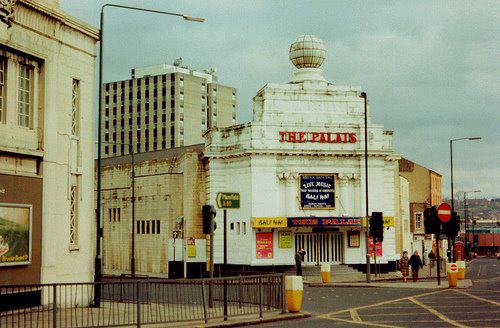 The Palais, Nottingham, 1980s
JW: But as soon as I’d got Rock City, the number one goal was to have a night there in the week, and to take the all-dayers there, because all-dayers would only be once a month.
GW: I think I played Nottingham Palais one time. Shakatak played there, didn’t they? On a Jazz-Funk all-dayer? I played that. It wasn’t great, if I remember. Well, it was a big place, but it wasn’t full. But yeah, that’s the only time I played in Nottingham.
JW: I’ve probably got a poster for that day somewhere actually.
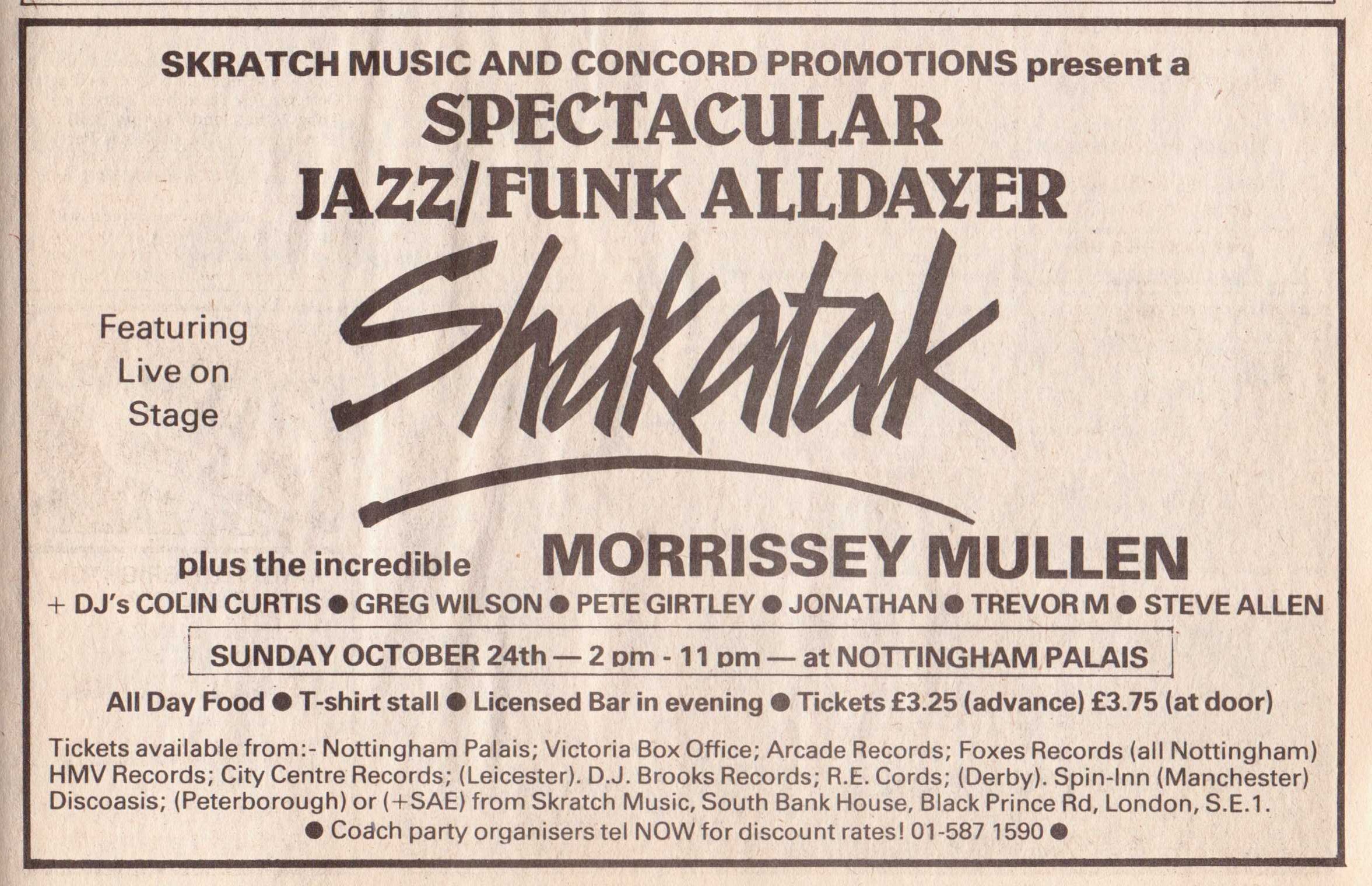 Nottingham Palais All-dayer, 1982
GW: I think the Rock City thing happened almost as I was leaving the scene, from Wigan and Legend. Because I stopped at the end of 1983, that that’s when this new thing moved on… For me, it’s in the Midlands and it’s The Powerhouse. It was incredible – what was going off there. So Rock City and The Powerhouse then took the baton and moved it all forward.
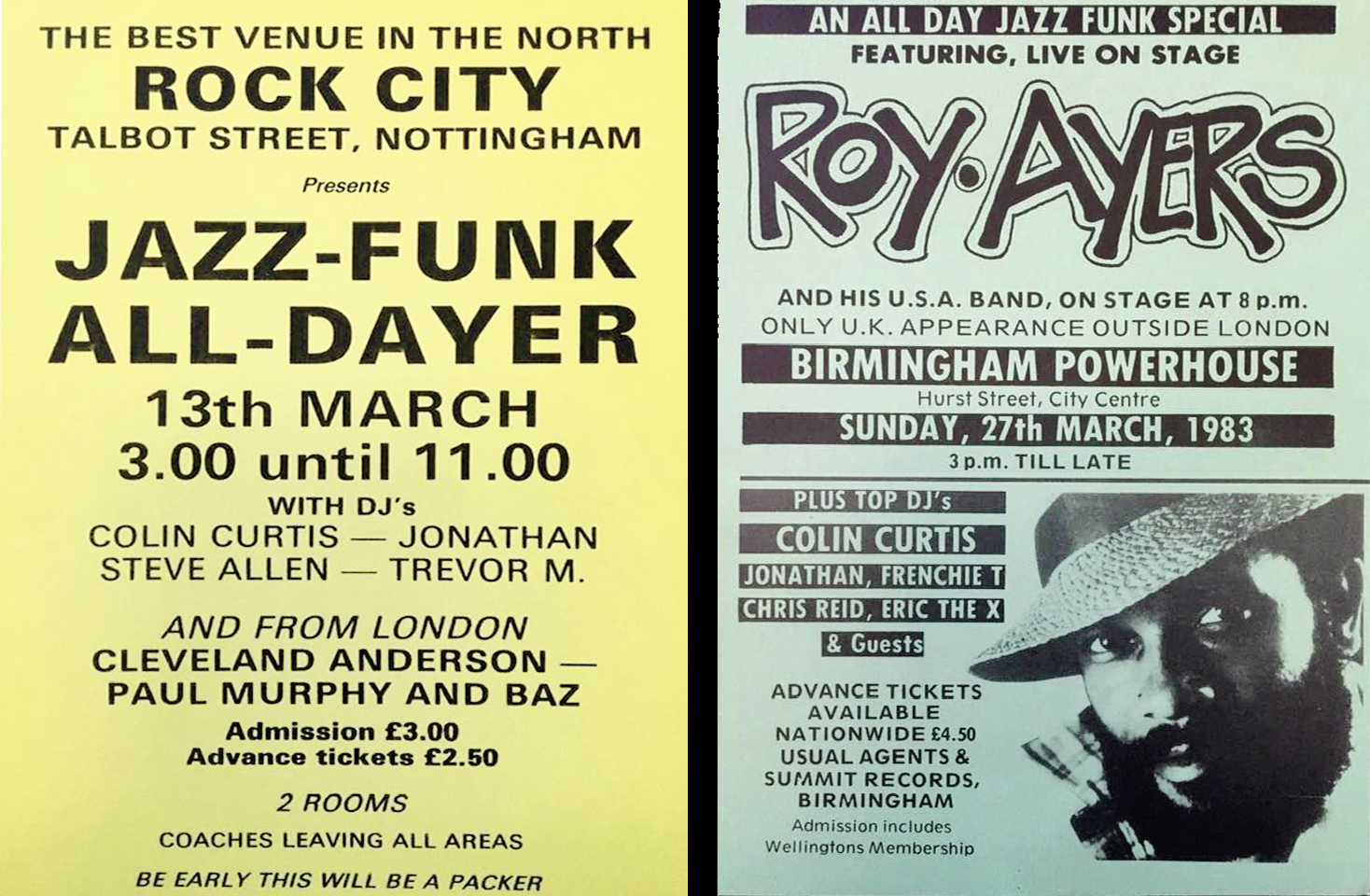 Rock City & Powerhouse Flyers, March 1983
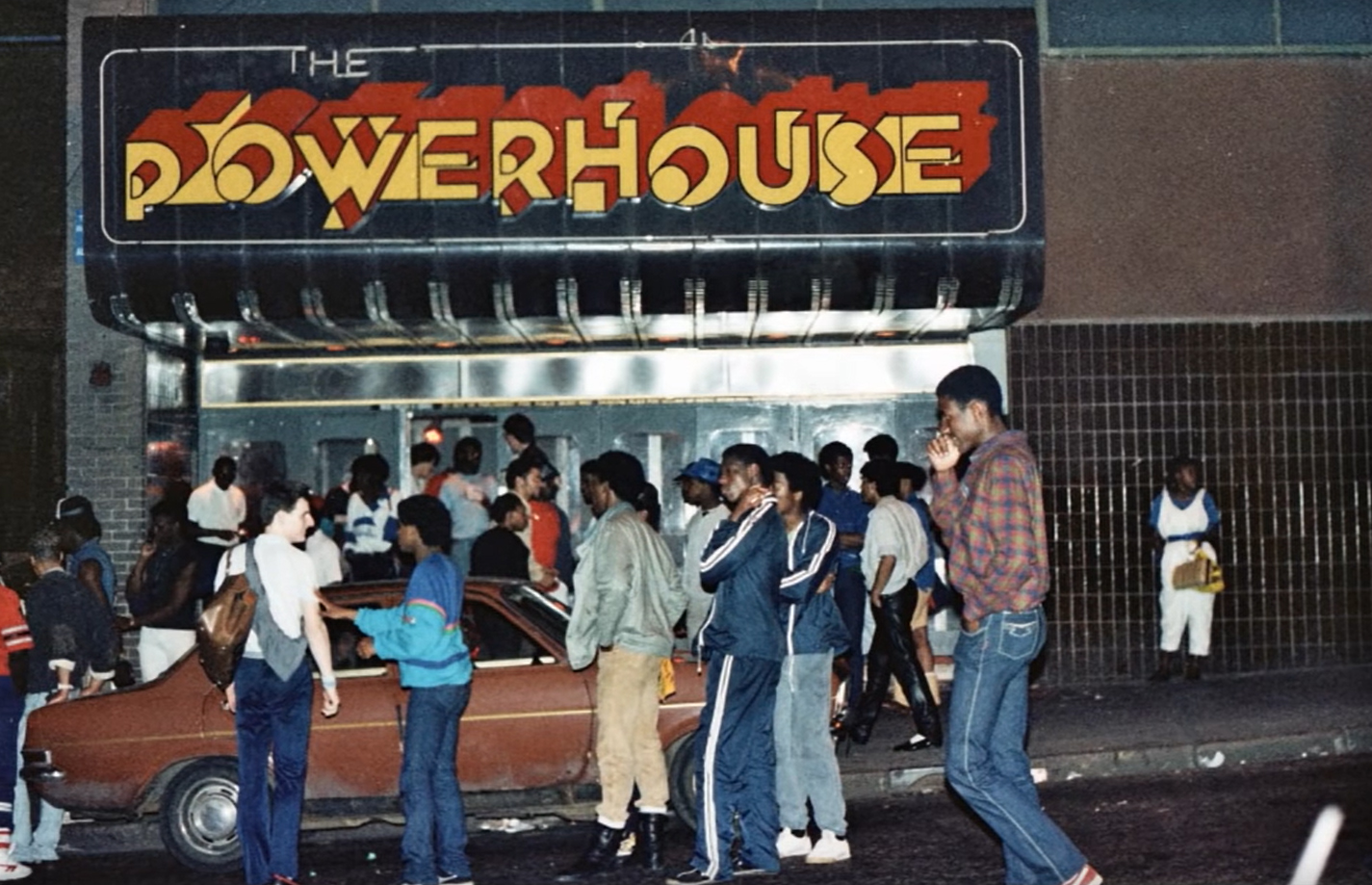
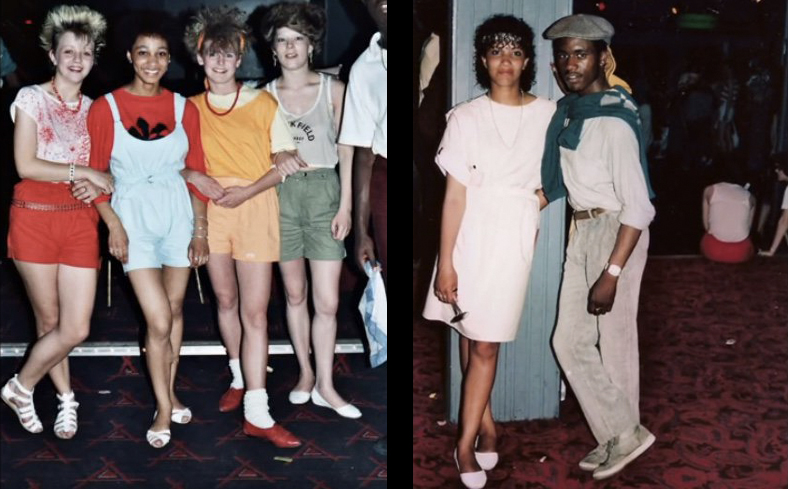 The Powerhouse, Jazz-Funk all-dayer, 1985. Taken from ‘Birmingham Powerhouse’ photo compilation
JW: Yeah, because we had a refit and then The Powerhouse had a refit, within probably six or nine months of each other. Going back to Saturday’s, we had radio DJs who suddenly realised that they were completely out of their depth, because these kids were coming up and asking for records that were massive on a Friday night and they weren’t even on the playlist on the radio (laughs). They were like, completely out of their depth! They were coming in, wanting to give out copies of a single, something that was a blatant Pop record, but the kids wanted to hear something else. It didn’t last very long before that was knocked on the head. But then they started asking me to DJ for the last hour, and of course, I just got the bit between the teeth and off we went. Within less than six months, it was probably three or four months at most, that was the demise of Radio Trent’s Kids Saturday afternoon and the rise of the Hip-Hop sessions that started on Saturday afternoons. It was another string to the bow, where after finishing Friday night at two o’clock in the morning, I’d have to get up Saturday morning, go to the record shop and then be ready by 12 o’clock for those afternoons. Then of course, after that, at four o’clock, I’d have a few hours where I’d have to get sorted, the staff would have to be in there, cleaning the club to reopen again for the Futurist night, or the Goth night, as it ended up. For me, it was like groundhog day every week. But it was just amazing!
GW: You’d have the adrenaline for it?
JW: You know. It was just non stop!
GW: I think you’ll appreciate this, and maybe have the sense of it yourself; when people say, “Oh, when you look back on that…”. It’s like, I knew it at the time. I knew at the moment it was going on, that this was something really special that hadn’t happened before. Legend for me was my ultimate. The vibe in there, the electricity, just knowing that you were playing exactly what you wanted to play, to exactly who you wanted to be playing it to. When I went to The Haçienda, which was the latter part of ‘83, with all the problems that I had there; The DJ booth was a nightmare at the time, but there were so many issues; the acoustics, everything was wrong. They couldn’t get a crowd in. People now talk to me about The Haçienda, when I’m abroad, they say, “Wow, it must have been amazing! What was The Haçienda like?” I say, “Well, not when I was there…”. But my ultimate was Legend. I can imagine with yourself, you’ve got those nights… I had Wigan Pier on Tuesday and Legend on Wednesday, so I had a similar thing going on. You had the Friday night, the Saturday night, and the daytime session. When I started at Wigan Pier, the demographic was probably 80% white to a 20% black crowd. By the time I left, it was probably 60% black. That’s in Wigan, you know. Legend was a black club, with a white representation that you will get in a black club, the same as you would have had at Rock City. So you’re in an amazing cultural moment, because this is the first time these kids had experienced such a club. Like you say, before places like Legend, Wigan Pier, The Powerhouse and Rock City, the nights that black kids were allowed into were in the worst hovels, broken down places that couldn’t get a crowd.
JW: Yeah. Or it was a Reggae club that would do a Soul night.
Suddenly they’ve been given a top notch, A1 venue that they were welcomed into with open arms, and they treated it with respect. Yes, there were bits of trouble, but very little compared with what potentially could have happened. There was very little trouble because they knew that this was their night, so there was a mutual respect there between me and that crowd. They didn’t want to mess it up because it was somewhere for them to go. It was a focal meeting point, “If you’re going out Friday, this is where we’re going. Everybody’s going to this!”, it was word of mouth. It wasn’t loads of adverts in Blues & Soul and Black Echoes, or loads of flyers. We did it word of mouth. Within three months, we turned it from nothing, into a full house and it was that way for a long time.
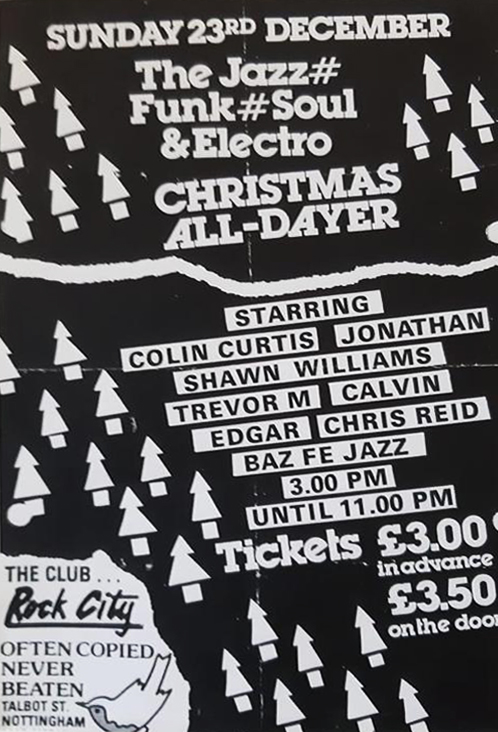 Rock City, Christmas, 1984
GW: You mentioned before about the breakdancers that came with the Milk Marketing Board, but can I ask you about The Rock City Crew. Both of us have a similar trajectory; I ended up managing Broken Glass in Manchester, almost by a kind of default situation, whereas you would manage the Rock City Crew. This thing, breakdancing, was amazing and we wanted to show it, “Look at this!”.
JW: Because we were playing those records in the right club, those kids were coming in, and they wanted to be a part of that music. We had the Saturday sessions, but some of the lads out of The Rock City Crew did come down on a Friday night too, unbeknownst to me, they were just people in the crowd.
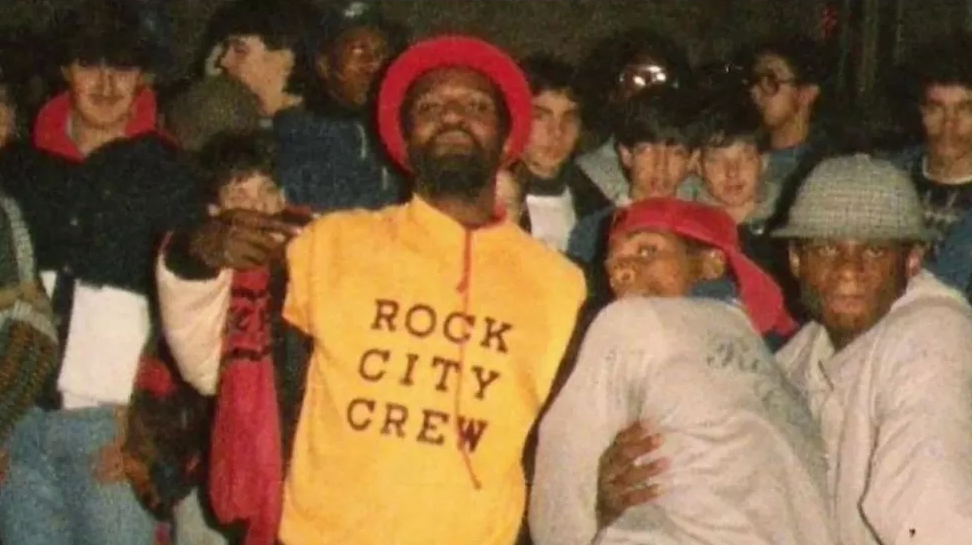
JW: Some of them travelled to all-dayers, because on a Friday night, I’d announce that there was a coach trip going to another all-dayer on the Sunday. So I did coach trips outside Rock City every Sunday, apart from the Sundays when all-dayers were on there. So if I was going up to Leeds, to do Tiffany’s, there’d be a coach full, we’d take one coach up there. If we did The Powerhouse it might be one or two coaches going over there. So every Sunday there would be a coach trip going to another all-dayer. So Nottingham would be represented in every city where there was an all-dayer, whether it was at Clouds in Preston, or wherever. All the way through, there were coach trips being run and of course, when I was at Rock City, it was run from Rock City.
 Tiffany’s, Blackpool & Cassanovas, Wakefield, 1980
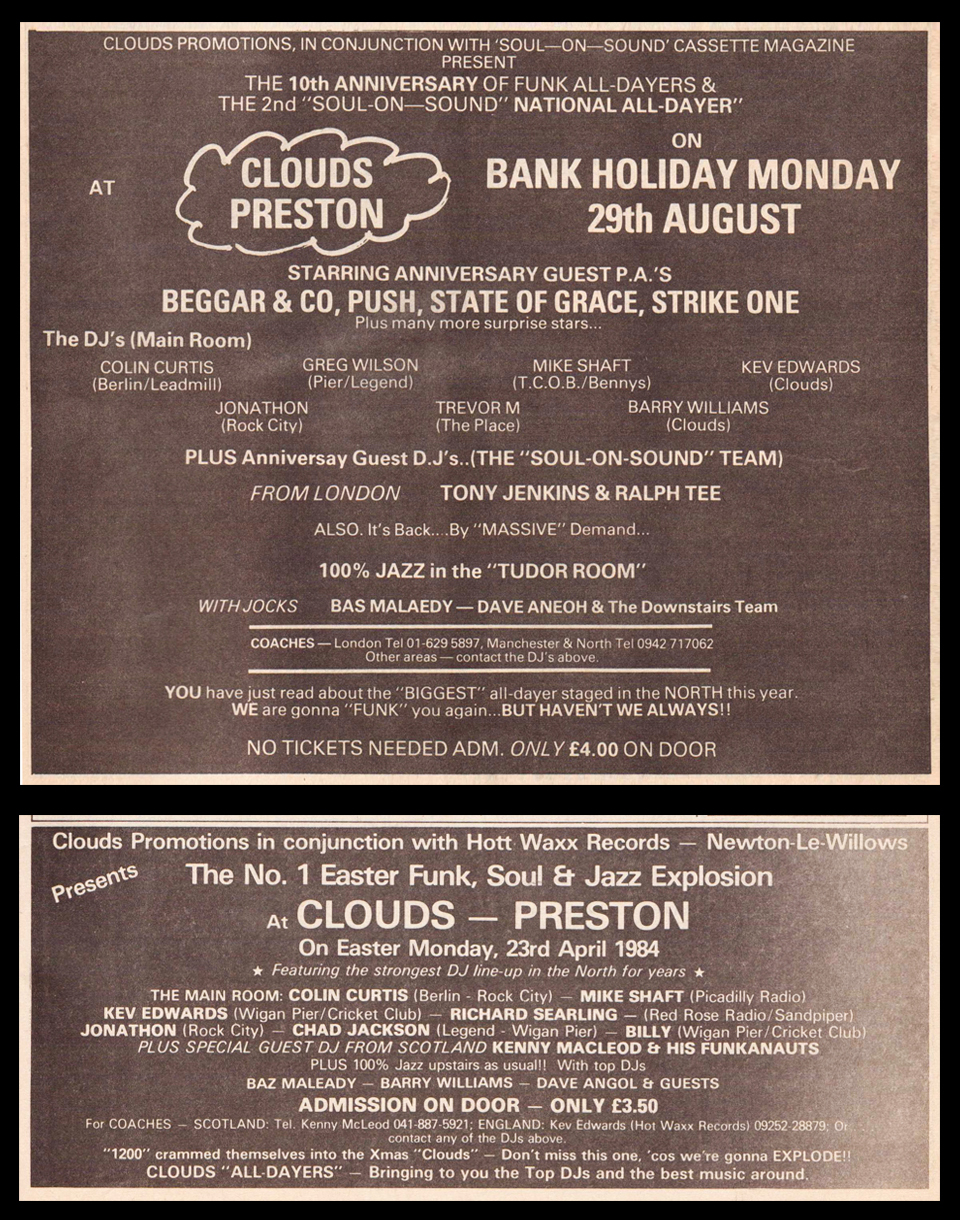 All-dayers at Clouds, Preston, 1983 (Top) & 1984 (Bottom)
 All-dayers, 1984, Sheffield (L) & London (R)
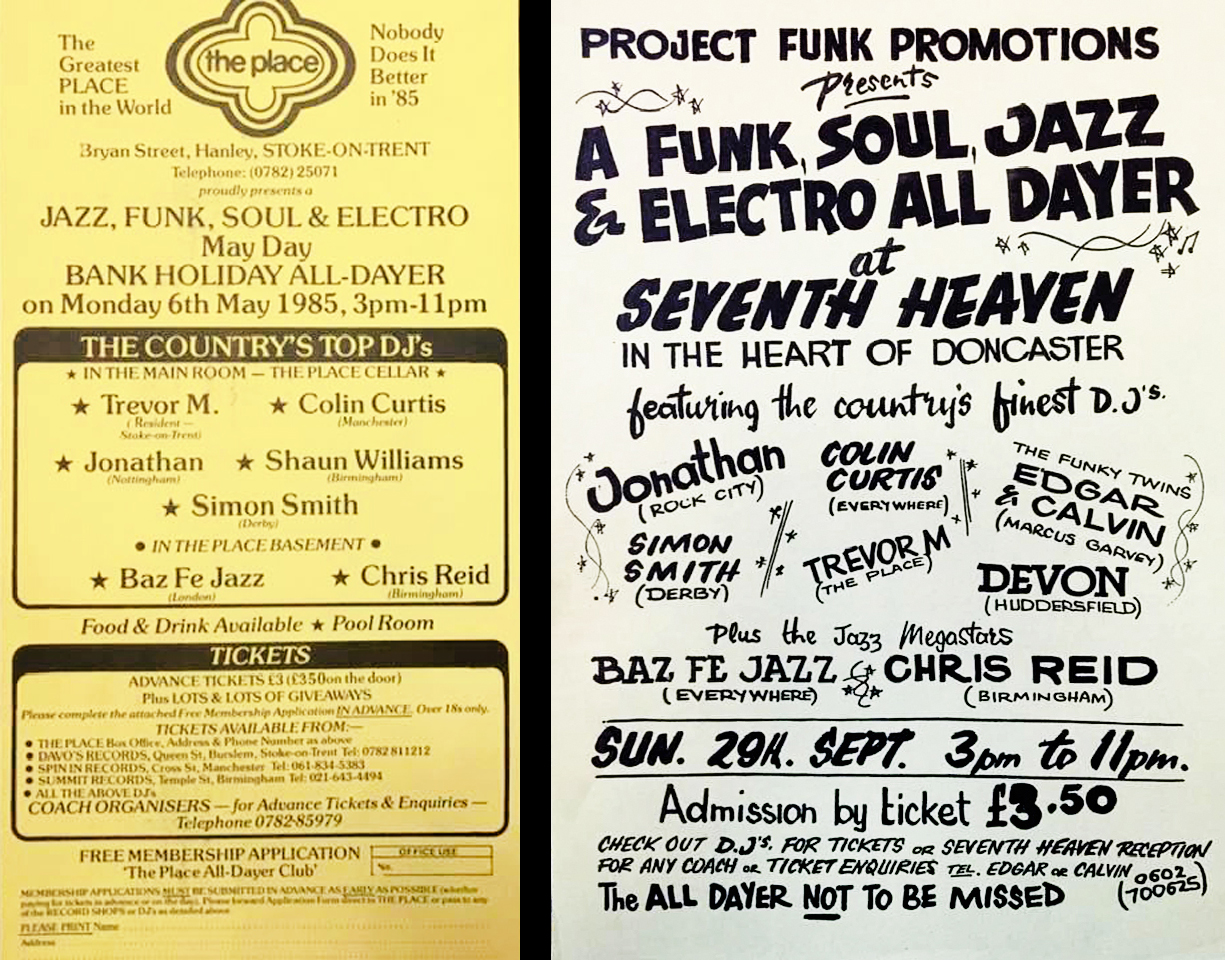 All-dayers, 1985, Stoke On Trent (L) & Doncaster (R)
JW: I’d get 1000 people at Rock City on a Friday night from Nottingham, and then the other 500/600 people were people coming from out of town. I didn’t know it at the time, but people like Normal Jay were coming up from London, because they’d heard about the club. A lot of the people that I knew came up from London, like Andy Marriot who worked at Greyhound Records, he said to me at the time, “There is nothing like this in London. What you play up here is completely different”.
 Rock City Crew
JW: The Rock City Crew was built out of auditions that took place on Saturday lunchtimes, where I picked a group. There were about 18 people, and I just said to them, “Right, I’ll open the club on nights when it’s not open and you can come in and rehearse”. I gave my time up and looked after them. A lot of them had had tough upbringings. Some were under 18 in there. 90% of the time, they respected me. A couple of them took the piss, but it was what it was and they became very, very successful. The club, then suddenly became interested in what they were doing, and what we were doing. So they wanted to get involved, saying, “Oh, we’ll do this, and we’ll do that”. So it was, kind of, taken out on my hands. I was like, “Well, Okay, if you’re going to get tracksuits for them…” and so on. But it didn’t quite work out. I think what they thought was going to happen, didn’t happen, and although they didn’t fall out with me, I think they felt let down. But at the end of the day, you’re only as good as the performance that you do, and what you put in you get back. I think when they went down to Brixton, to the UK breakdancing championships and got robbed by the London All Stars, that was a bitter pill for them to swallow. They all knew, and a lot of people in London said the same thing; that we were robbed that day, simply because the London All Stars wasn’t a crew that was regularly out there. They were a crew built specially for that event. At Brixton we lost that day.
 London All Star Breakers, 1985 (Photo by Martin Jones)
JW: We knew all the crews. I knew Danny Price from Broken Glass really well, and some of the other guys. Obviously, Goldie… Goldie was in the crew from Wolverhampton, the B-Boys. I let the lads do the talking. I knew the faces, because some of them had gone to all-dayers and I’d talked to them all. You know, some amazing times there, and some of them have done really well out of it.
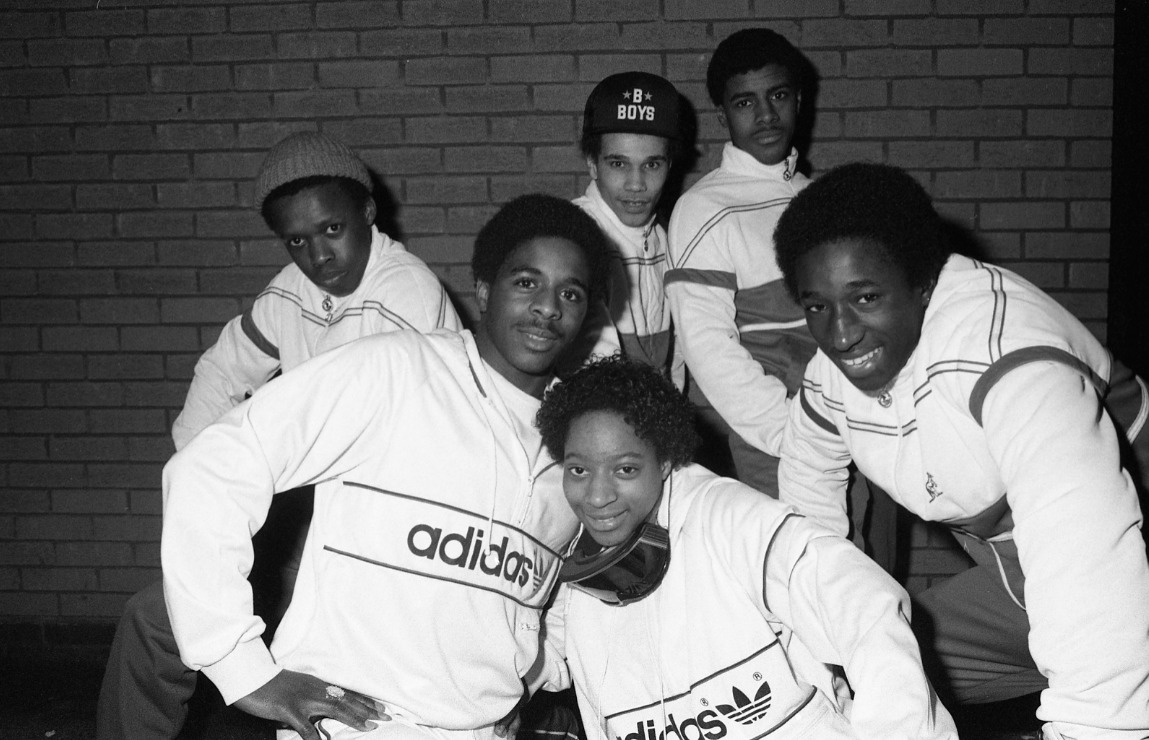 Goldie & The Wolverhampton Crew, 1985 (Photo by Martin Jones)
GW: Who was a guy who had dreads from The Rock City Crew?
JW: Sly Tommy Thomas.
GW: Yeah, he used to come up with some of them to Wigan Pier. I always remember him, just like I remember Goldie coming in with the Wolverhampton crew. This was the way, everything was crossing over. We were aware of Rock City early on, because we saw them, we saw their level and standard. I mean, we could add all the breakers from everywhere you know. Huddersfield were the first guys to take it on the floor! They were the first to do it; to actually to take it into the club. Then it was like everyone had primed themselves, but no one was going to do it. That must have gone on for a few months, with people practicing at home and getting their thing together.
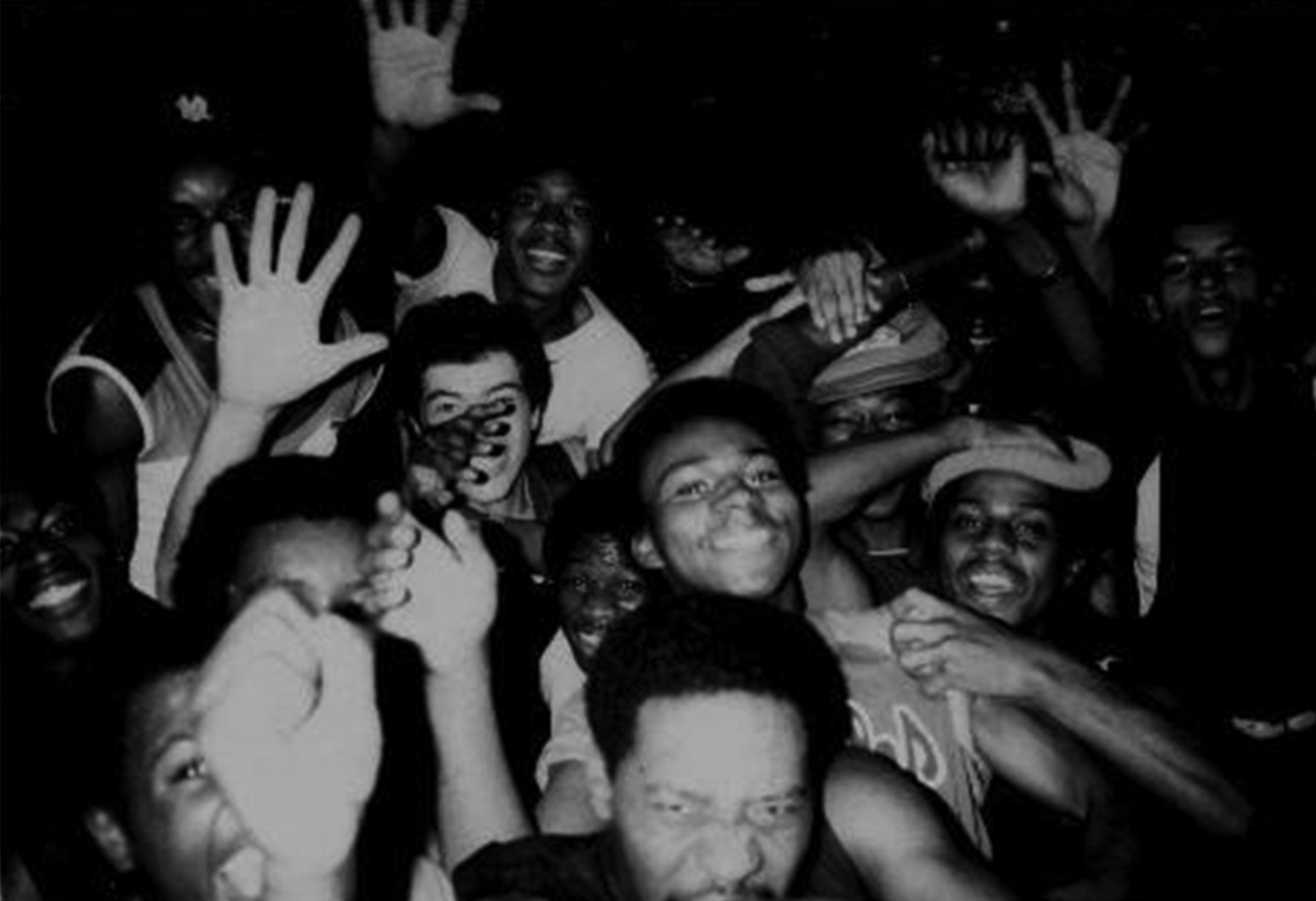 Huddersfield Crew, 1982
(Photo taken by Greg Wilson from the DJ booth at Stars Bar, Huddersfield)
JW: I’d see everybody on a Saturday afternoon, they all came down.
GW: That night when it blew up. It was like, there’s somebody doing that American thing, then all of a sudden, it’s happening. Everybody got to the proficiency to be able to… Talking about Danny Price, he said he used to cut his elbows through trying to do those windmills. He smashed them up and smashed them up. But he was determined to get it. This is what we’re talking about, a level of commitment to dance, and to the scene; that they had to be there at these nights. You had to be there! It was so important. There’s no comparison to what is happening now, in that sense, you can’t compare it to today because there was a different social climate then.
JW: Of course. It was the first time that those kids had been able to express themselves… I took kids off the street and turned them into household names, into stars. They could walk around Nottingham and everybody knew them, whereas six months before, they were just black kids that, wherever they lived, whether it be St Ann’s, The Meadows, Hyson Green, or wherever in Nottingham, they’d be known only on their streets, in that area. They wouldn’t be known right across the city. But then they became superstars overnight.
GW: It was the same thing with Broken Glass. Rock City Crew were Rock City’s crew, Broken Glass were adopted by The Haçienda. When I guested on Saturday nights there (my night was Friday), to try and get some of their regular crowd into the music I was playing, Broken Glass would dance on the stage. The Haçienda, was a members club at that point, but a lot of black kids didn’t have the money to buy memberships, so there were all sorts of problems, just even trying to get to first base with this. But that’s what Broken Glass became there, because I’d have them on the stage then. They actually toured as The Haçienda Dancers at one time, although they went off and did their own things as well, and, after my time, they continued on through.
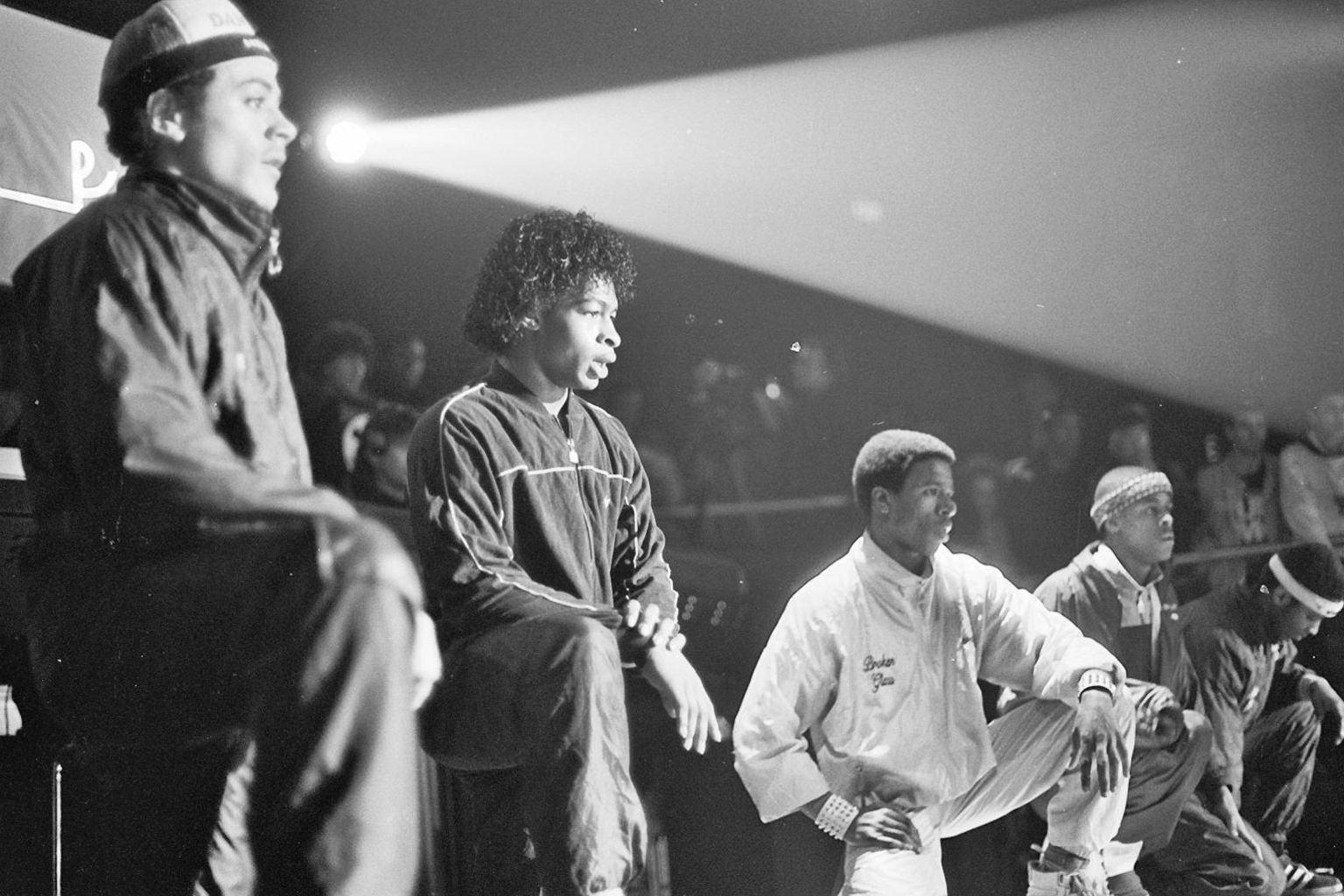 Broken Glass (Photo by Martin Jones)
GW: So the commitment of these kids was on a serious level. If you talk about dance, and even go away from the breakdancing, let’s talk about Jazz Fusion dancing, and what was going on before breakdancing came along. A lot of those Jazz Fusion dancers were amongst the first breakers, because they immediately had the athleticism to be able to take those moves on.
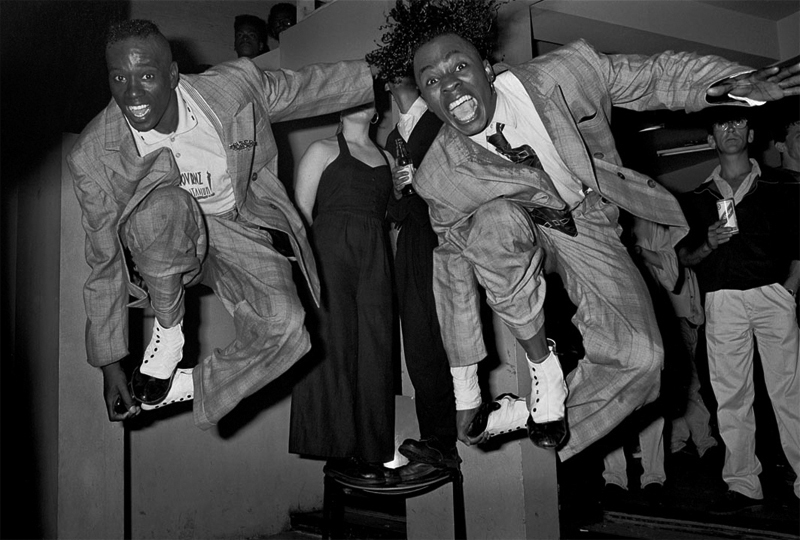 Foot Patrol dancers at The Haçienda (Photo by Ian Tilton)
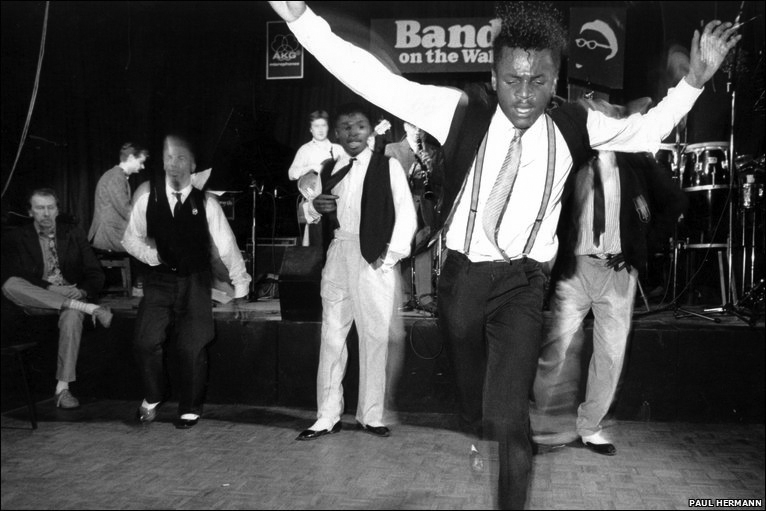 Foot Patrol dancers at Band on the Wall, Manchester (Photo by Paul Hermann)
JW: Well, there’s a line that runs through Nottingham where you’ve got the Jazz dancers, then some of the younger Jazz dancers ended up being the footwork guys, because obviously there’s a style of dancing to Jazz – you change from, sort of, ballet moves, to sort of, spats and tap dancing. So that was footwork. Then footwork was also involved with breakdancing, because when I put the original crew together when did auditions, there were already some people that I already knew that I wanted in. I’d already said yes to some. Then there was a pool of people that I was unsure about. I needed to see them rehearsing, to try and pick out. We then worked together. Of course, the ones that didn’t get in then formed their own crews and then their determination was, “Well, we didn’t get in Rock City, so we’ve got our own crew, we’re going to practice like hell, somewhere else” and “We’re going to beat them!” (the Rock City Crew). So there were regularly challenges on Saturday afternoons, between three or four different crews from Nottingham. Then of course, crews from out of town would come down as well, so there were some pretty tough Saturday afternoons.
GW: They had to be on their game, from their side, with the competition?
JW: Exactly. You had to be unbiased about this and let the crowd decide, but at the same time…
GW: You spoke about the Rock City Crew and going to London and you mentioned the London All Stars. As with Broken Glass, there’s film footage online, because a TV program was there when Broken Glass lost the competition to Street Machine, who were the crew that came through behind them in Manchester. Street Machine wanted to surpass Broken Glass and they became a great crew in their own right.
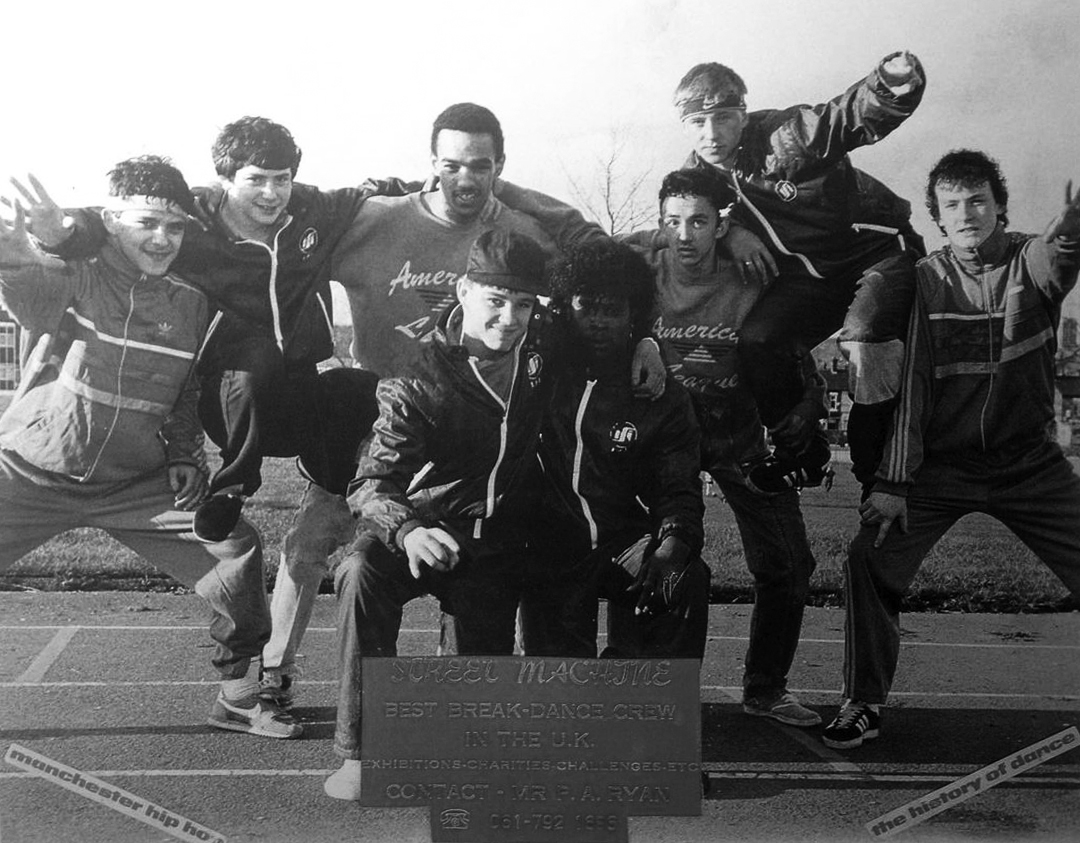 Street Machine
GW: But that’s what it was about; the competition. Broken Glass will say, “Well, we didn’t have such-and-such and so-and-so there that day”. No one’s going to admit, one way or the other. It was the same with Fusion dancing. With breakdancing, it could be a lot more exciting. In Broken Glass, we had Patrick Booth who, at the time had an unbeatable move where he did the flares from the floor. He could do these because he’d been a junior gymnast. A lot of kids later learned that move, but no one could do that for a period. That was just a specialist move that he could pull out at any time, if he needed to. Someone like Danny Price, who for me, was the best breakdancer of his generation. He was incredible! Danny was brought in, he wasn’t from Manchester, he was from Oldham. He was recruited into Broken Glass. There was also a Liverpool member, Dave the Wave who was the white guy, the body popper. But the rest of the crew was a self-formed core of kids in Manchester who went on the streets of Piccadilly Gardens, rolled out some lino and started dancing and passing a hat around for some money. I just came into that and built on that, really for them. So again, this was a parallel, between us, with this movement. I wasn’t part of the Northern Soul scene, but we pick up at the same time with Jazz-Funk and we move through Electro-Funk and then, with breakdance culture. With Legend… that finished it for me at Legend… What you were saying with Rock City… Rock City was a much bigger place than Legend. Legend was a 500 capacity and you can imagine how it went; we were getting people in from everywhere! Birmingham, Huddersfield, Leeds and Bradford. So when I played anything that was remotely Electro, then there was a ruck of guys challenging each other. The testosterone levels were high, and I’m looking at this and thinking the scene is not going to continue like this. It needed, and to be honest, I’ve only just thought of this now, it needed to move into the big cathedrals, places like your place – Rock City and The Powerhouse.
JW: But even then, when it was in those bigger clubs, you had those dance challenges, but it stopped the atmosphere, because the focal point became that challenge, at that moment. You’re saying it needed to go to those bigger clubs, but with the bigger clubs, it had a bigger problem. It stopped the atmosphere.
GW: Actually, thinking again about it. It translates, no matter how big the size of the club, it is the same situation. Once the music is the same, with all the rucks of guys all over the place, challenging each other. The girls in there are like, “God, I just want to get my groove on!”.
JW: Well exactly, you know, the challenges became a part of things, but yourself, as the conductor of the night, you could see that you couldn’t have challenges going on all night, because you would end up losing your night, because an element of people go, “Well, I’m not going down there because I can’t dance because everybody is challenging… I feel intimidated by them, because I can’t do that”. There were a lot of people there that loved the music, but they weren’t brilliant dancers. So you were having to draw it back. For me, when there were challenges on a Friday night, it would only be to certain records. I would either then cut those records short, or if it was two or three records on the bounce that they’d been challenging to, I would then change the tempo, on purpose, to stop the challenges and to bring everybody else back in. Because I was aware that if it wasn’t, not so much kept in check, but if the balance of the night didn’t shift too much, then it wouldn’t cause issues to the detriment of the night. So yes, I was aware that those challenges were a part of the night and were an integral part of the culture at that time. But too many challenges would ruin your night. When, as the Electro thing came along, for me at Rock City, there was a period where… it was probably just after you stopped, when we suddenly got that different sound again from The States; when they made more mid-tempo, nice, smooth, produced stuff. Rap also came along, which was a different thing again. We had Hip Hop all-dayers then as well. We had Kid ‘n’ Play on, we had Run-DMC, and we had the Def Jam Roadshow. Hip Hop was part of Friday the nights too, but not everybody was into Rap and there where elements with that where you couldn’t go too deep into it. But Saturday dinner time was perfect for it.
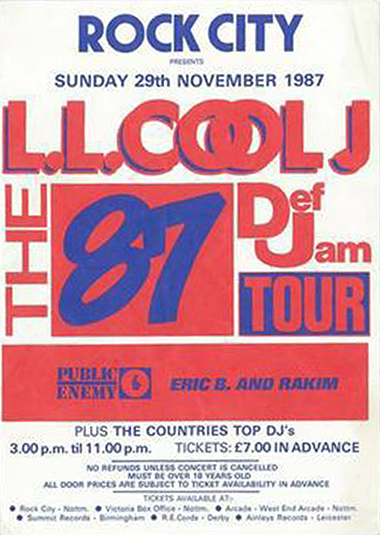 LL Cool J @ Rock City, 1979
GW: One thing I’ll always say to people, and you said it before; when you go back through Jazz-Funk, and those music scenes, they always retained a variety of black music, different strands, right through. I was still playing Jazz breaks at the height of Electro in Legend. But people think that Legend was an Electro club per se. But no, Electro was the predominant music at that certain point in time. So you’re talking about a time when the music was changing towards whatever was going to be the next phase. Finally, thankfully, people are starting to see this lineage; of what happened in the North and the Midlands, as opposed to what happened in London, with regards to House Music.
JW: What happened down there was completely different.
GW: The different dynamic there was just how big Rare Groove was, it was massive! It wasn’t as big in the North; in some places it wasn’t that big at all. I think it infiltrated the Midlands to a degree, but not to a London level.
JW: But not to the detriment of new releases. It was a nod to the past where you’d play the Jackson Sisters ‘I Believe in Miracles’ and ‘Across the Track’ (Maceo And The Macks). But you’d still be playing the new releases, where the Rare Groove thing in London was a scene.
GW: Yeah, exactly. A self-contained scene, on a musical lineage and this is where it’s an easy equation. It’s like House Music, of course, was going to be played in these clubs as a form of Electro initially, that just happens to come from Chicago.
JW: Yeah, exactly. That’s exactly what happened; where we were looking for up-tempo records. But you also had that smooth Nick Martinelli sound. So your tempo would come down to around 100 BPM, but you couldn’t have a whole night of playing Change, Krystol ‘After the Dance is Through’ and those kinds of records. You had to have some more up-tempo records to raise the atmosphere in the club. And, yes, those Electro records were there, you know, Hashim and a whole host of them from that time. Nitro Deluxe ‘Let’s Get Brutal’ , there’s a whole stack of things. Colin and I were looking for other records that’d bring everybody to the dance floor because it was an up-tempo record. I guess one of the things that set us on this new course was us playing Harlequin Four’s ‘Set it Off’. Not Strife, but Harlequin Four’s with Barbara Tucker, because that was massive, absolutely massive for me and Colin! but it was impossible to get hold of, because those copies just dried up after the first week, nobody could get it.
Then the early Trax records came out. We were on it literally way before London was even thinking about it. You’ve probably heard this interview, but they interviewed Larry Heard for a program on BBC called ‘Pioneers of House’. This is something that will set the record straight for the North once and for all, because Larry came over with Larry Sherman from Trax Records when they did a Trax tour. Now, they did Limelight in London. I think Limelight was on a Saturday and they did an all-dayer at Rock City on the Sunday. We put this Trax tour on at Rock City. That all-dayer was sold out, 1700 people! We had Marshall Jefferson, Larry Heard – Mr. Fingers. I think Frankie Knuckles was on that day too, as he came over with them. And Adonis, I can’t remember who else. So they did this all-dayer and it was just off the chain! We’d all already been championing these records, they were big records. So Larry Heard does this interview a few years later and this came up in his conversation. This sets it in stone, proof that without a shadow of a doubt, where House was played, because he said, “Well, we came over and we did the Limelight, and it was okay”. I think they did the Limelight on the Friday, somewhere else on the Saturday, then they did Rock City on the Sunday. He said, “We went to Rock City on the Sunday… I then knew what Michael Jackson felt like when he went on stage… I went on stage and as soon as I start playing my records, that place went ballistic!”. He also goes, “I was like, what the hell is going on here? How come all these people know my records?”. It was because we’d hammered all those records. Colin and I had hammered them! I mean, not just us, but other people had picked up on them too. But, you know, we were the ones that grabbed it and went for it. Those records weren’t big in London. No way! They weren’t even played in London first off. They ended up playing them after we played them up North. And I say, we, everybody was involved with it, but I do think that Colin and I were primarily the instigators. Within two or three weeks, every other DJ that worked the all-dayers were scrambling for these records, because they’d seen what had happened when we’d gone up to Huddersfield, Leeds, Bradford and Birmingham to do the all-dayers and we played those records and through the roof it went!
GW: Again, there was a different lineage in this respect, from London and the North and the Midlands, because the black crowd was with this music in the North and the Midlands, whereas in London, the early House was being played in forward thinking gay clubs. People like Mark Moore and Colin Faver were playing some of those things, but in a completely different setting. The development from the Northern side, in this respect, is part of a black lineage that moved through Funk, Disco, Jazz-Funk and Electro, before arriving at House. Elsewhere, at origin in Chicago it was a black, gay lineage. In London, it was a white, gay lineage. But in the North and Midlands it came out of the black scene, on the back of Electro.
It’s obvious from our point of view, because we understand the whole lineage, but with other people, there’s disconnect with what went before. I think what threw the whole thing out of place was the false narrative that House was somehow discovered in Ibiza – people thought, because they came back with ecstasy, they’d come back with House music as well. But it was just a straight extension of all the musical forms that had gone before, that you’ve been a part of yourself, during that whole period of time, that then was categorised as black music. But even that could blur the lines. In the moment, it was whether the music was right.
JW: Yeah, whether it was right for us. It fitted with what we were doing, and we were able to school our audience with what we thought was right. And luckily, it was.
GW: Yeah, it was. As you said, with Ryuichi Sakamoto, everyone was happy, they didn’t care that he was from Japan. All that Japanese Jazz, for God’s sake! Sadao Watanabe, Hiroshi Fukumura and all those. So it was an open-minded scene musically. It was always open-minded. I think it was like when Electro came along, with a lot of the criticism from the purists at the time; that it wasn’t black music, which is just ridiculous now, when you think that people actually said that.
From my perspective, Jonathan, I grew up loving Soul music in the ‘60s. Otis Reading, Wilson Pickett, all that was Soul. But for me, the Soul music of the early ‘80s was, you know, Luther Vandross – great. Alexander O’Neill – beautiful, but absolutely produced to the ‘enth degree. It was aspirational music, but it didn’t have the raw edge. ‘Planet Rock’ has more in common with ‘I Can’t Turn You Loose’ than a lot of the Soul music of that time, because it was coming from that raw place. So the effect of Electro and the connection between the music that went before, which was Soul, Funk, Disco, Jazz-Funk, and the music that came later, which was Hip Hop, House and Techno. For me, Electro is that pivotal point that allowed one thing to change into the other.
JW: Yeah, absolutely. You’re absolutely right. I think the all-dayers came to an end when a certain drug was discovered and suddenly thousands of white kids started going clubbing again – because they’d discovered a drug.
GW: …and that drove the black kids off the floor. I saw what happened with The Haçienda. Oddly, at one point, there was a journalist from the Guardian or the Observer, who wanted to do a piece because I’d been talking about how black kids had brought House music into The Haçienda. This journalist was well up for it, he could see what I was saying and everything. But it all came down to a photo, “Have you got a photo?”, but there was no photo. The closest I could find was of Foot Patrol, who were doing a show at The Haçienda. But it wasn’t enough and as a result, they never wrote the piece. So as a result, a whole chunk of history was potentially missed out and misunderstood.
JW: Exactly, I mean, I can remember going up to that all-dayer that they had at The Haçienda, where they had the pillbox DJ console to the left of the stage and you had that little slit of a window. You probably played on that day.
GW: That was my world, mate. That was my world.
 All-dayer at The Haçienda, 1983 & The first Haçienda DJ Booth (Photo by Hewan Clarke)
JW: I’d heard about this because I went up there. Paul Mason had done a night out, where he taken some of the staff on a minibus up to The Haçienda to see Bow Wow Wow. It was on a night when the club (Rock City) wasn’t open. So we all went up there to have a look at The Haçienda, which was the first time I’d been there. Within about six months, there was an all-dayer on there that I played at. I looked at the club that first night and I didn’t like it, I thought it was too cold. That was borne out when I went to do that all-dayer. I have to say, that would probably be one of the worst all-dayers that I played at. In a club that people now revere as the birth of House in the UK…. And I’m like, Really? Really? You think that’s where it started? You are so wrong (laughs).
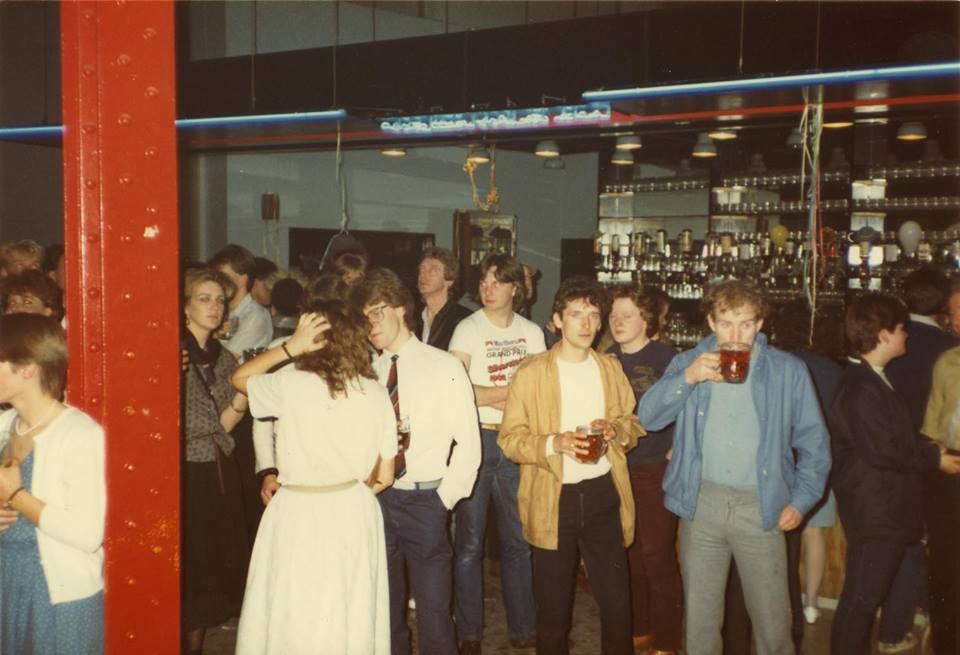 Pre-rave Haçienda, 1982 (Photo taken on the opening night by Ben Kelly)
The Hacienda in 1983
GW: Now we’ve got to the Haçienda, very interestingly, there are two massive Nottingham connections with the Haç. Of course, everyone knows about Graeme Park, who I believe was working at the Garage in Nottingham, but he also cut his teeth doing all-dayers with you in Rock City?
JW: That’s right. What happened was Graeme used to do a student night on a Tuesday in The Garage. That was when the DJ console was at the opposite end to where it was when he ended up doing the Saturday nights in there. So I’d go down on the Tuesday night, if we hadn’t got a band on. I’d go out round town and go to every single club that was open, where there was a DJ on that I knew. So I’d go to Part 2, the gay club where Pete Martine DJ’d. The gay clubs had good sound systems. Pete Martine at Part 2 was a very flamboyant DJ, good at mixing, played what he played, to that crowd. The club had a brilliant sound system, so I’d go there, then I’d go and see Graeme at The Garage. He’d be playing The Smiths, Talking Heads, you know, very much a ‘studenty’ mix of things; a bit of James Brown and a real mixture of stuff. All over the shop, but it worked all right. But he was struggling to mix records. One night I was like, “Graeme, you see those rubber mats that you’ve got on the decks. You want to take them off and get some slip-mats.” He looked at me, and I went, “See what you think when you buy them”, and that was that. You ask Graeme now and he will recite that word for word. But I had to tell him that (Laughs). He used to come down to the all-dayers and he used to beg me to play the all-dayers at Rock City. Then finally I put him on and he was good at what he did, but it was different again. It wasn’t how Colin and I played at the all-dayers. This was somebody else looking at music differently and putting things together differently. I’m not saying that what he did was wrong or right. It was just different. That was the start with what he was doing at The Garage. It was the start of his rise, a rise that would inevitably end up where Paul Mason was, up at The Haçienda.
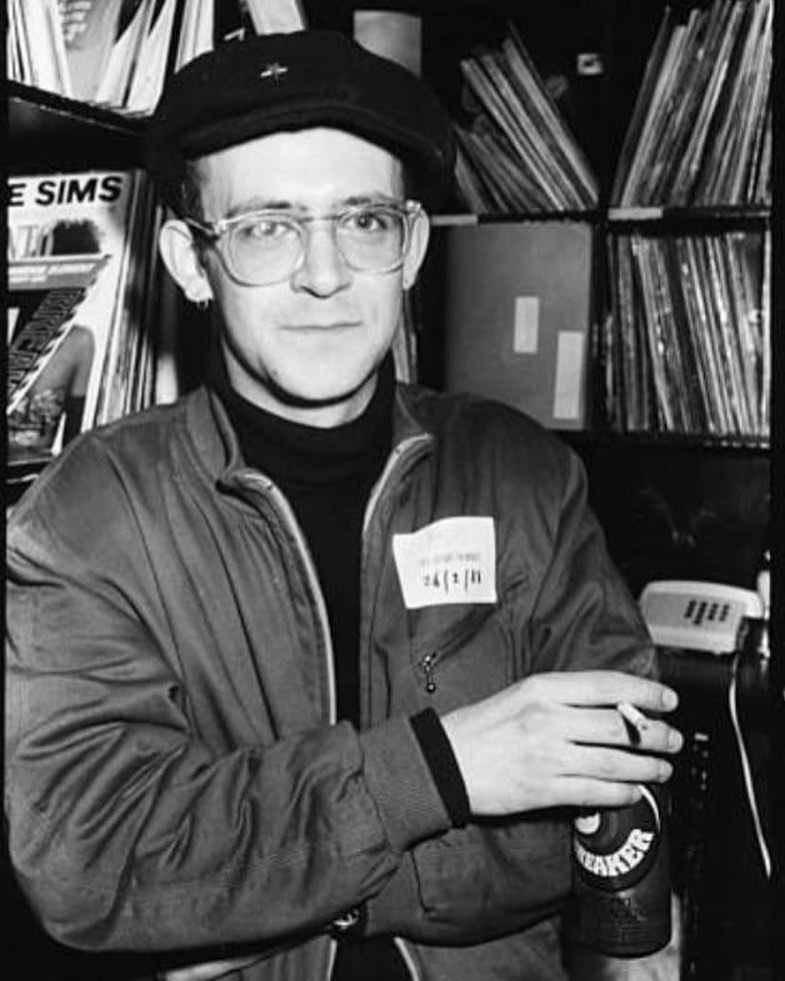 Graeme Park, 1988
(Photo taken before his first DJ appearance at The Haçienda)
JW: When Paul left Rock City, because I’d done that all-dayer, I had no interest in doing The Haçienda. Andy Bentley, who worked at Rock City, went up there for a while to DJ for Paul. That was way before Graeme started. Andy would go up there, I think it was on a Friday night, because Andy was coming back and doing Rock City on the Saturday night. I just didn’t get that club at all, even when I went there one Christmas Eve, after I’d left Rock City. This would be ’90 or ’91, or it might have been ’89 or ’90, when I went on the road with Allister Whitehead – I think it was either Christmas Eve or it was New Year’s Eve, I can’t remember which. But he’d got five gigs that night and we went to The Haçienda. I think Tom Wainwright, Graeme Park and Alistair were playing there. Even then, I thought the atmosphere was there, but it was driven by the drug, not by the music, and I could see it had all changed. I was aware of the big raves in London. There were big raves on just outside Nottingham too. They were all over the place! But the music was programmed completely differently and the drugs determined what was being played. It was different again, and it was a whole different set of people.
That black crowd that had followed me through that journey had stopped, House music had started and they were on that journey, this drug had come along and it just blew everything, here, there and everywhere! For me, I continued to buy House music, but I didn’t go to any of those raves. I only went to listen to the American DJs, because they were the ones who played it how I wanted to hear it. You know, much as though I’d go and watch Allister and Graeme play, I wanted to hear the Americans play it. I used to go and see Danny Tenaglia in the very early days of the music conference in Miami, or Kenny and Louie of Masters at Work, or Todd Terry. I went down when Steve Rain did that massive thing in London, when he had about 40 DJs on one night at Bagleys. I went down there and it was literally just about every single American DJ you could possibly want to see on one night. I got in on the guest list and went swapping records with Kenny Dope. Kenny had been asking me for Rare Groove albums, and he’d be giving me test pressings of ‘Sume Sigh Say’ (House Of Gypsies) and all manner of other things.
With the Rave thing, I didn’t not like it, but I couldn’t get into it. I couldn’t get into it because I didn’t do those drugs. At that time, all I ever did was smoke weed. That would work in that environment. There are a few records that I like, but seeing loads of people completely off their trolleys, with glow sticks, dancing to music – that was not for me. There was less ‘soul’ in it. It was driven by the drug and noises that would enhance your night, rather than the thing that, for me, was always the main ingredient – soul. Hearing live instruments being played, even if it was a drum machine, the pattern was different, the way it was programmed was different again, and that wasn’t for me. I then went down a different path and it ended up where I was hardly DJing at all. I was a supplier of records to DJs from 1990 to 2000. I was probably at the store, Arcade Records, for 12 or 13 years. I played out, I did odd gigs, I hadn’t got a residency and I didn’t get a DJ residency again. I would just go out and play the back rooms in clubs around the country that had a back room. I’d do a bit of Rare Groove and a bit of Disco, so I’d just go and do those gigs. That was what I ended up doing, because the store was my main source of income. That for me, was like being a kid in a sweet shop, because I got to hear everything. I got sent everything and I was spoiled. I just went over piles of records every week, even more than I did in the ‘80s and the ‘70’s.
GW: So when was it you actually left? What year was it you left Rock City?
JW: I think it was ‘87. I went back over to the States on a bike trip for two weeks. Just hunting for records; Northern Soul records, Jazz albums, rare twelves and all kinds of stuff, which was great. Then I came back with loads of promo 12s; Depeche Mode promo twelves, Prince promo twelves, I put them into Arcade Records and sold them there, so I had some money to live on and keep buying records. I then got offered a job there and thought, “Okay, why not work in a record store?”. I was there for 12 years as the buyer for the dance department. Of course, everybody who got into House music from that date onwards, from ’87/’88, had to come to me to get those records. Obviously I supplied Graeme. I supplied Allister, Christian Woodyat, Angel, the DIY Sound System, all those guys. You’d have people like Sasha coming in every now and again, he’d pick a few records up if he was playing down at Venus (legendary Nottingham rave venue). So that’s what happened; I became a selector of tunes for all the DJs, rather than me being the selector at clubs.
I came from an era where mixing wasn’t required to control a night, it was more the ability to drop the right record at the right time, on a break, rather than have a running mix, or three copies of a record running at once. Even though I’d see Kenny and Louis work on five decks at Southport Weekender, playing some blinding sets. I couldn’t do that and I put my hands up. I’ve stuck with the same medium, I always play off vinyl. I don’t bring memory sticks with me. I don’t own a pair of Pioneer CDJs. I’ve got two decks in the house, so that’s what I play off. You know, that’s what I’ve always done and I’m not about to change now. I’m 62, do I need to change? No, I don’t. I’m quite happy buying the records. Through lockdown, I just bought loads and loads of Jazz, Funk, Soul and Rare Groove records, new and old. Over the past 10 years, I’ve built a nice collection of Northern Soul originals back up again. I’m happy doing what I’m doing now. I don’t want to go out and try to reinvent club land. My time has been and gone, now it’s time for others. I’m sure people don’t want to see a 62 year old playing records.
GW: Well, I’m one year behind you, mate, so keep your mouth shut! (laughs). Mind you, I play CDs, so there’s a difference.
JW: There’s a difference. The technology moved on and I didn’t embrace the technology. I’m happy in the medium that I live in. DJing has never been my sole source of income. When I left the record store, I went to work at a pressing plant. I was there at an independent pressing plant for probably five years. Then I left and went to work for another company that was involved with Dulux paint, so a completely different career change. Then, three or four years after that, I got talking to John Adams at Hardwick Hall. It was all about doing a ‘Manor Born’ Christmas party. John said, “Do you think we should do another one of those this year?”. I said, “Yes, I think we should do it on Boxing Day”. We just got chatting because, Dawn, my wife, used to work for John at the hotel at Hardwick Hall. That’s where Dawn and I met, she moved down to Nottingham and we got married, had children, then we moved back up here, to Darlington. Dawn always wanted to move to Darlington. So we sold the house in Nottingham and moved up here. When I was talking to John, I said, “Oh, I’ve just bought a house in Darlington. I’m looking for a job up here”, as I was still working in Nottingham. John said, “Oh, I’ve got a job for you, when are you next up?”. It was literally the next weekend. He said, “Come and see me. I’ll meet you on the Saturday at Hardwick Hall”. We met and two weeks later I was working full-time for him. That was eight or nine years ago. So I do the Hardwick festival.

GW: And how long has the festival been going?
JW: Well, we didn’t do one last year, due to Covid. This year would have been the 10th year. So we’ve done eight or nine of them now, I think. Yeah, and a good time is had by all. Although it is hard work and long hours. We do other events up there as well; we have some big corporate events that I’m tasked with sorting out the PA and lights for, getting the spec right and looking after the acts. For many years, I’ve also worked for Alex Lowes, doing the Southport Weekenders. So you know, our paths cross again from there, don’t they?
GW: Yeah. A couple of other things I wanted to ask you about – people with Nottingham connections. I don’t know if you remember a guy called Pete Darrington at all?
JW: The name rings the bell.
GW: He used to go to your Rock City Saturdays when he was a lad. Later, he did some music. I remember him telling me about this guy, Master Scratch.
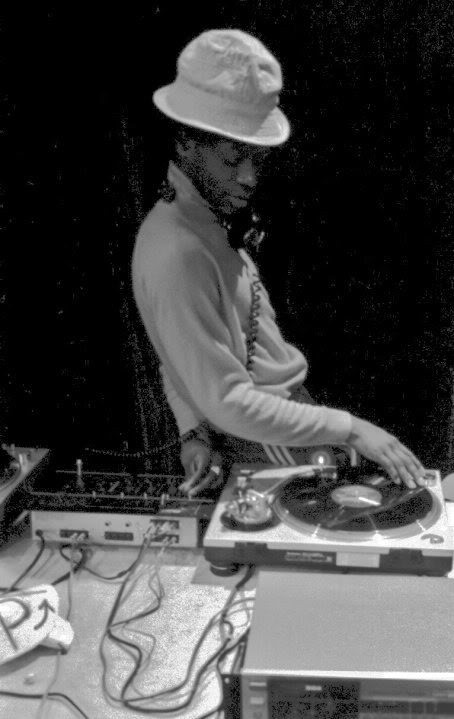 Master Scratch
JW: Right, so on the Saturday, when we started doing the breakdancing thing… Franklin Hughes is Master Scratch. So Franklin came up and said, “I’d like to DJ”, so I said, yeah. Then between us, we would do the Saturdays. We’d go hunting for breaks, finding out what records that certain breaks were from. Obviously, with me being slightly older and having a large record collection, it was quite easy for me to find those breaks, because I already had those albums for other tracks. So I’d just go to those albums, “That’s what we used to play at the Jazz-Funk all-dayers, but that is the break that…”. Whether it was Grandmaster Flash or Cash Money, I knew that’s where that break came from, because I happened to have that album. You know, we’d cover up the breaks so that other people didn’t know. Franklin was far more technical, I could do a bit of scratching and cutting, but not as good as he could. I didn’t have the time.
GW: So he was like, your turntablist?
JW: Yes. I didn’t have the time to practice that, because of the amount of different nights I was doing at Rock City.
GW: That was another one of the reasons that contributed to me finishing DJing. I’d realised that I’d have to embrace those turntablist aspects fully. But I understood that doing that would involve a lot of time, effort and energy, I wasn’t prepared to do that. Whereas Chad Jackson, who came through behind me, he was the younger guy, he was hungry, and prepared to do all that. He eventually won the World Mixing Championship. So yeah, I get that.
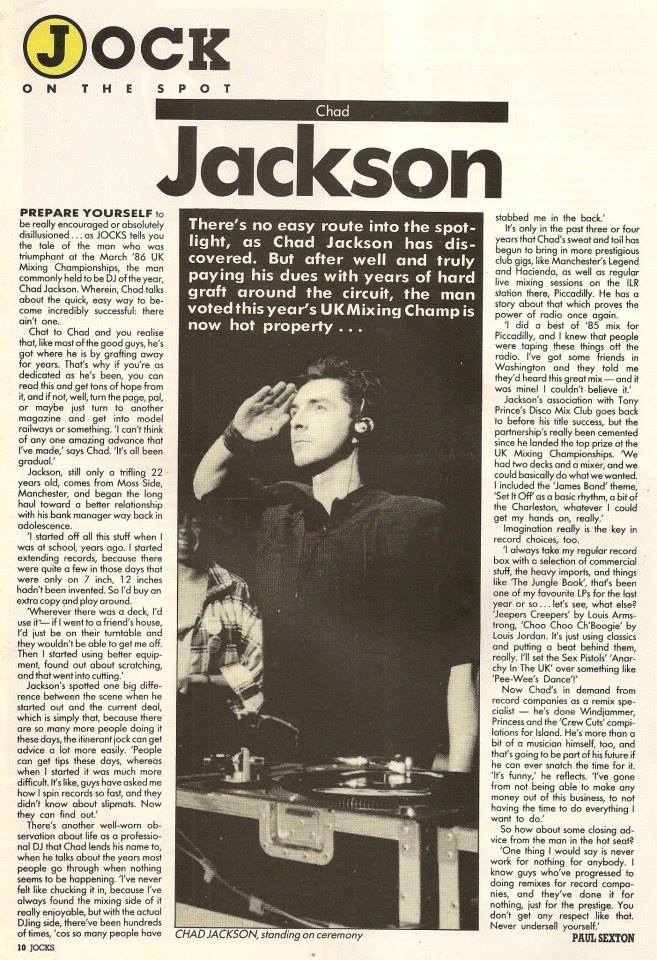
JW: Credit to all those people who did that, because you’re absolutely right, it took a lot of time, effort and dedication to get right. Just like with the dancers. As you say, it wasn’t for us, so Franklin was the turntablist. What we did, because people then, the kids, were coming up… obviously they couldn’t afford to buy the records. But a tape was a good medium to have. So Franklin would do Master Scratch tapes that were all mixed. Then I did two different tapes. I did one where it was the last four or five weeks of the new 12’s that were right for the Saturday dinner-times, they would be taped. But I also had a friend of mine who’d come down to the club, one of his best mates in New York would tape WBLS Rap Attack shows and send the tapes over. I bought two Hitachi machines that would record on fast record on both the A and B sides. So Mick would come to the club and go, “Well, so-and-so from New York just sent me these five tapes over…” I was like, “Right, here we go!”, I’d go straight down to buy a load of TDKs. So, yeah, I do one tape out of the five tapes, the next Saturday, tape number one would be done, dated. 40 or 50 tapes run off. Sold at a fiver each, because the kids wanted them! Having Rap Attack on a tape… there was no other way they could get them. You couldn’t tune into it on a computer, because they didn’t have one, they didn’t exist. This was a direct connection to New York, and this happened all the way through the Saturday afternoons. These tapes came in, Franklin would do his, and I would do mine. They’d be completely different, but they all helped keep that whole connection alive.
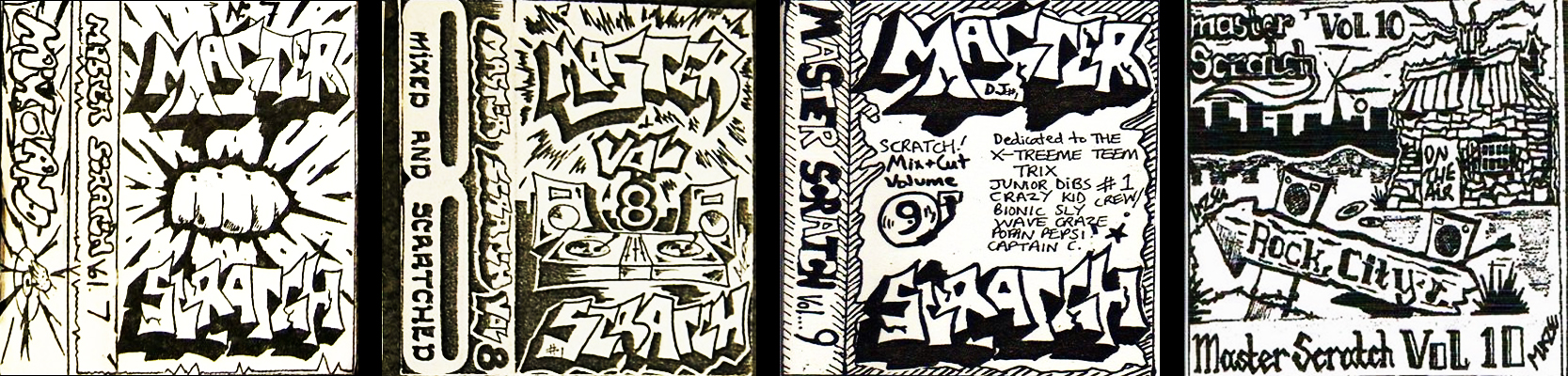 Master Scratch tape archive on Discogs
GW: Yeah, it put the word around because you didn’t have much by way of specialist radio in Nottingham, did you?
JW: Nothing.
GW: So there was nothing catering for the black crowd, apart from in the clubs?
JW: Exactly. There were a couple of community radio stations, but they were in their infancy. It was mainly a Reggae driven station, they played Lovers Rock and some Soul. What used to happen on Friday night was, some of the guys from some of the sound systems used to come down and hear what I was playing. Records that were massive… I had a signature record I’d play at the end of the night. Don’t ask me why this record was picked, but I always used to finish the Friday nights with The Jones Girls, ‘This Feeling’s Killing Me’. Before that it would be the Isley Brothers ‘Between the Sheets’. Then it would probably be Mtume ‘You, Me and He’. That was played as a new release, at the end of the night because it was just such a phenomenal record!
Mtume ‘You, Me and He’
JW: When we had Mtume perform live at an all-dayer, they did ‘You Me and He’ and the place was just electric! So I played that record and it became part of the Friday night ritual. Those three records would always be played as the last three records. Then suddenly, all the sound systems in Nottingham were playing ‘This Feeling’s Killing Me’ (laughs). There were a couple of times when the lads from the sound systems were going, “Come down and play at the blues” (blues parties). So I’d go down and bring the bullets. You know, the new releases that had fat basslines and sweet vocals, they’d be the cause of some right trouble! (laughs).
But yeah, that’s what Franklin did on the Saturdays and it worked really well.
GW: He went there just on the Saturday with you?
JW: Yeah, he ended up being the Rock City Crew’s DJ. So he was part of the Rock City Crew. He’d go on tour with them. Master Scratch would be the one who went out with Grandmaster Melle Mel, because Flash had left. Grandmaster Melle Mel did this tour, and they were the supporting act, they went out on the road with them. They thoroughly enjoyed it, because they already had the routines down.
They went the same way all the other crews… To be suddenly put on a pedestal and everybody knows you. These kids from Nottingham were suddenly known right across the country and right across Europe. Rock City took them to Germany, to the breakdancing championships. They didn’t do as well as they thought they would. I didn’t go, Paul Mason took them over there. I don’t think the crew really respected Paul. So they came back and I think that was when there was a difference of opinion. The Rock City Crew then became The Extreme Team. They did a tour of Italy, then other people took over the mantle of looking after the crew, because I couldn’t do it. I was just too busy. I had to say, “Well, guys, I’ve done what I can do…” and I hadn’t made any money from it. They all knew that and we all stayed as friends. Some were, obviously, a little bitter about it, because they felt Rock City hadn’t done them justice. But that was out of my control, it was taken away from me.
Trix ended up going all around the world with the breakdancing championships, as an MC for that. Tommy Sly works in Nottingham, he’s not very well now. Three or four others, Ian Bedwood – Dibs was his stage name, Oliver Darby and Lloyd, they’ve all sadly passed away through drug misuse. A couple of the others are, you know, paranoid about everything now, again, from too many drugs and thinking that there’s been a conspiracy to stop them, as artists in their own right, from becoming superstars. It’s pretty sad. Then with the other guys I see, they look back on that whole thing with fond memories of it. When I see them, they’re just like long lost friends. Others were quite spiteful, or have just lost the plot. These things happen, don’t they?
Jonathan’s Record List 1980 – 1987:
- 52nd Street – Tell Me (How It Feels) (Extended) [10 Records]
- Active Force – Give Me Your Love (Specially Extended Version) [A&M Records]
- Al McCall – Hard Times [West End Records]
- Alicia Myers – You Get The Best Of Me (Say, Say, Say) [MCA Records]
- Arnie’s Love – I’m Out Of Your Life [Radar]
- Atlantic Star – Silver Shadow (Specially Remixed Version)
- Atlantic Starr – Circles [A&M Records]
- B B & Q – (I’m A) Dreamer [Elektra]
- B B & Q – Genie [Elektra]
- B.B.C.S. & A. – Rock Shock [Sam Records]
- B.T. (Brenda Taylor) – You Can’t Have Your Cake And Eat It Too (Vocal) [West End Records]
- Barbara Mason – Another Man (Vocal) [West End Records]
- Billy Griffin – Hold Me Tighter In The Rain [Columbia]
- Booker Newberry III – Love Town (Short Version) [Boardwalk Enertainment Co]
- Brass Construction – Walkin’ The Line [Capitol]
- C.O.D. – In The Bottle (Extended Edit) [Disconet]
- C.O.D. – In The Bottle [Emergency]
- Captain Rapp – Bad Times (I Can’t Stand It) [Saturn Records]
- Carl Smith – Come Back Lover [Clarence Music Records]
- Carol Williams – You’ve Reached The Bottom Line (Vocal Version) [Vanguard]
- Change – Mutual Attraction (Vocal / Long Remix Version) [Atlantic]
- Cheryl Lynn – Encore [Dance Version] [Columbia]
- Chi-Lites – Changing For You [R & B Records]
- Collage – Get In Touch With Me [Solar]
- Curtis Hairston – I Want You (All Tonight) [Pretty Pearl]
- ‘D” Train – Music [Prelude Records]
- Dennis Edwards – Don’t Look Any Further [Red Label]
- Dunn & Bruce Street – Shout For Joy [Devaki Records]
- E.T. Boogie – Extra T’s [Sunnyview]
- Electrik Funk – On A Journey (I Sing The Funk Electric) [Prelude Records]
- Eugener Wilde – Gotta Get You Home Tonight [Philly World Records]
- Evelyn King – Get Loose [RCA]
- Evelyn King – I’m In Love [RCA]
- Evelyn King – Love Come Down [RCA]
- Ex Tras – Haven’t Been Funked Enough [Excellent]
- Fat Larry’s Band – Act Like You Know [WMOT Records]
- Flowchart – Ask The Boss (Remix Version)
- Fonda Ray – Over Like A Fat Rat [Vanguard]
- Freak It Out – Electric Smoke [Blue Records, Inc.]
- Funk Fusion Band – Can You Feel It (Edited Version) [WMOT Records]
- Galaxxy – Sexy Style (Club Mix) [Pop Art Records]
- Gladys Knight & The Pips – Save The Overtime (For Me) [Columbia]
- Glen Adams Affair – Just A Groove [Sam Records]
- Glenn Jones – I Am Somebody [RCA]
- Gwen Guthrie – Aint Nothin’ Goin’ On But The Rent [Polydor]
- Gwen Guthrie – Outside In The Rain (Larry Levan 12” Megamix) [Polydor]
- Gwen McCrae – Keep The Fire Burning [Atlantic]
- Hanson & Davis – Tonight (Love Will Make It Right) [Fresh Records]
- Harlequin Four’s – Set It Off [Jus Born Records]
- Hashim – Al-Naafiysh [Cutting Records]
- Herbie Hancock – Rockit (Long/Album Version) [Columbia]
- Howard Johnson – So Fine (Edited Version) [A&M Records]
- Ingram – D.J.’s Delight [Mirage]
- Instant Funk – No stoppin’ That Rockin’ [Salsoul Records]
- J.M. Silk – Music Is The Key [D.J. International Records]
- James Ingram – Yah Mo Be There (With Michael McDonald) (Jellybean Remix) [Qwest Records]
- Jeffrey Osborne – Don’t Get So Mad [A&M Records]
- Jeffrey Osborne – Plane Love (Dub Version) [A&M Records]
- Jimmy Williams – All Of My Lovin’ (Extended Club Version) [Salsoul Records]
- Jimmy Young – Times Are Tight [Delirium Records]
- Joyce Sims – (You Are My) All And All [Sleeping Bag Records]
- Joyce Sims – Come Into My Life [Sleeping Bag Records]
- Karavan – The Funk Is Gonna Get You Yet [Columbia]
- Keni Burke – Let Somebody Love You [RCA]
- Keni Burke – Risin’ To The Top [RCA]
- Kerr – Back At Ya [Tra-San Records]
- Key-Matic – Jazz-Up & Hip Hop (Club Version) [Next Plateau Records Inc.]
- Kleeer – Intimate Connection [Atlantic]
- Kleeer – Never Cry Again (Vocal / Remixed Long Version) [Atlantic]
- Klinte Jones – In The Heat (Of The Night) [Oh My! Records]
- Komiko – Feel Alright [Sam Records]
- Krystol – After The Dance Is Through (Vocal) [Epic]
- Larry Graham – Sooner Or Later [Warner Bros. Records]
- Larry Levan Featuring Sly Dunbar, Robbie Shakespeare, Gwen Guthrie, Wally Badarou, Darryl Thompson – Padlock (Special Mixes) [Garage Records]
- Larry Wu – Let Me Show You [Atlantic]
- Lee Prentiss – Love This Way [MSB Records Ltd.]
- Lefturno – Out Of Sight [Ascot]
- Lenny White – Didn’t Know About Love (Till I Found You) [Elektra]
- Leon Ware And Janis Siegel – Why I Came To California [Elektra]
- Lillo – (Your’e A) Good Girl (Special Mix) [Capitol Records]
- Lillo Thomas – Settle Down (Extended Remix) [Capitol Records]
- Lonnie Liston Smith – Never Too Late (Extended Version) [Doctor Jazz]
- Loose Ends – Hangin’ On A String (Mastermind Megamix) [Virgin]
- Marshall Jefferson – The House Music Anthem – Move Your Body [Trax Records]
- Maxine Singleton – You Can’t Run From Love [Connection]
- Maze Featuring Frankie Beverly – Twilight [Capitol Records]
- Melba Moore – when you Love Me Like This [Capitol Records]
- Meli’sa Morgan – Fool’s Paradise (Paradise Mix) [Capitol Records]
- Michael Wycoff – Looking Up To You [RCA]
- Michael Wycoff – Still Got The Magic (Sweet Delight) [RCA]
- Michelle Wallace – Tee’s Right (Instrumental} [Emergency]
- Midnight Star – Curious [Solar]
- Mike And Brenda Sutton – Don’t Let Go Of Me (Grip My Hips And Move Me) [Sam Records]
- Mike T – Do It Any Way You Wanna [Golden Pyramid Records]
- Mr. Fingers – Can You Feel It [Trax Records]
- Mr. Fingers – Washing Machine [Trax Records]
- Mtume – You, Me And He (Polygamy Mix) [Epic]
- Newcleus – Jam On Revenge (The Wikki-Wikki Song) [Sunnyview]
- Newtrament – London Bridge Is Falling Down (Special Vocoder Mix) [Jive]
- Northend – Tee’s Happy [Emergency Records]
- nyc Peech Boys – Don’t Make Me Wait [Garage Records]
- Odyssey – Inside Out [RCA]
- Oliver Cheetham – Get Down Saturday Night [MCA Records]
- Oneness Of Juju – Every Way But Loose [Sutra]
- Orbit – The Beat Goes On [RFC Records]
- Patrice Rushen – Feel So Real (Won’t Let Go) [Elektra]
- Patrice Rushen – Number One (Instrumental) [Elektra]
- Plush – Free And Easy [RCA]
- Quantum – Love Song [BlackRock Inc. Records]
- Raw Silk – Do It To The Music [ West End Records]
- Reese & Santonio – The Sound (Smoothe Mix) [KMS]
- Reggie Griffin & Technofunk – Mirda Rock [Sweet Mountain Records]
- Rhythim Is Rhythim – Strings Of Life [Transmat]
- Roberta Gilliam – All I Want Is My Baby [Sutra]
- Royalle Delight – (I’ll Be A) Freak For You [Skyview Records Inc.]
- Russ Brown – Gotta Find A Way [Jump Street Records]
- Rythim Is Rythim – Nude Photo [Transmat]
- Sass – Much Too Much [25 West Records]
- Serge Ponsar – Out In The Night [WEA]
- Serious Intention – You Don’t Know (Limited Edition Special Remix) [Easy Street]
- Shades Of Love – Do Your Own Dance [Scorpgemi Records]
- Shannon – Give Me Tonight [Emergency]
- Shannon – Let The Music Play [Emergency Records]
- Sharon Brown – I Specialize In Love [Profile]
- Sharon Redd – Beat The Street [Prelude Records]
- Shot – Main Thing [Easy Street Records]
- Simon & McQueen – I’m Down If You’re Down [Landmark Records]
- Sinnamon – I Need You Now (The Fierce Reprise) [Jive]
- Sinnamon – Thanks To You [Becket Records]
- Sinnamon – Thin Line [Power House Records]
- Skipworth & Turner – Thinking About Your Love [4th & Broadway]
- Skyy – Dancoin’ To Be Dancin’ [Rams Horn Records]
- Skyy – Show Me The Way [Salsoul Records]
- Sly Cabell – Feelin’ Fine [Salsoul Records]
- South Bronx – The Bottom Line [Rissa Chrissa]
- Stanley Clarke – Heaven Sent You [Epic]
- Starshine – All I Need Is You [Prelude Records]
- Status IV – Lovin’ You [Radar Records]
- Status IV – You Aint Really Down [Radar Records]
- Steve Arrington – Feel So Real [Atlantic]
- Steve Arrington’s Hall Of Fame – Way Out [Konglather Records]
- Steve Harvey – Something Special [Pressure Records]
- Stevie Wonder – Love Light In Flight [Motown]
- Stone – Girl I Like The Way You Move [West End Records]
- Subject – The Magic, The Moment [Pow Wow Records]
- Surface – Falling In Love [Salsoul Records]
- Surface – Happy (Extended Version) [Columbia]
- Sybil Thomas – Recue Me (Vocal) [West End Records]
- T/Ski Valley – Catch The Beat (Rap & Breaks) [Grand Groove Records]
- Tambi – You Don’t Know (Dub Mix) [Electric Ice Records]
- The Circle City Band – Magic [Circle City Records]
- The Controllers – Stay [MCA Records]
- The Funkacise Gang – Funkacise [GRP]
- The Gap Band – Outstanding (Vocal) Long Version [Total Experience Records]
- The Gunchback Booggie Band – Funn [Prelude Records]
- The Isley Brothers – Between The Sheets (Long Version) [T-Neck]
- The Jammers – And You Know That [Salsoul Records]
- The Jonzun Crew – We Are The Jonzun Crew (Extended Edit) [Disconet]
- The O’Jays – Put Our Heads Together [Philadelphia International Records]
- The Paul Simpson Connection – Treat Me [Easy Street Records]
- The S.O.S. Band – High Hopes [Tabu Records]
- The S.O.S. Band – Just Be Good To Me (Long Version) [Tabu]
- The S.O.S. Band – No One’s Gonna Love You [Tabu Records]
- The Salsoul Orchestra – Take Some Time Out For (Love) [A Tom Moulton Mix) [Salsoul Records]
- The Strangers – Step Out Of My Dream [Salsdoul Records]
- The System – This Is For You [Mirage]
- The System – You Are In My System [Mirage]
- The Valentine Brothers – Money’s Too Tight (To Mention) [Bridge Records]
- The Webboes – Under The Wear [Sam Records]
- Thelma Houston – You Used To Hold Me So Tight [MCA Records]
- Toney Lee – Reach Up [Radar]
- Touchdown – Ease Your Mind (Remix U.S.) [Streetwise]
- Tourist – Hooked On You [Reelin & Rockin Records]
- T-Ski Valley – Catch The Beat (Scratch The Beat) [BMC]
- Twilight 22 – Mysterious (Remix) [Vanguard]
- Two Sisters – High Noon (Extended Edit) [Disconet]
- Two Sisters – High Noon [Sugarscoop]
- Tyrone Brunson – The Smurf [Believe In A Dream Records]
- Unique – What I Got Is What You Need [Prelude Records]
- Universal Robot Band – Barely Breaking Even [Moonglow Records]
- Unlimited Touch – I Hear Music In The Streets [Prelude Records]
- Vaughan Mason & Butch Dayo – Party On The Corner (Master Dub Version) [Salsoul Records]
- Viola Wills – Dare To Dream [Wide Angle]
- Visual – The Music Got Me [Prelude Records]
- Weeks & Co. If You’re Looking For Fun {Master Dub Version) [Salsoul Records]
- West Phillips – (I’m Just A) Sucker For A Pretty Face (Vocal) [Quality]
- Wickett – Can’t Get Enough Of You (Long Version) [Mr T Records]
- Wish – Nice And Soft [Perspective Records]
- Wish featuring Fonda Rae – Tuch Me [K N Records]
- World Premiere – Share The Night [Easy Street Records]
- Wuf Ticket – The Key [Prelude Records]
- Xena – On The Upside (Dub Version) [Emergency Records]
- Zest – Hot Tasty Love [Jungle City Records]
Rock City is one of the Classic Club’s in Greg Wilson’s book, Discotheque Archives available from here.
Interview 25th May 2021
© Greg Wilson, June, 2024

