

IN CONVERSATION
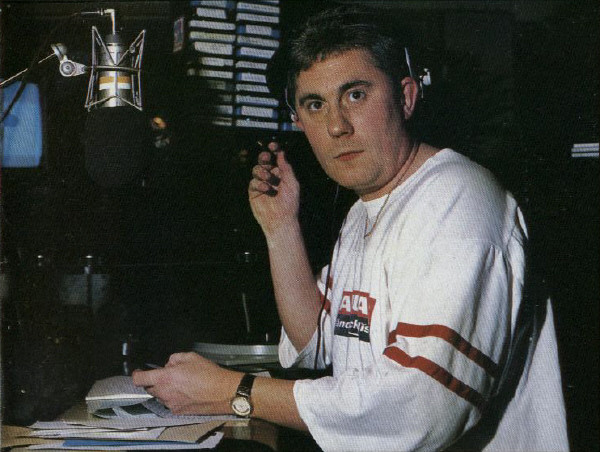
Before Pete Tong there was Jeff Young – Jeff’s Friday evening Radio 1 show, Big Beat, the direct forerunner to Tong’s ‘Essential Selection’, broadcast by the BBC from 1987 to 1990.
Jeff and Froggy were the two Funk Mafia DJs I got to know best in the early ‘80s. I stayed with Froggy a couple of times in Ilford, and brought him up to Wigan Pier for an all-dayer in 1982. My contact with Jeff was more frequent though, via regular phone chats and visits to his London office, at Phonogram Records, where he ran the club promotions department at that time. It was thanks to Jeff that Kool & The Gang visited Legend in Manchester, early into my time there, when we were striving to build the numbers up, before the night went through the roof. It was also Jeff that gave me a VHS copy of ‘Buffalo Gals’ by Malcolm McLaren & The World’s Famous Supreme Team, before it had been screened on TV, and even before the record had been released, enabling me a ‘culture shock’ premier in Huddersfield, which I’ve subsequently written about as a key moment in hip-hop’s Northern ascendancy. These were the perks of forming a strong alliance with the club departments.
Jeff was already an A-list DJ on the jazz-funk scene going back into the late-‘70s. He worked alongside Funk Mafia head honcho, Chris Hill, for several years, at one of the movements most legendary venues, the Canvey Island Goldmine, whilst partnering up with Radio London’s Robbie Vincent’s at Flicks in Dartford, having initially gotten his break at the Southgate Royalty. After filling in for Vincent over a number of years, when he wasn’t able to make his radio slot, Jeff was eventually offered his own show on the station in 1984 – Radio 1 beckoning, three years on.
Continuing to work in the music business, including A&R roles at A&M and MCA, Jeff is also remembered for his radio shows on Capital and Jazz FM.
Greg Wilson: Where are you from, Jeff?
Jeff Young: Well, I’m a London suburban kid. I was born in central London. But when I was two, my parents moved out to North Kent. So I grew up around Welling / Bexleyheath, that sort of area. So I’ve always been, kind of, a Southern lad, if you see what I mean.
GW: Yeah, so when were you born? What date was that?
JY: Sixth of June ’55.
GW: Okay, yeah, Bexleyheath, that was were Dave Godin apparently discovered Rhythm and Blues, from a jukebox in an ice cream parlour?
JY: Oh, okay. I didn’t know that.
GW: Yeah, in 1953. Because there was an American airbase nearby, wasn’t there?
JY: Well, I don’t know about that. Most of the air bases down this way are in Norfolk and Suffolk, I think. But maybe in those days, in ’53, maybe there was somewhere else down here.
GW: Yeah. I think what happened was that they’d got the jukebox out of the airbase and it had all these Rhythm and Blues tracks on it, and Dave stumbled across them. I also heard that Brian Eno came across black music in the same way, via jukeboxes coming out of air bases and things.
JY: Brilliant!
GW: So what got you into music? What were your early memories?
JY: Well, I don’t know what got me into music, I just got drawn towards it. I was buying records by the time I was eight years old. I just loved music! When I was in my early teens, it was all about Record Mirror and stuff like that. Then later on, it would become NME and Melody Maker. Up to about 16 or 17, I was listening to Blues-based Rock; Zeppelin, Hendrix, The Stones. I never got the other side of Rock. I never got Prog, I never got Genesis, Sabbath, any of that. Deep Purple, that wasn’t my thing. Then when I was about 17, I suddenly found myself in an arena where I was discovering and listening to black music. That obviously became a huge thing in my life! I’d still listen to other forms of music, but the whole black music thing, which then developed into a more Jazzy area. That was how I kind of developed, really.
GW: So what kind of black music bands were you getting into first?
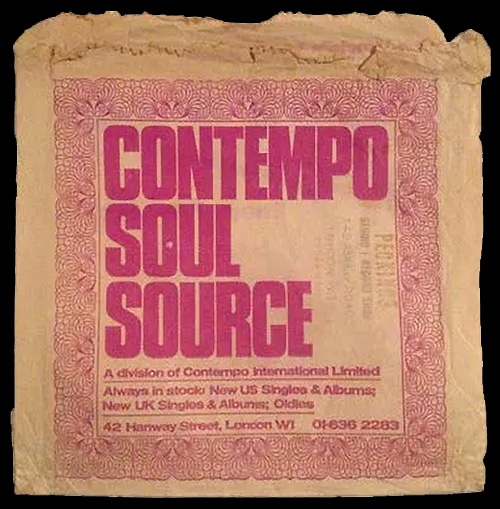
JY: Well, in the early moments of me finding all this stuff, it was all kinds of charty Motown things. Stevie Wonder was putting albums out like ‘Music Of My Mind’, so I was getting into things like that. So it was all the stuff that was charting really. The O’Jays, KC & The Sunshine Band, George McCrae. That would develop into a deeper area as things went on. We discovered places like The Goldmine, and we would go up to Contempo in Hanway Street, to buy our records on a Saturday (Contempo was owned by Blues & Soul magazine). Then we got into a zone where we were listening to things that had nothing to do with the charts, to put it mildly, so that was where I ended up.
GW: So you were a punter at The Goldmine before you came into DJing?
JY: Well, I already was DJing. I mean, when I was still at school, I started doing a youth club with a pal of mine, who then took himself off to university and I was left on my own. So I just kept going really. I kept buying records and I kept doing gigs. I was doing Soul gigs, wherever I could. I was also on the wedding circuit, which is where I worked out how you’d control a dance floor.
GW: That was our apprenticeship back then, with a mobile discos, weddings and 21st’s.
JY: Yes, exactly! So by the time I was going to The Goldmine and places like that, yeah, I was already DJing and buying tons of records.
GW: So what was the first club where you were playing Soul and Funk at?
JY: It was up in Welling, called Bexley United. They had some sort of financial catastrophe and folded, but they had a little clubhouse in the ground where I used to do Friday nights in there. Occasionally I did the Black Prince, which was quite a big venue around these parts. Then most Saturdays, I was either doing weddings or whatever, but if I wasn’t doing one of those kinds of gigs, I was going to a proper club. So I’d either go to The Goldmine, or I might be able to get into town and go to Crackers or somewhere.
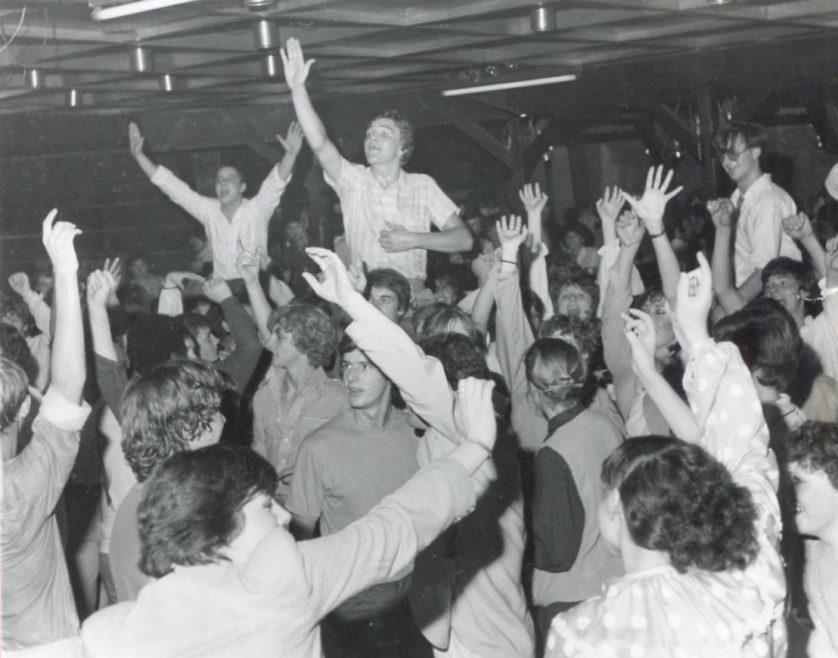 The Goldmine
JY: We’d go and see Robbie Vincent at the Golden Lion in Sydenham. So yeah, we would get around, or I would get around as much as I could, if I didn’t have a gig of my own on a Saturday night, of which, most of us guys did. That was when we played. But it was mainly little local places, in the early days, around where I lived.
GW: Yeah. You’re saying that you went into Central London and places like Crackers. Was that when Mark Roman was playing there?
JY: Yeah, yeah. I saw Roman play there. Yeah, that was the reason we went up there. We went up there to see Roman play.
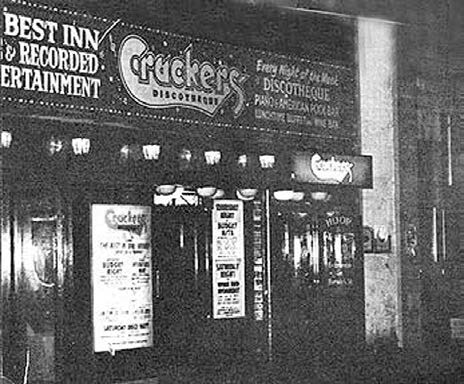
Crackers, 203 Wardour Street
Article – Soul Survivors article – Fitzroy speaks with Mark Roman, the original Crackers DJ
GW: And how did you know about somewhere like Crackers? Were you reading Blues & Soul by this point?
JY: Yeah, we were. I keep saying we, because it was me and a bunch of mates. We were very, very immersed in the whole thing by then; We were talking to other people about where they were going and what they were doing, so you’d hear about places. Then again, like you say, you’d be reading Blues & Soul and reading about this person and that person, so yeah, we knew about these people, even if we couldn’t get to see them.
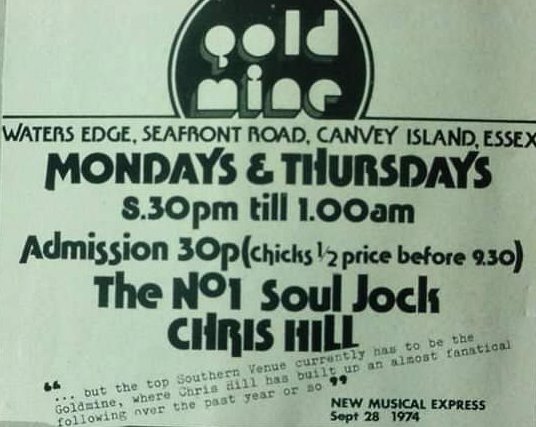
GW: So we’re talking mid ’70s, would you say?
JY: About ’75 To ’77. Yeah, ’75-ish is probably the best ballpark.
GW: And so at what point did you come into the sphere of people like Chris Hill?
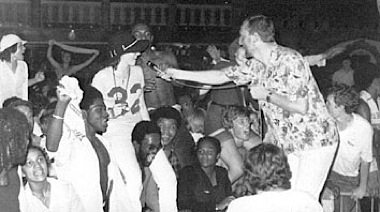 Chris Hill during the first all-day soul event at Tiffany’s in Purley, 1978
JY: When we used to go to the Golden Lion to see Robbie Vincent, my mates would go up to him, as they had more front than I did. They kept saying to Robbie, “You should work with him over there. That bloke over there, he’s really, really good! You should work with him”. And Robbie’s like, “Yeah, whatever”. Then one week, he did need somebody to back him up, so he took a flyer and gave me the job. So I backed him at the Golden Lion, and because I had a little sound system, when he got gigs – various gigs, he would book me in as well and get the promoter to take me on with my sound system. The reason he did it was because when I played with someone, who was supposed to be the star turn, if you get what I mean, then I wouldn’t stitch them up. I could play records all night without playing the big records of the moment. So I would set the room up for these guys. I played none of the big records, but I’d give them a room with the audience already in the palm of their hand. Then they’d go on and do their thing. I think Robbie said to Chris Hill about this and so all of a sudden, I did a few things with Chris. Then the same thing happened with Greg Edwards.
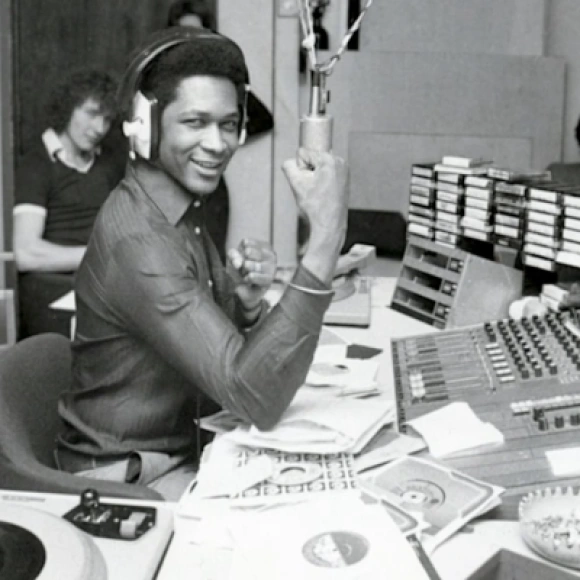
Greg Edwards
JY: I did a few things with Greg, and then Robbie put me up for the gig at The Royalty in Southgate. There was a guy who’d been there for quite a while and for various reasons he decided he was going to leave, so Robbie put me up for the gig and I got it. So I worked with even more people, as a kind of a backup DJ to the star turn of the night etc. After I’d worked with Chris for a while, he then said to me, “Do you fancy doing The Goldmine?” So I went to The Goldmine and then Flicks came along. Robbie and I ended up doing Thursdays at Flicks. This was all in the same year. It was a really big year for me that year. I think that was ’78. So that’s how it developed for me.
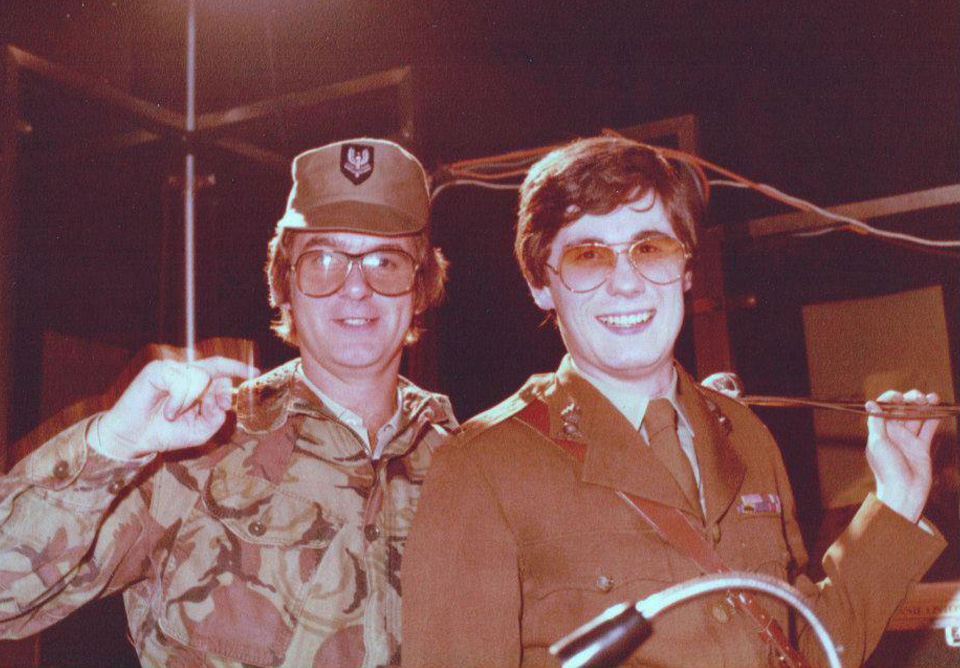
Robbie Vincent & Jeff Young
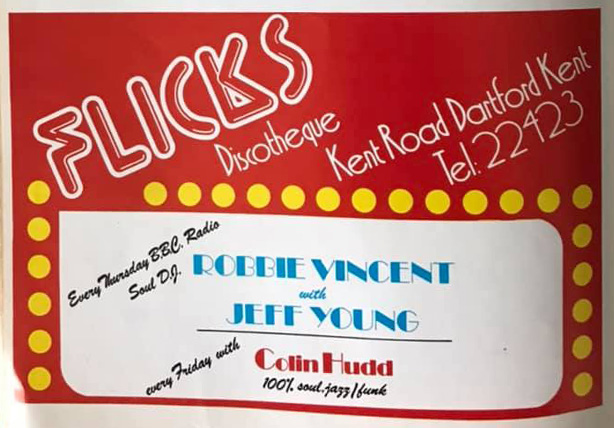 Flicks, 1980
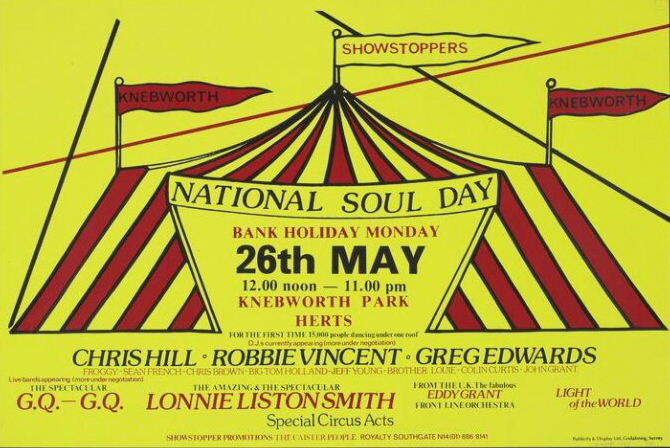 National Soul Day, 1980
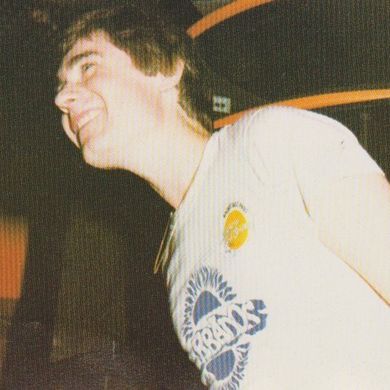 Jeff Young, 1981-ish
GW: With the Royalty, that was a big gig for Froggy, later down the line, wasn’t it?
JY: Yeah, that’s right.
GW: But he wasn’t there at that time?
JY: Well, the thing is when I first went to The Royalty, it was on a Saturday, and then they switched the night to Friday, which allowed me to do Saturdays at The Goldmine with Hilly. So I think Froggy may have gone in on the Saturday after I moved to Friday.
GW: I think he did the Dave Lee Travis thing there initially, that’s what introduced him to the venue, if I remember rightly. But you didn’t know Froggy at this point?
JY: No. I mean, we were all meeting each other along the way, as the whole Southern suburban scene developed really. Obviously, by the time we got to do the first Caister, we all knew each other pretty well; because we’d been doing all-dayers and various gigs were three or four of us might all be there on the same night. So we got to know each other by that point. But when I first went to The Royalty, no, I didn’t know Froggy at that point.
 Froggy at The Royalty
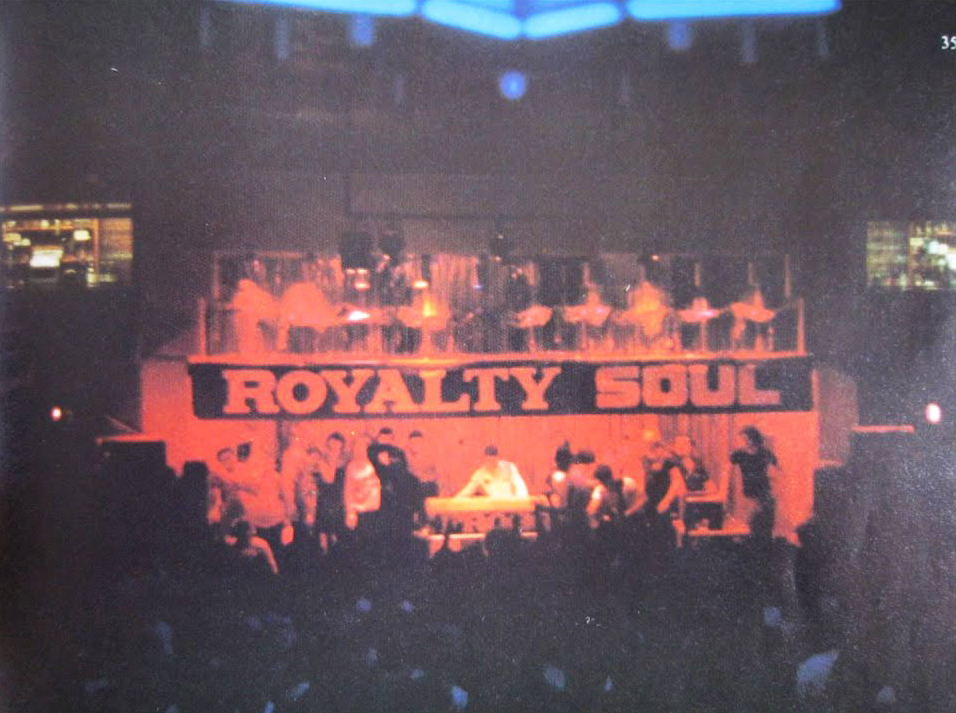
GW: Tell us how the all-dayer thing really started to kick off down there?
JY: Basically, the guys that owned The Royalty would put all-dayers on in these huge ballrooms, in places like Purley in the South. Seven or eight of us would play all day and that was it. But it was only every Bank Holiday. We didn’t do any other day. That’s what made it quite good, actually, because we didn’t do that many a year. So it was quite special when we did do them. That went on for a couple of years, I’m pretty sure that the story goes… Robbie actually did a gig for a holiday company at Caister. Where he took one look at this, and the whole potential of it, he took the idea back to the guys at The Royalty and said, “Look, I’ve just done this gig, blah, blah, blah”. Then I remember one Sunday, when a load of us climbed into two cars and we shot up there, had a look at it, then the next thing we know, we’re all doing the first Caister Soul weekend.
Article – ‘Living For The Weekend’ Caister Soul Weekender – Fred Perry Subculture
GW: At what point did the idea the whole Mafia thing come about?
JY: Well, this keeps coming up, the Mafia thing. Apparently, Hilly tells a story when he’s talking to somebody. It could have been a bit random, could have been a punter or someone when we were doing all-dayers, the weekenders and stuff like that. And some kid said to Hilly, “You look like the Mafia”. Hilly just laughed it off. But he thought about it and the next thing, we were the Soul Mafia.
GW: Can I stop you there a second, because you say the Soul Mafia?
JY: Oh, the Funk Mafia!
GW: There we go. I had a thing with Snowboy, because I was saying the Soul Mafia for a long time. Then Snowboy was saying to me, it was always the Funk Mafia. I looked it up, and it was the Funk Mafia.
JY: Yeah, that was my mistake. That’s the first time I’ve ever called it the Soul Mafia thing.
GW: You did it on the Rodney P documentary.
JY: Oh, did I? Okay, right.
GW: Just trying to clarify that… I think both terms were used, but it seems that nowadays, you see Soul Mafia more than Funk Mafia. From a personal point of view, I’ve reverted back, to appease Snowboy [laughs]. I noticed around that time as well, looking back at old adverts, you’d have DJs like Owen Washington, who was doing a lot of stuff with you?
JY: Yeah, I mean, there were a few people in the early days that did gigs with us, you know, people like Owen and Brother Louie became part of the fold. There were a whole bunch of guys that were there. With the whole Funk Mafia thing, I think we were labeled with a whole bunch of stuff that was just overinflated. People would say that we had certain venues stitched up and that we didn’t allow anyone to book anybody else in the venues. On one of Rodney P things, some idiot was saying about how we controlled the pirate radio stations down here. That was all absolute cobblers! Nonsense! So yeah, just because we went around and played each other’s gigs and did a few things together, it was like we were a closed shop, but we weren’t a closed shop! Loads of people got a shot. I remember Nicky Peck doing a gig, then later on, as the whole thing progressed… Obviously, Nicky Holloway, Paul Oakenfold, Johnnie Walker… All those guys came in, as well as some of the old school guys who’ve been going for quite a while; Martin Collins came in later on. So yeah, that’s the story basically.
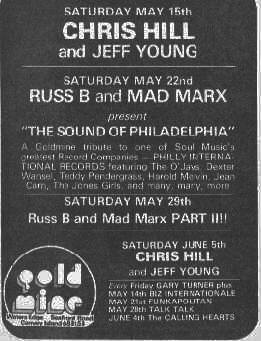
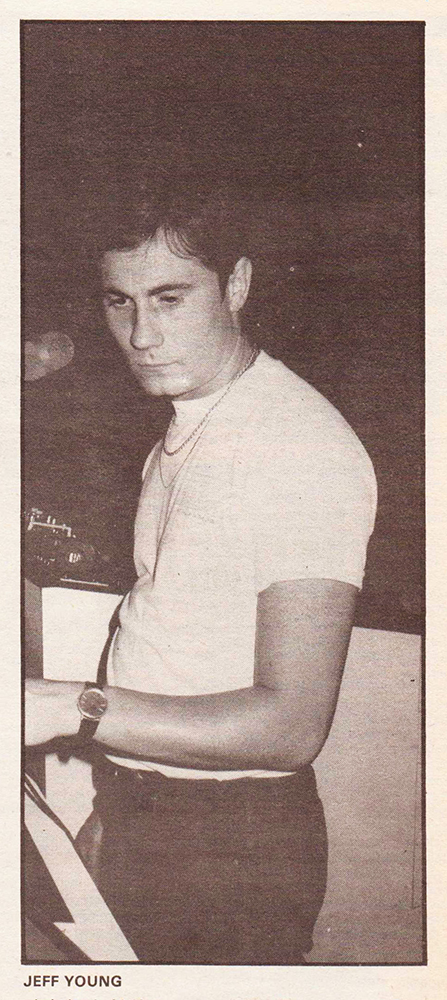 Blues & Soul magazine, 1982
GW: But obviously it was a power base. It was like all these leading DJs from the region who were working together at these events. Obviously Chris Hill had huge influence in Blues & Soul; the amount of adverts for a start. So there was definitely a power base with regards to what was happening in the South.
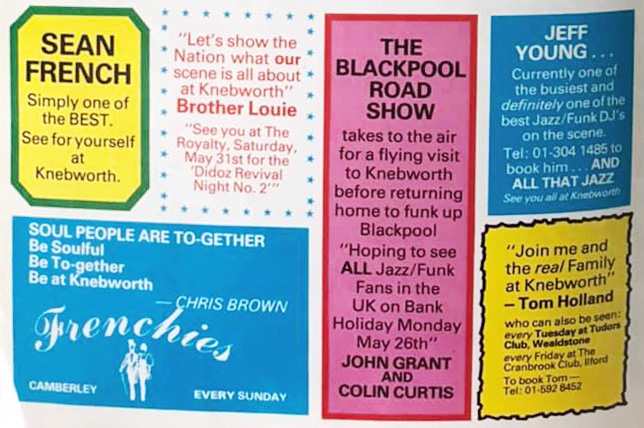
GW: Going back to Owen, because I’ve been doing an interview with him recently, and I found out some stuff from him. Can you remember him being jailed?
JY: Well, okay, I can, but I have no idea why he went to jail. All I heard was that Owen’s gone away. I was like, “Oh, really!?”, but I never asked him about it. I was working with him before lockdown and I never ever turned round and said to him, “So why did you get locked up then?” For all I knew it could have been false, but whatever.
GW: Well, I believe he got a tube into Oxford Street, he was gonna buy a John Davis and the Monster Orchestra record. He said that he went into London, when as he was getting back on the tube, he got his shoulder felt, the next thing he was being told that he was being arrested because somebody had had their purse lifted, and that he fitted the description. Basically, he ended up going down for that!
JY: That’s mad!
GW: Exactly, you know, I mean, his career was curtailed. I know that when he came out of jail, he carried on and did some work down at Le Beat Route, I think, and places like that.
JY: Yeah, I remember that.
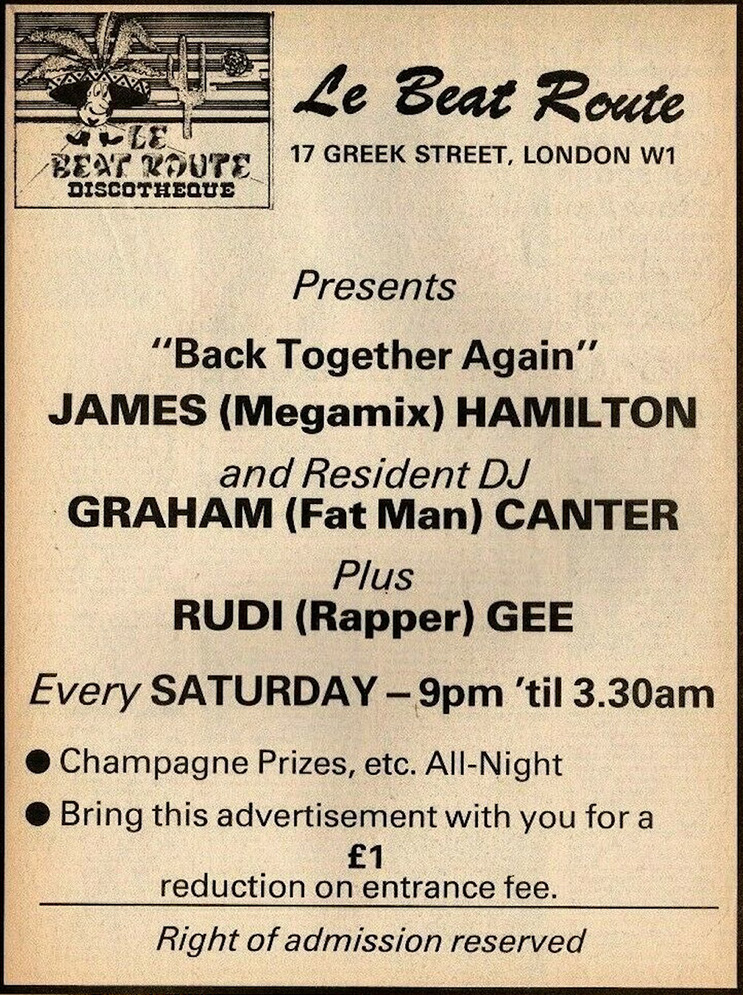
GW: I was noticing that he was on the bills a lot. So I was thinking, what happened to Owen? Where did he go to? He was doing all these all-dayers and the next thing he’s not there at all. I was very interested because he’s one of the first black club DJs in London. Obviously there was Greg Edwards. Greg was on the radio and stuff, and later you’d have Paul Anderson, then Norman Jay and Cleveland Anderson, all these people. So yeah, Owen just, kind of vanished at that point in time. He was saying that he was due to play the first Caister, but ended up inside.
JY: Yeah, I’m sure he was, yeah.
GW: So anyway, moving on… What also interests me is your move into the record industry, as well as the radio side of things. Which came first? Were you doing radio before working at Phonogram?
JY: Radio came a few years before I got into a record company. Again, we were somewhere doing a gig with Robbie Vincent and out of the blue, Robbie said to my driver, Chris, “I think Jeff would be really good on the radio”. So my mate, Chris, tells me this when we’re on the way home. I was quite shocked, because I just thought I was a bit of a Cockney boy and I had absolutely no chance whatsoever of going on the radio. So anyway, Robbie goes on holiday and he put me and Graham Canter in and we did the show. Then he went on holiday again, so he put me in with Canter again. Then at a later date, when he went on holiday again… God knows how long later… he put me in on my own. And I was like, “Well, okay…”.
 Robbie Vincent
GW: So this was BBC Radio London?
JY: Radio London, yeah. So I did stuff for him whenever he was on holiday, I also did the occasional program on JFM, one of the pirates down here. Then Robbie went to Radio 1 and they gave me the Radio London show, so that was where I kicked on from, when it came to the whole radio thing.
GW: What date are we talking about there?
JY: The first show that I did on my own was Saturday, the 25th of August 1984.
I went to Phonogram in ‘81. But when I said I was doing radio, I was doing those stand-ins for Robbie when he was away. But I did the first solo show, which was when it was my show, which was in ’84.
GW: Okay, that makes sense. You mentioned Graham Canter, he’s a character that never gets his dues, really. But he was he was a very important part of that whole London scene, with Gullivers and what he was doing there.
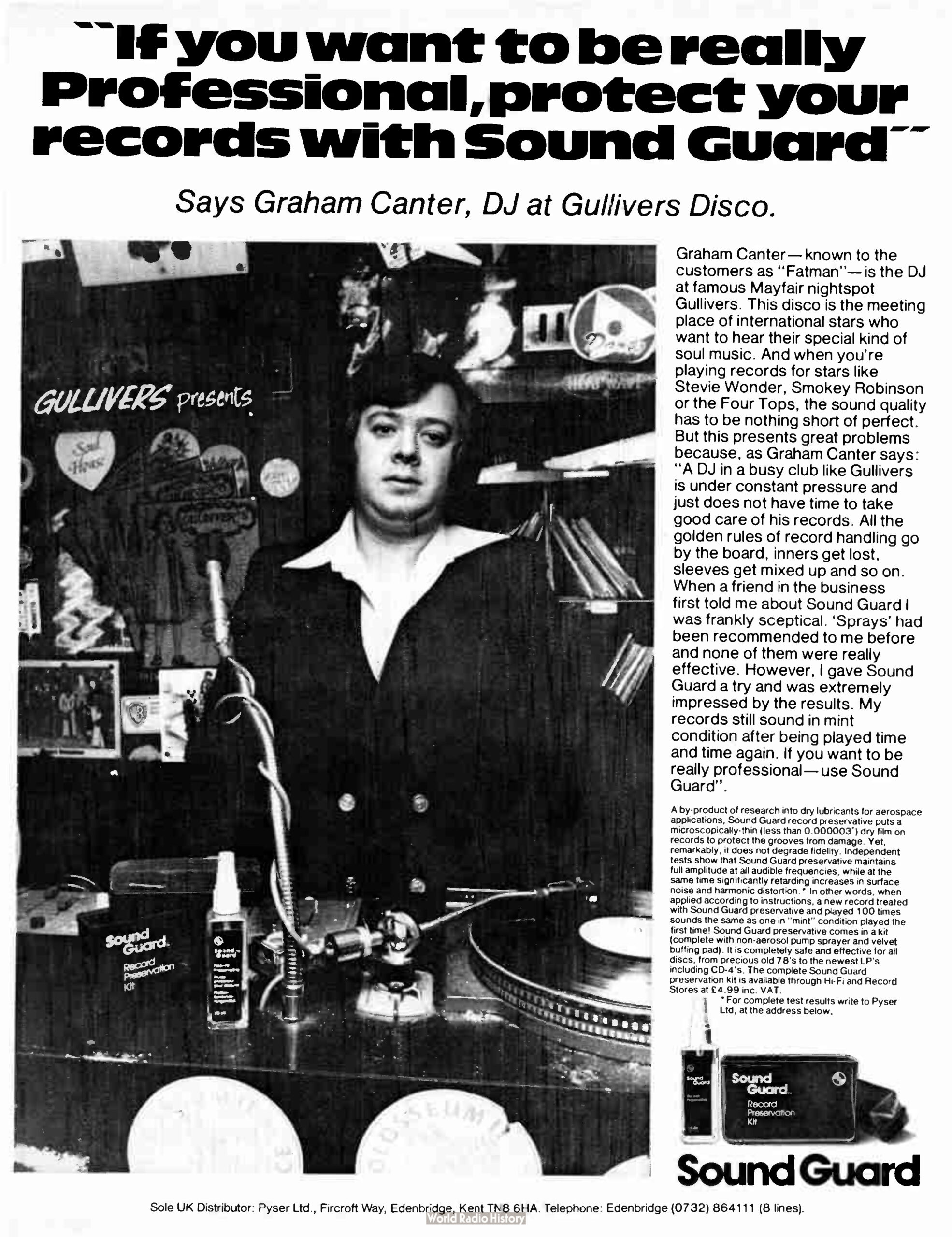 Graham Canter, Hi-Fi-News, 1978
JY: Yeah, Gullivers was some place actually and Canter, Canter was very funny. James Hamilton used to go down to Gullivers all the time? Graham Gold was working there. Yeah, it was quite a place actually.
GW: Yeah. I used to go there sometimes when I went to London. I went as early as ’79, because I took a photo of James and Graham behind the DJ booth. It had a Gibson brothers Cuba sticker on there [laughs].
 Graham ‘Fatman’ Canter & James Hamilton
GW: There’s a lot more online now about people like James, but at one time, there was hardly anything written about James Hamilton. I was seeing books written about UK dance culture, and there was no mention of James, and it’s like, this is crazy! Because that guy was so integral to the whole thing!
JY: There’s quite a good James Hamilton Facebook page actually.
GW: There is. And his stepson, Mike Atkinson, set up a website. He’s done a great job with it. So he’s uploaded all this stuff, so finally we can access that. But, you know, go back 10 years ago and it was crazy! I was talking to people and they just didn’t have a clue about James Hamilton’s impact.
JY: But you know, the whole thing about Hamilton… This is something I say to quite a few people and that is there are tons of books and stuff about Northern Soul. There are tons of books and stuff and things out there about the Rave scene. But, the scene we were involved in, there’s next to nothing! That’s why people like James, they weren’t airbrushed out of history, but there hasn’t been anything out there, where what he did could be highlighted really. Maybe the odd essay and stuff like that, or dissertation, but nothing like a really great book, that’s got it all in.
(*since the interview, the 2024 book, James Hamilton’s Disco Pages 1975-1982′, edited by Mike Atkinson, has been published by my own company, SWS: https://superweirdsubstance.com/product/james-hamiltons-disco-pages).
GW: Yeah. I think you’re going to get more of a light shined on that period, especially now, in the whole Black Lives Matter climate. I think, all of a sudden, people are starting to realize that we haven’t paid our dues to the black culture in this country; going back into the ’70s and the early ’80s, before the Rave thing happened. So the narrative for many years has been that some guys went to Ibiza and they brought back dance culture, forgetting about everything that had already been built on before, including the Jazz-Funk scene. It’s like you said before, Nicky Holloway links into the Jazz-Funk era, as does Paul Oakenfold. Everything comes from something else, it doesn’t just happen on its own, out of nowhere.

Chris Hill & Robbie Vincent
GW: So, you’re doing stuff for Robbie, you’re working in the clubs; you’re at The Goldmine by this point, so you’re working with Chris Hill. That’s the main club in the South at the time, certainly in terms of profile, with everything that’s going on there. Again, with Chris, I think we’ve now got a situation whereby a lot of the footage of Chris hasn’t dated too well. Today we’re in a period of time where DJs mix and they’re not on the microphone, but going back to then, the personality DJ ruled supreme! Chris Hill was right at the top of that tree!
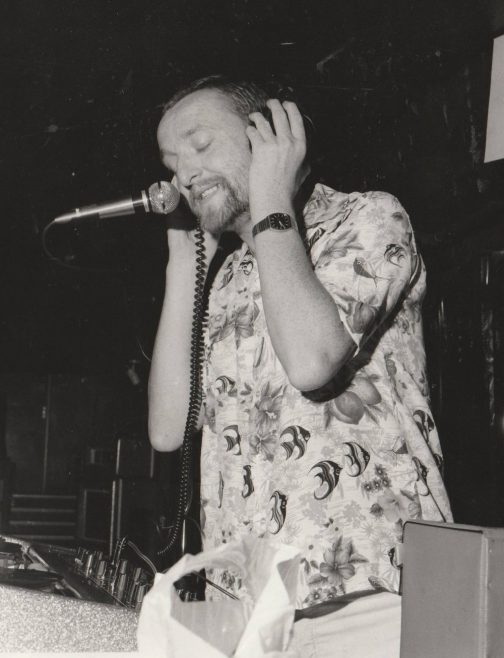 Chris Hill
GW: Also, the amount of music that was discovered there and then… The fact that the first place that record companies would go, to drop their records off, were to people like Chris Hill, Robbie Vincent and Greg Edwards, and up North, maybe Mike Shaft and Terry Lennaine, these kinds of people, at that time.
The Mafia were so influential at that time… A lot of the other things weren’t as widely reported in Blues & Soul. I think there’s been a bit of a backlash since, and it just needs a levelling off. I think that on one level, the kind of party games aspect of the night… The film ‘The British Hustle’ and things like that, show that aspect of the scene, which existed then, but it didn’t date well. What did they call it? “White socks and fluffy dice”.
‘Brittish Hustle’, 1978 (Full Version of the original film)
JY: Oh, yeah. Yeah.
GW: That’s what I was hearing about the Jazz-Funk scene, when I started DJing again. People who were writing these things were really dismissive of the Jazz-Funk scene. It was almost like, they were saying it was all Shakatak and Spyro Gyra and the like, “…are you mad!? Do you know what went on there? Do you know what music was played?” But some of the footage with Chris, because of the personality and the DJing style then, hasn’t dated well.
’20th Century Box – Funk Music’, 1980
JY: I think outside of possibly one other DJ that I know, I don’t really know of any other DJs that did what Chris did with that whole thing, where he just stopped the night and just had a laugh, really. That’s the stuff that doesn’t date well. It’s all supposed to be very serious and very music, and we must do this and we can’t do that. But all he did was just stop the night and had a bit of a craic for an hour. But of course, there’s no footage of anybody else playing music. It’s all Chris larking around, that’s the bit that doesn’t date very well. So it’s not a level playing field, if you see what I mean? It’s like the footage that’s out there is not really all of what was going on. That stuff was going on in the Goldmine, but it certainly wasn’t going on in too many other places.
GW: Yeah, absolutely.
 The Goldmine
JY: I mean, you’d never see Chris Brown, Shawn French and Colin Hudd getting everyone to sit on the floor and mess about like they were an airplane for three quarters of an hour, you know? [laughs]
GW: Chris was a unique character, he did his records as well; He had that period where he had those two Christmas hits and stuff.
JY: Yeah, for sure. Chris was a showman. He wasn’t just a DJ, he was a showman. Some people could put up with that and some people couldn’t, basically.
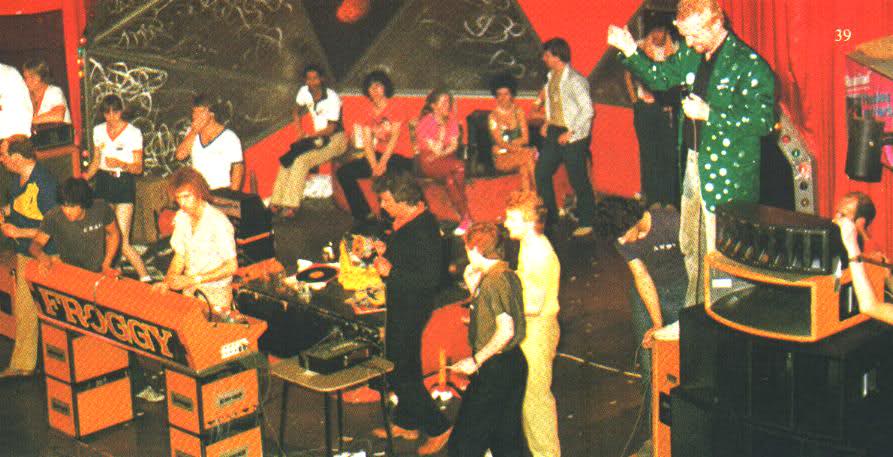 Froggy & Chris Hill
GW: When I interviewed Bluey from Incognito, he spoke fondly of Chris – because Bluey had obviously been signed to Ensign Records… saying that Chris dates back to the start of the scene and the whole Rhythm and Blues thing. He knew his music inside out! Chris was playing Jazz and early ’70s Soul. So his musical integrity cannot be doubted. But some people have chosen to ignore that. So, as I say, hopefully we can bring some kind of balance to it.
GW: Was it ’81 that you went to Phonogram?
JY: Yeah, October ’81. I went into Phonogram.
GW: That was in a club promotions capacity?
JY: That’s right, Orin Cozier was club promotions manager at Phonogram, he decided he was going to jump ship to Arista. At that time, I was at a point in my career where I was either going to be lucky and get in at a record company, or I was going to go and work in a shop selling trousers on Oxford Street. Luckily, the record company thing came up and I had a couple of interviews at Phonogram and they gave me the gig. From then on, I kind of motored on, really.
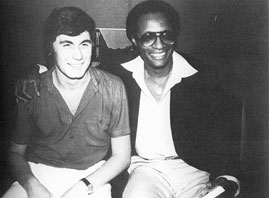
Jeff Young & Ramsey Lewis
GW: Obviously before that, you would have been buying your imports. But you’d be getting your records… You’d be on the mailing list for everybody?
JY: Oh, yeah.
GW: Who do you remember from around that time? Obviously there was Fred Dove over at WEA…
JY: Yeah, and obviously people like Orin. Robert Blenheim, he was with Decca, I think. Lorraine Trent was at CBS. Yeah, there were a few of them. Greg Lynn, Rowdy Yates, there was a whole bunch of them actually.
GW: Do you remember Garryl Redfearn as well?
JY: I didn’t know him very well, but I did know of him.
GW: Yeah, that was the first mailing list I got on, MIF (Make It Funky), but they were doing all Polydor stuff at the time.
JY: Polydor, Theo Loyla.
GW: Of course. Obviously, from the US side, they talk about the record pools over there; they were a big thing. It was mid ’70s when that started, but the UK lineage runs a lot earlier than that. Apparently, Chris Hill said at the New Music Seminar in ’79, that it started in ’73 with Nigel Grainge at Phonogram. That was the first mailing list specifically for club DJs. So in terms of club promotion, the British lineage runs earlier than what we know of what happened in New York.
JY: Yeah, I’m not surprised by that.
 Chris Hill Speaks at the New Music Seminar, NYC 1979
GW: That’s the thing that I learned when I came back into play; that a lot of the American history had seeped into ours. So I would imagine that people might think that we were following America very closely. But that didn’t really happen until probably the early ’80s.
JY: I think that happened because we were playing so much American music. At that time, there weren’t many artists making the music here that we wanted to play. So we were very State-side oriented. So I’m not surprised that that’s how things were represented. I mean, CBS tried the record pool thing. Do you remember that happening?
GW: Absolutely, Yeah.
JY: Yeah, they tried that. But again, they said it was an idea nicked from America.
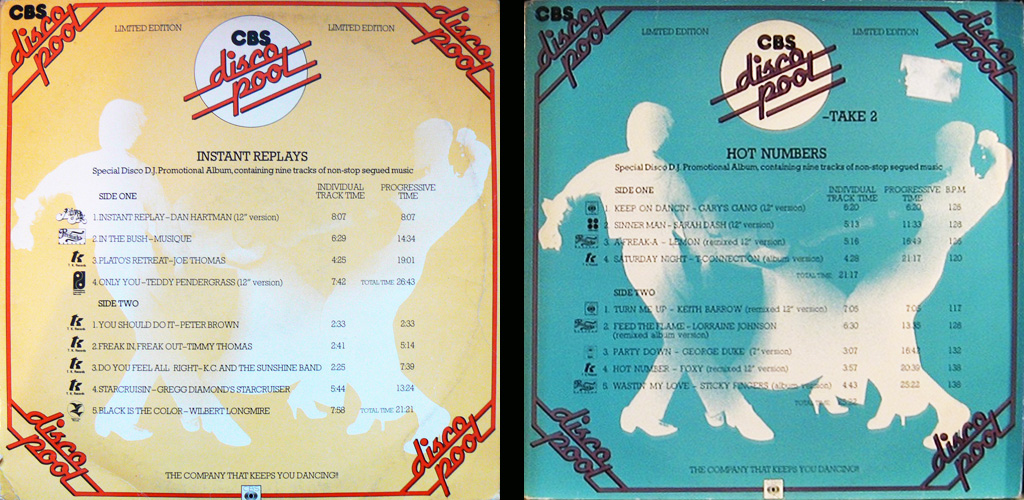
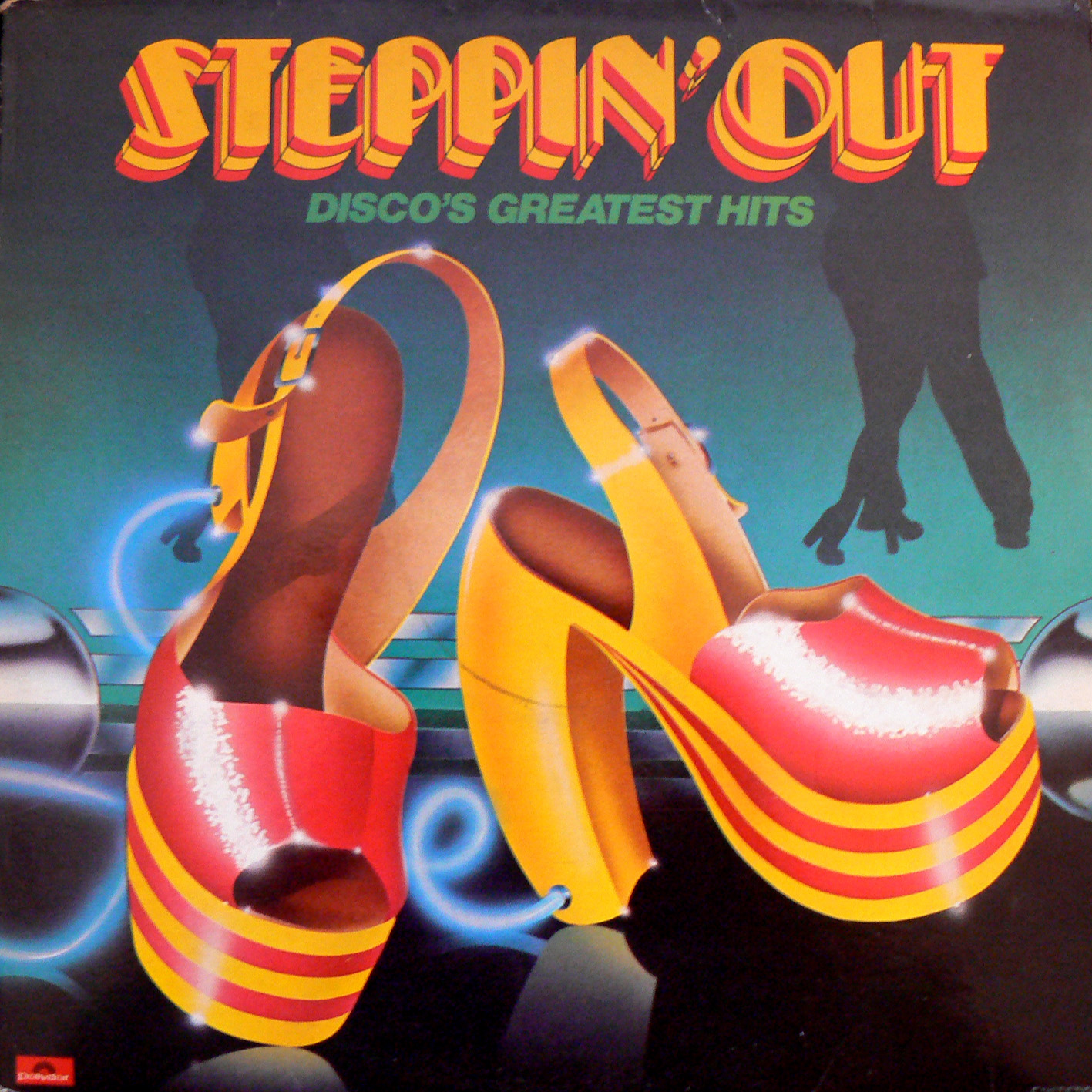
GW: I think what they were doing, and Fred Dove at WEA, they started to service imports. I remember that list was so difficult to get on! Once you got on that, you were really looked after. I remember getting all the Chic and Sister Sledge on import. Then Greg Lynn followed suit with the CBS Disco pool idea. Also, the early mix albums were coming out this way. So they were bringing this American culture through. He did the ‘Instant Replays’ and ‘Hot Numbers’, those two promo albums. Then, you had Theo Loyla doing a proper mix album for commercial release, ‘Steppin’ Out’, for Polydore.
GW: Obviously, James Hamilton was evangelical about pushing the idea of mixing, of listing BPMs and things like that. For a long time, British DJs weren’t taking that approach. I think a lot of it was because we didn’t have the right equipment at the time; vari-speed turntables.
JY: Well, that’s exactly what I was gonna say, we never had the kit. For me personally, it wasn’t until Froggy turned up with a couple of Technics turntables on his system. It was like, “Hello! This is interesting!” That certainly opened a few people’s eyes and we were all on it in a flash. It was fantastic!
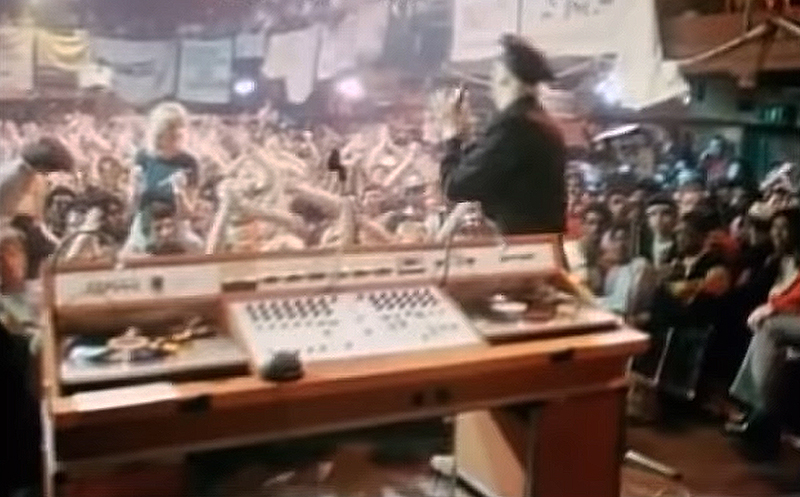 Froggy’s Matamp mixing console
GW: That was ’79, after he’d been to the New York Disco Forum. He saw Larry Levan at the Paradise Garage; that was a bit of an epiphany for him! Then I think he imported… he might have even been the first person to have the 1200s, certainly as a DJ in this country. I didn’t come across them here until Legend opened in 1980. So, Froggy arrives as a mixing DJ at this point.
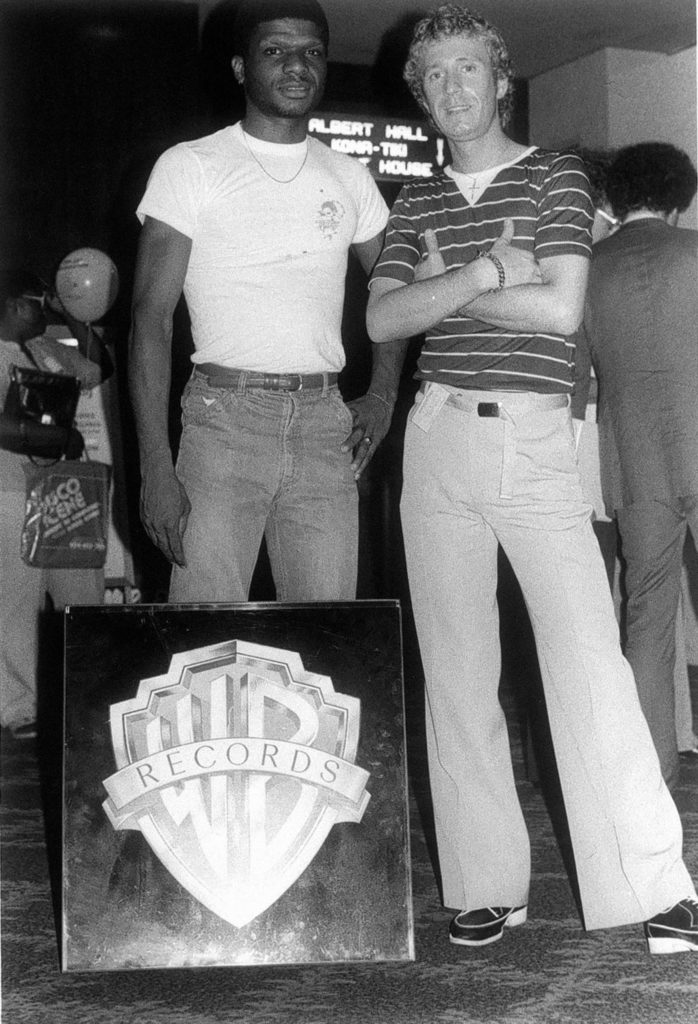 Larry Levan & Froggy
GW: Interestingly, Greg James, who was at the Embassy, was obviously mixing here from ’78. He considered Froggy to be a protégé almost, but Froggy always talked about Larry Levan, and going to the States. I saw Greg James at the Embassy and was aware of what he was doing, and knew the principle of it. But trying to take it back to my club, with belt driven turntables didn’t work.
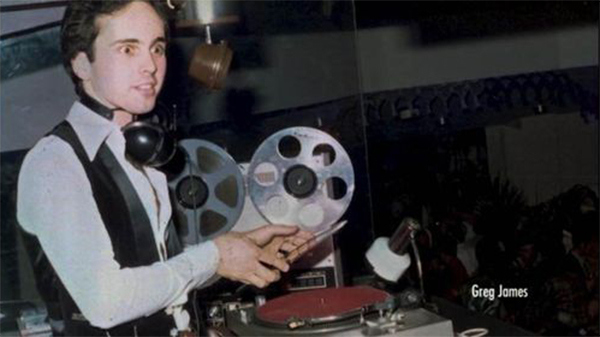 Greg James
GW: So James Hamilton was pushing this direction very strongly from the late ’70s and eventually more and more people started to take that stance. I look at the main instigators as being Greg James, Graham Canter, Froggy, and Ian Levine, who was opening Heaven in 1979. I followed behind those guys with what I was doing.
Article – Froggy Got Britain mixing
GW: So working at Phonogram, obviously it was a fantastic company for the music, because you were dealing with all sorts of labels. What labels were you handling there?
JY: Well, we basically had a whole bunch of labels coming out of America, under the Mercury banner, or Polygram, or whatever. But the artists were brilliant. Certainly for me, on a promotional level, because we had Cameo and we had Kool And The Gang. All kinds of bits and pieces that we generically got; we signed a few things. So we had a lot of great music! That just helped us build a base for what we were trying to do.
GW: Also you’d later get Streetwise, wouldn’t you?
JY: Yeah, that came a bit later. The way it worked for me at Phonogram was that in this country, Polygram had three frontline labels. One was London Records, one was Phonogram and the other was Polydor. I worked for both London and Phonogram. So one minute I’d be doing Cameo and Kool & The Gang and, because the boys at London didn’t really have a catalog, they were licensing stuff in. So that was how Streetwise came into the building. ‘Candy Girl’, Rockers Revenge and all kinds of stuff like that. And then Phonogram was getting stuff generically from the major labels in America anyway. But I was doing both.
GW: Yeah, I’m jumping ahead a bit, but you had Charisma as well, because you were the one to service ‘Buffalo Gals’.
JY: Yeah. Yeah, absolutely.
GW: At what point did Pete Tong start working for London Records?
JY: I can’t remember when he came in. But I think what happened was, London was becoming quite a large entity of its own, and they wanted a split from us and have their own thing. At that point, I think I’d said to them, “Look, why don’t you get Pete Tong”, and I think Pete was doing stuff for Blues & Soul and whatever. Pete ended up going into London Records. Now this must have been somewhere around ’84/’85, I reckon. Because I only did three years in promotion before I went into A&R. So I probably went into A&R in about ’84. By then, London would’ve needed someone. So Pete would have shown up at some time around that point.
GW: I speak about this in I piece I wrote called ‘Wake Up The City’, a Jazz-Funk piece, about the fact that initially the club promotions people were the poor relatives to the radio pluggers and the press people, but then it would all start to change as the Black British acts started to come through; Brit-Funk as we now refer to it.
WaxPoetics Jazz-Funk Articles:
GW: So Brit-Funk, as we call it today, led to A&R departments opening up – specific to Dance music. So you would have seen your personal power base change over that period from ’81 to ’84. From being somebody who serviced records to DJs, to actually being somebody who could make a lot of money for the company, by bringing in these artists.
JY: Yeah, yeah, absolutely! So when I went into A&R, we started a label called Club. We called it Club because the more white-orientated electronic music scene was still going, and obviously the Black Music scene was there. We called it Club so that it was generic, so we could put on the label what we wanted. We didn’t want to call it Soul Club or whatever, because we didn’t want to pigeonhole the music we put out on the label.
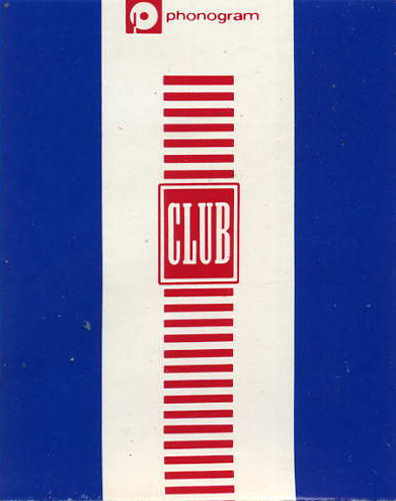
JY: So whenever we got stuff from Cameo, Kool and the Gang, whoever, wherever, we just jam it all on Club and gave all these people a little home of their own, even though they were signed to the label anyway, it was just a bit of labelling. It was pretty successful and it worked very, very well. So out of that came 4th & Broadway, Cooltempo and FFRR.
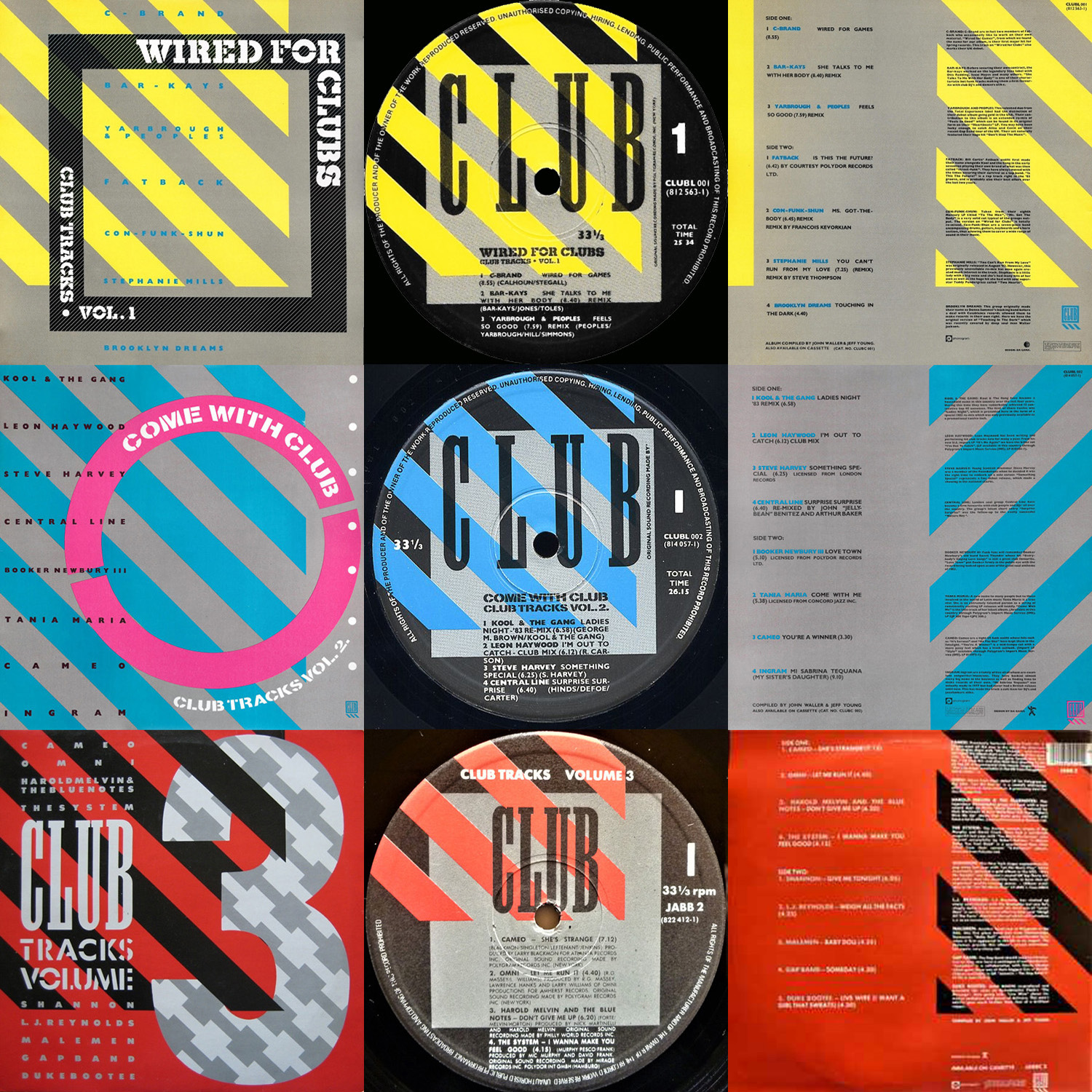
JY: Everybody jumped on the bandwagon as it were, and they started their own club label, which was great. Yeah, it was really good. The scene was strong, why not? Let’s do it. And as you say, from there, most A&R departments would add a guy who would be the guy to deal with all that stuff.
GW: Yeah, absolutely. With stuff like Rockers Revenge coming out on Streetwise, Arthur Baker’s label, we’re now talking about the music changing from, the Cameo, Kool And The Gang side of the Disco/ Funk, to this new electronic music.
From the Funk Mafia side of things, there seemed to be a resistance to that music. I’d certainly say from Chris’s side, there was definitely a resistance to that music.
JY: Well, okay. Let me just say something about that. Somebody else mentioned this to me recently and they, kind of, did it in a disparaging way. My own view of this is, yep, with the Funk Mafia, whatever they want to call themselves; that (electronic) music wasn’t what they played. They played soulful stuff, jazzy stuff, whatever. They didn’t get into the more electronic street stuff. That’s just one of those things. Later on, it did develop. When Rap came along, there were a few of us that were prepared to play the stuff that was coming out. A lot of that obviously had an electronic bass. But I don’t think it was you know… it wasn’t terrible. If you’re a Soul DJ, and someone says to you, “Why don’t you play this electronic stuff?” You’re like, “Nah, it’s not for me”, you know. So it’s not a disparaging thing. It was just what those people were doing at the time. Some of them changed. Some of them didn’t. A lot of them didn’t, but there we go.
GW: I think with you and Pete Tong being the younger ones, you were caught between those two stools, and it seemed certainly that you were working with these electronic records, so I think that you moved slightly away from that.
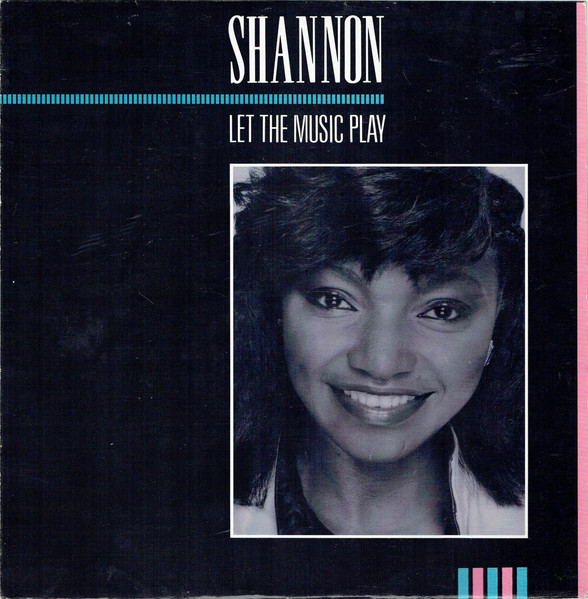
JY: Yeah, I’ve got an example I signed Shannon’s, ‘Let the Music Play’, but I never played it at a gig.
GW: Okay.
JY: So I’m happy to sign it, because I know it’s a big record, but I wasn’t going to play it at any of my gigs.
GW: Yeah. Would Tongy be playing that or….?
JY: No
GW: Right. So there was that kind of distinction musically, in terms of what you were playing. That led to a kind of, change of the guard, in a sense, I think. By ’84 you had Morgan Khan doing his Electro albums, which were hugely influential.
JY: Absolutely.
GW: Again, there’s another person that gets very little mention in this story, yet those albums were huge!
JY: They were, they were.
GW: Also, you’ve got people like Mastermind Roadshow, who were doing the mixes on there. Mike Allen was on the radio at that point, and the start of the Hip-Hop scene coming in. Do you feel that that’s where the influence of the Mafia, kind of, waned somewhat? Or should we say, went into its own thing?
JY: Well, basically, what was going on in the background is that we were kind of… I said this on telly once… We were a bit like a band, in that after a good few years we began to drift apart because of musical differences. You know, we would play Doug E. Fresh, ‘The Show’ and the room would go absolutely stark-raving bonkers and there’s Chris and Robbie going, “Well, we’re not going to play that shit”. And it’s like, “Well, you don’t have to, don’t worry about it. We’re going to play it”, and you know, ‘Rock the Bells’ and all kinds of Def Jam stuff and all this kind of thing. So, we still did gigs together. We still played together, but more of a cross section of stuff began to creep in. Because some of us were prepared to go off in a different direction. Like on the radio, Pete and I would play anything that came out on Paisley Park. If it had Paisley Park on the label, we’d play it. Now, again, we weren’t banging that stuff out at our gigs, but we started to play things and just push the envelope a bit and spread the boundaries a bit wider. But we never did Electro. It was just one of those things, you know. It wasn’t for our audience,
JY: With the Electro thing. I mean, I always find it quite interesting, when drum machines started to become a feature on Soul records… You know, I remember at the Goldmine, I started playing the intro to a record, and it was a drum machine. After people left the dance floor, when they realized it was Bobby Womack, they all ran back onto it again. I mean, stupid, stupid stuff. But that’s the way it was.
GW: Yeah. You had that obviously with ‘Sexual Healing’, Marvin Gaye. I always look at Herbie Hancock doing ‘Rocket’, because obviously I was playing the Electro, and in certain quarters, I was taking a lot of flak for it. It was like, almost as though you just plug this in and the sound comes out. So when somebody like Herbie Hancock, who was there right at the start of the whole Jazz-Funk thing with ‘Chameleon’ and all that, is now taking to the technology, it gave it a different slant and give it its credibility. At least people started to understand more. Okay, this isn’t going to go away and this is this is a new approach to things.
JY: Going back to what you were saying about Rockers Revenge. I worked all that stuff. If you’ve got a Rockers Revenge seven inch, that’s my edit. I did a lot; tons of radio edits for Phonogram. I spent half of my life in a club, the other half I was in the studio cutting up tape.
GW: Cutting it down to go to seven inch?
JY: Yeah, to seven inch length. Because it was a club record, and I knew what the record was all about, I’ve tried to leave in some of the reference points that in the record that the people that know, know, if you see what I mean? I didn’t just go in and chop it down to three and a half minutes. I thought “Right, I need to leave that bit in, people understand what that’s about. I’ll leave that bit in”. A couple of times, I went back with something that was 4.15mins, or 4.20mins and the A&R guy has said, “Man, it’s too long”, and I’d be like, “Trust me, it’s gonna be a hit. It’s gonna get played, leave it as it is”. And he was like, “Okay, whatever”. But the rest of the time, if it was a structured song, you could bang that down to the classic 3.30mins to 3.45mins and it would be fine for radio.
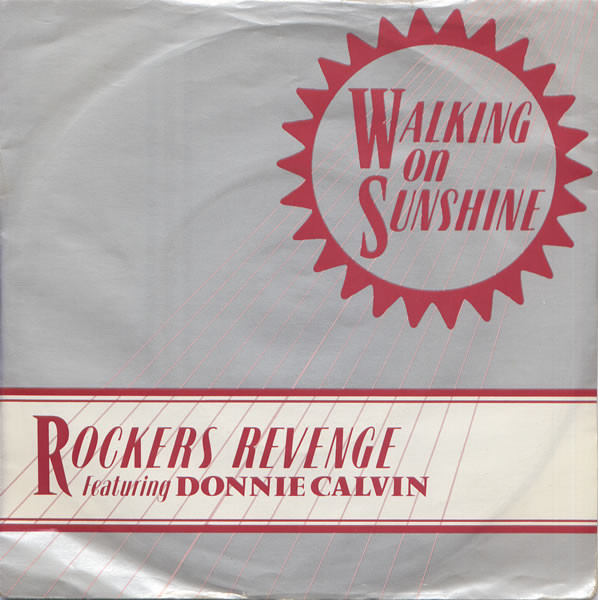 7 inch version on London Records, 1982
GW: You were playing like stuff like Rockers Revenge, were you?
JY: Yeah.
GW: It was a huge track and obviously something like the Peech Boys was being played. ‘Don’t Make Me Wait’.
JY: Yeah, absolutely. Yeah.
GW: What do you think differentiated those from, like, as you say, the Shannon’s and Africa Bambaataa’s Soul Sonic Force and those things?
JY: Yeah. It’s difficult. Okay, I think if there was a melodic element to it, it kind of got through. But if it was just a drum machine and say, a chant that didn’t work for that scene that I was on. But as things began to open up… that’s what I was saying earlier on about Soul records with drum machines on; things started to change. If there was a melodic element, they were like, “Okay, yeah, well, we’ll have this but we’re not having the Jonzun Crew. Thank you very much”. So yeah, that’s how it kind of worked. I think it was more about a melodic element than anything else.
GW: Obviously you had the whole SOS Band side of things and a movement towards that Jam and Lewis sound. Well, that kind of sound also brought out the British Street Soul vibe with Loose Ends and The Cool Notes. So the music started to change at that point.
JY: But again, you see, Greg, there’s a melody there. There’s a song on it.
GW: Yeah, of course.
JY: You know it, that’s the difference.
The Cool Notes – Blown It (1984)
The Cool Notes – Spend The Night (1985)
GW: So, at this point, in ’84, you’ve moved into an A&R capacity. You’re still doing your gigs, of course. You’re now on the radio, on Radio London?
JY: Yeah.
Robbie Vincent and Jeff Young live from Caister for Radio London `85 part 1
Robbie Vincent and Jeff Young live from Caister for Radio London `85 part 2
GW: Moving along a little bit, you start doing the first Dance show on Radio 1. Obviously, there was the Peter Powell Show, but that wasn’t an out-and-out Dance show….
JY: No, it was three records on a Monday afternoon or whatever it was.
GW: Yeah. And he brought in Froggy sometimes?
JY: Yeah, absolutely!
GW: It was still very commercially based. Now, what year was it that you went to Radio 1?
JY: I went to Radio 1 in October ’87. But what happened was, when I signed Shannon’s ‘Let The Music Play’ there was no video. The American company was a small independent label, they hadn’t made a video. So we turned around to them and said, “We’ll make a video”. So the guy that did all Phonogram’s videos and myself went to New York to shoot a video.
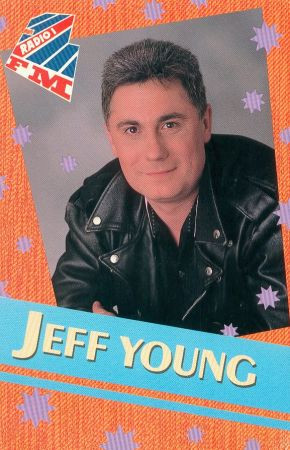
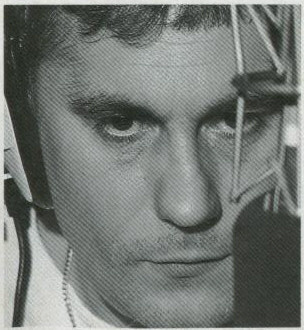
JY: I’d never been to America before and so that was a bit of an eye opener. But one of the things I couldn’t help but hear was New York radio. It was absolutely fantastic for someone who was just used to listening to Robbie and Greg; a few pirate stations, Kiss FM and whatever. It was like, “Man, this is amazing!” One of the things I also found interesting was that during the week, something like WKTU, could be a pop station, and then at about six O’clock on a Friday night, it would turn into a club station until Sunday night. I was like, “This is absolutely outstanding!”. So I’ve had my eyes opened, and I go back to London and I wrote a three page letter to Johnny Beerling (then Radio 1 Controller), telling him why he needed a club show on a Friday or a Saturday night and in true Radio 1 style, it took months and months and months to reply. Then out of the blue, I got a phone call and they said, “We’re going to do it”. I was like “Christ! really?” So in the middle of October ’87, there I was, on Radio 1 with the first Dance show they’d ever had. Now, one of the good things about this was that, at the time, the Indie guitar scene was in a bit of a lull. There wasn’t much going on and nearly all of the music on independent labels in the UK, that was great, was Dance. So there was tons of stuff! and for a change, most of it was British. So that was really, really good! Also, six weeks after I first started, Radio 1 started to go FM. That was the reason why I went there. Because they said to me they were going to FM soon. If you know what medium wave sounds like at nine o’clock at night, it’s a farce. You can’t hear anything. But as soon as they said, “We’re going FM”, I’m like, “Great!” So it was a big sea change for Radio 1, they went FM, and we had this Dance show on a Friday night and it worked. It took until about April before I thought, “I think I’m getting somewhere here. I think this is beginning to feel quite good”. All of a sudden, we got some listening figures that were pretty good and it was Okay and we went from strength to strength.
GW: Also, that coincided with the rise of House music in the UK?
JY: Yes, absolutely!
GW: How did that impact what you were doing?
JY: Well, I was trying to get it all in the program. It was funny because I was still doing what we used to do in the days of the old Soul gigs, where I was trying to play loads of genres in one program, you know. There would be a little bit of Soul. There would be House. There would be Rap. There would be like Pop/ Dance/ Indie stuff, like S-Express and all this kind of thing. After I’d been doing it for a while, I realized that the Rap stuff was getting in the way. So I kind of ghettoised that all off to the last hour. So the first couple of hours were everything that was good and great in Dance music. I played as much House as I could. Although it was a club show, I was still a little bit old school in the fact that some of the acid things were a little difficult to play. Whereas now I don’t think I’d have been worried about that, I’d have just steamed into it. So I think years later, I got a bit of criticism for not sticking with some of the House things that I probably should have stuck with. But, yeah, I played it all. Whatever was going on in Dance got an airing on that program.
GW: And how long did you do the program for?
JY: I did it until the end of 1990. For some reason, I don’t know why, I always had it in my mind that I would probably only last four years. But after three, my job at the record company was so intense, I was ill at that point, and I realized something had to go and I chose the radio program.
GW: Were you still at Phonogram at this point?
JY: No, I was at A&M by then. And so yeah, again, in the October of 1990. I went into Radio 1 and said, “Look, I’m going at Christmas”. Which is what I did do. I went on the last Friday of 1990. Tongy started in the January, they said, “What should we do?”. I said, “Get Pete Tong off Capital”. They did, so obviously that became historical in its own way. So yeah, that’s how the Radio 1 thing came and went very quickly. But it was great.
 Early Pete Tong
GW: Taking you back to just some of my own memories. I remember I used to come and see you whenever I was in London, I’d come into the office to see what you had. On one of those occasions, I got my white labels of ‘Buffalo Gals’, but I also got the video. You had the video there.
JY: Okay. Yeah, right, because that was a big part of clubland then. We were all playing videos, weren’t we?
GW: Well, I mean, we didn’t have videos in Wigan Pier and Legend, but I was doing a small club called the Stars Bar in Huddersfield. Even though it was this dodgy place on the downside of town, they had a video unit and I’d got the video from you… I wouldn’t have probably even watched in your office, I don’t think. I can’t remember. But you said, “Here you are, take one of these”. I took it home and it just blew my mind! because there was some fella spinning on his head! It was like, “What is going on here?”. There were the four elements of Hip Hop culture, for the first time, being shown together; we had cutting and scratching, we had graffiti, we had rapping and we had the breakdancing – b-boying. I took that video into Huddersfield. I tell this story quite often; I put it on at one o’clock. The club was open until two. I put it on and everyone stopped! It was a really raucous black crowd. It was a real hardcore crowd and they went like little lambs. I then understood what a culture shock was at that point. There was no turning back from that moment. I ended up… for the rest of the night, basically, it wasn’t worth carrying on! I was just playing this video over and over because they were just so… you know, it was like the aliens had walked in!
 Huddersfield crew (Photo taken from the DJ booth, by Greg Wilson)
JY: I’ve got a very similar story. It goes back to my first visit to New York with the Shannon video thing. Obviously, we’ve been talking about all these genres of music, particularly the electronic stuff. Then came Rap music. I would hear a lot of this stuff, but I wouldn’t necessarily get it. Then I go to New York, and we’re driving around all over the place and I’ve got the radio on thinking, “Oh, my God, this is amazing!”. Then all of a sudden, I got it. I’ve got it because I was in the environment from which it came and then the penny dropped. And it was like, “Ah, okay, now I understand what this is all about”. It is quite an epiphany when you have those moments.
GW: Absolutely! The video that you gave me had such an effect! From my point of view, because I was immersed in this sound, I was just going with the Electro. I was taking, as I say, a lot of criticism and becoming the “heretic” for doing this. But nevertheless, I was playing to a young black audience who were absolutely into it, all the way! We had the sound system at Legend, and we had the sound system of Wigan Pier. So I was able to present this new approach with music. I was very fortunate in that respect; having those two clubs.
GW: Also, if you remember, going back a little bit further again, you arranged for Kool and The Gang to turn up at Legend one night, when they’d done a show, which was great because at that time, I was still in a period where I was working to try and build the numbers, because that’s how I got the job at Legend; The Wednesday Jazz-Funk night there had done really well, But John Grant, who was one of the big DJs then, had jumped ship; John had gone to work for a Blues & Soul and Piccadilly Radio promoted event called The Main Event, alongside Mike Shaft. The Main Event took the crowd with him, so it left Legend struggling. So that’s how I came across to Legend from the Tuesday at Wigan Pier. One of the things that helped us build the night was getting Kool And The Gang down, because it was a Wednesday night, I went to see them play and you sorted it out and they came down. I’ve even got a letter from you somewhere thanking us for looking after them and everything.
JY: There you go. Well, my first memory of those guys is I’d been at Phonogram two weeks when they sent me on tour with them. That was my first eye-opener I had for the music industry; going on the road with 10 Black Americans – an immensely successful band. It was just amazing. But, within 10 days I was shattered, I almost needed hospital treatment. But it was a fantastic time! I went on tour with them quite a bit, every time they came over. They came over every year. They were a great bunch of guys!
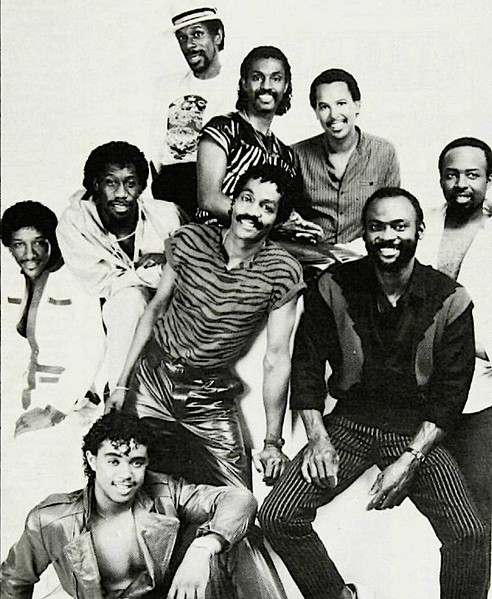
Kool & The Gang
GW: Just a quick final question, what’s your greatest club? What was the best experience that you had as a DJ? Where was it? Not necessarily a night or a club? What were the highlights for you?
JY: Well, I have to say, I was fortunate enough to go to the Paradise Garage to see Larry Levan, that really was some experience, I have to say. He did things differently, to put it mildly. But yeah, I guess the best… when I was younger, places like The Goldmine and The Royalty were so exciting. They were absolutely fantastic! So they’re the things that stick in my mind. But I’ve been to so many places, really. It’s more about what I didn’t do than what I did. I’ll always regret not getting to one of the proper Northern Soul gigs up there, to see it for myself. Because that music still just doesn’t make sense to me at all and I think again, a bit like going to New York, I might have got it if I’d seen it in action. But yeah, going to Danceteria in America, seeing you guys at places like Legend. Crackers was amazing! They are the kind of things that just stick in my mind, I guess.
GW: And playing? How about you DJing?
JY: One of my best experiences playing? I think, in recent times, doing Ibiza Soul week was really brilliant, because I hadn’t been back very long from an extended break, so that was very exciting. But again, all those great clubs when they were absolutely flying, like Flicks, The Goldmine, The Royalty, the all-dayers and Caisters, they were just ridiculous! They were fantastic, fantastic experiences. Really, really fantastic!
GW: So when did you actually stop Club DJing?
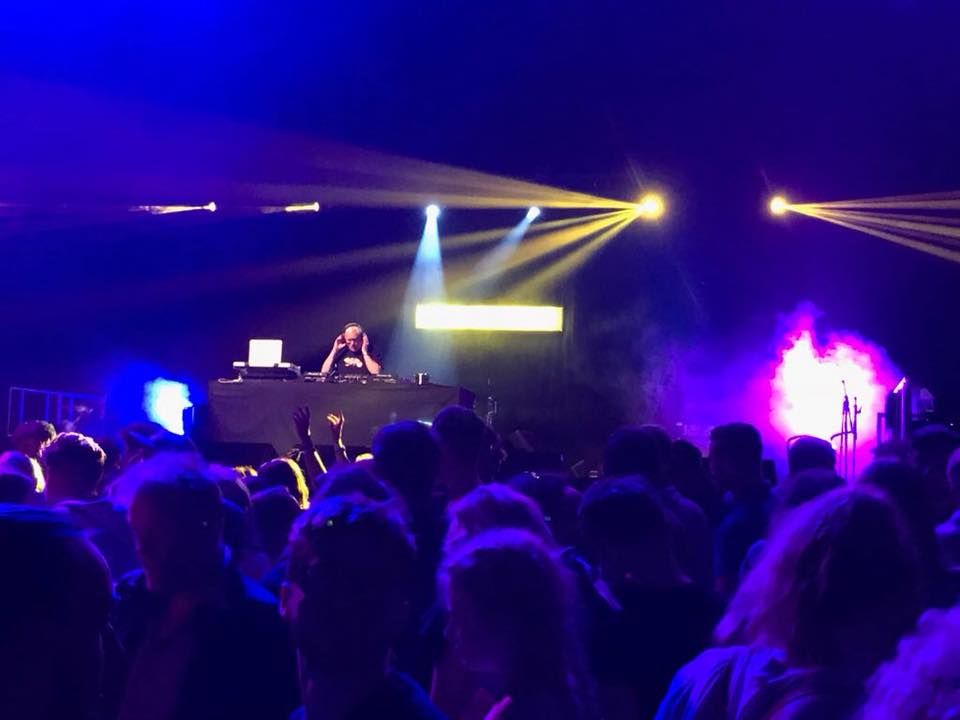
JY: Well, I stopped when I came out of Radio 1. And then I started again in 2011. So I had quite an extensive break. And I’ve just done another 11 years.
GW: How long were you at Jazz FM?
JY: Well, the Jazz FM story is quite funny. Because I was out and about somewhere and I got a call from them. I knew Robbie had been ill, he needed a couple of months off. This was in October 2010. When they said, “Oh, will you do a few months on Sundays for Robbie?” I’d been out of the game for 10 or 12 years at that point and I was like, “Yeah, Okay, as it’s for Robbie, I’ll do it”. I stayed there for 10 years. So I finished in March of this year. So yeah, it was funny; when I first went there, I did Robbie’s show, then they started to give me Saturdays and Sundays, bits and pieces here and there. And then Robbie left, and they gave me his Sunday show. I did that for seven years. It was very, very enjoyable, I absolutely loved it. Really great!
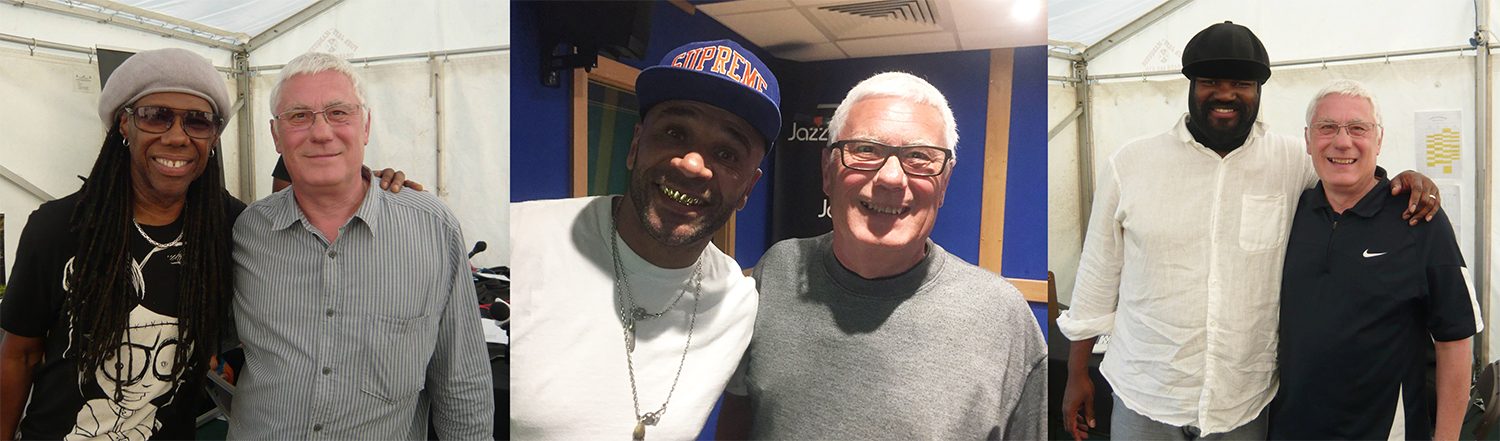
JY: I was able to do radio shows the way I’d always liked to do them; they let me choose all my music. I played quite a large percentage, probably 50 to 60%, was new music. Because, especially right now, it’s a very exciting time to be involved in Jazz, with all the stuff that’s going on now, with all these great new young kids on the block, you know.
GW: And so now, into retirement?
JY: Well, yeah, I’m kind of, gracefully retired. I stopped working in my studio business six years ago. But the Jazz FM program itself became such a heavy workload. I loved doing the program, but I began to fall out of love with what it took to get there. So I was working on it for five days a week, my whole life was revolving around that program. And I thought, “This is ridiculous!” I’m supposed to be cutting down, retiring. I think the only way I could see a way out of that was to actually stop it, which is what I did. Which is a shame, I didn’t really want to, but I wasn’t going to have a life in retirement if I kept doing that show. I didn’t want to get to 75 years old and say to myself, “Well, I didn’t go to Bhutan, I didn’t go to Chile”; I didn’t go to wherever, because I was standing in my record room doing shows with Jazz FM, I wasn’t going to allow that to happen, you know.
GW: Have you ever considered writing your memoirs?
JY: Well, again, this came up the other day. I personally don’t think my story is as interesting as some other people do. That’s probably one of the reasons why I’ve not sat down to write them really. But at the same time, as I mentioned to you before, the amount of stuff that’s out there, written about what I would call ‘our scene’, is really minimal, especially when you compare it to the Rave scene, or the Northern Soul scene. There’s tons of stuff on those scenes. So, you know someone, somewhere has got to write a book about our stuff.
GW: It’d be a big contribution if you did, because obviously, Jeff, what a career! From the DJ side, into the record company side, and through radio; you’ve seen it all come and go, in so many respects. Not too many people can tell that story.
JY: No, and the other thing I always think of as well, with the record company career, because I loved a little Rock and Pop when I was a kid, I had a grounding in that as well. So when I was at Phonogram, I worked with ABC, Dexys Midnight Runners, and bands like that. I went to A&M and worked with various artists, and then to MCA, it wasn’t always about Black music. There were all kinds of things that I was involved in. I signed a band called Hipsway, which became Texas. And yeah, it was great because of my broad musical envelope, it allowed me to do so much more than just do music based around clubs and dancing. So I was always grateful for that.
GW: And do you keep in touch with many people from back in the day?
JY: I do, actually. I thank the wonderful world of Facebook and Twitter and these kinds of things, and you’re always running into people at various times. I make more of an effort now to say, “Okay, we should meet up”, and you actually get round to doing it. I’ve got more time to do that now. So I do try and see as many people as possible or at least communicate with them, so that’s good.
GW: Yeah, definitely. And it’d be good to meet up with you at some point down the line.
JY: Yeah, When you’re down, or if I’m up there at some point. I mean, I get up there every now and again. You know, sometimes I find myself in Liverpool. I mean, it’s not far away. Is it?
GW: I’m literally right over the water from Liverpool? I’ll take you out for lunch.
JY: That’d be great. That’d be super. Yeah, Greg, thanks ever so much, and good luck with everything and we’ll speak soon.
GW: Okay. You take care.
JY: Cheers, mate. Bye.
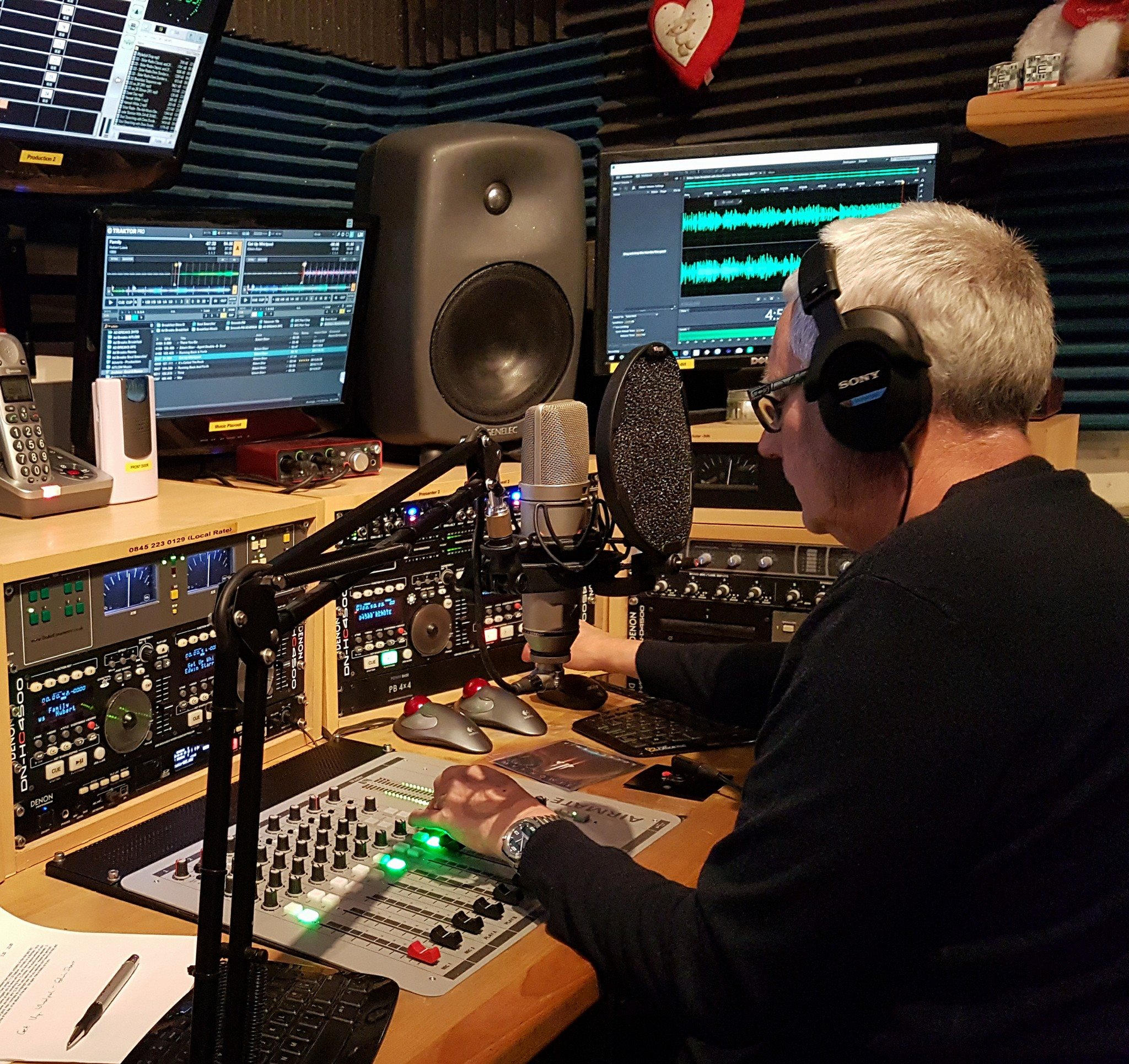 Jeff on Solar Radio
Jeff Young is Greg Wilson and Mike Atkinson’s special guest on the 3rd episode of their Record Mirror Disco Charts podcast.
© Greg Wilson, March, 2025

